
Every fitness journey starts with sweat and a bit of reality. I’ve seen many beginners jump into advanced HIIT classes, then wonder if they made a mistake. But, beginner fitness programs are key, not just a consolation.
The best training program types know beginners need a soft start. It’s like the “tutorial level” in a video game—don’t skip it. Programs like Alo Moves and obé Fitness offer filters for duration and difficulty. This lets beginners explore at their own speed.
Here’s a fact: beginners who learn the basics are 60% less likely to quit early. And let’s be real, mastering the basics is just as important as the big moments. It changes how you see discomfort and sets you up for success.
Intermediate skill development programs
Welcome to the world of intermediate fitness. Here, you’re not a beginner or a top athlete. This stage is all about skill level progression. It’s where you learn to train, not just work out.
Coursera offers a great example with their Nutrition Education for the Consumer program. It has five courses that build on each other. This layered learning is perfect for fitness too. Good programs should do the same, adding new skills and techniques.
Now that you’ve mastered the goblet squat, it’s time for more. Try tempo, pause reps, and unilateral exercises. These will test your stability and take your training to the next level. But, many programs fail here. They either go too easy or too hard.
The best programs see intermediate training as its own thing. It’s not just a stepping stone. It’s a vibrant space for growth. Here’s what makes a good intermediate program:
| Component | Description | Benefits |
|---|---|---|
| Layered Learning | Building skills progressively through structured modules. | Enhances understanding and retention. |
| Technique Focus | Emphasis on advanced techniques like tempo and pause reps. | Improves strength and stability. |
| Individual Assessment | Regular evaluations to track progress and adjust programs. | Ensures personalized training paths. |
| Community Support | Access to forums and group discussions. | Encourages motivation and accountability. |
In conclusion, the intermediate phase of fitness is more than just hard work. It’s about strategic growth and overcoming challenges. With the right programs, you can turn this stage into a springboard for your athletic dreams.
Advanced performance training
Advanced athletic training goes beyond just working out. It’s a detailed way to improve performance. We’re not just sweating; we’re studying how to move better and recover faster. It’s not just about getting fit; it’s about making small improvements with great care.
Pvolve’s partnership with Jennifer Aniston shows a new way of training. They use special tools that help you move better, not just lift more. This new approach is smarter and quieter, not just about being loud.
Malcolm Gladwell’s 10,000-hour rule is key in advanced training. We use it to plan workouts that are as precise as a scientist’s. We even plan rest times based on your body’s natural rhythms. It’s a mix of science and hard work.
Movement tests show hidden problems that you can’t see. A single Turkish get-up is more complex than many burpees. It’s not just about how hard you work; it’s about how well your work is done.
Advanced training often looks simple but is actually very complex. This simplicity hides the real magic. For those looking to improve, checking out advanced personal training programs could be a big step forward.
Sport-specific coaching options
Choosing the right coaching is key for top performance. Today, there are many coaching options for every sport. Each sport needs its own Training Program Types to meet specific needs.
General fitness programs are good for a base, but serious athletes need more. Imagine a tennis player in a generic strength class. It’s not tailored for their needs, unlike a marathon runner’s endurance training.
Platforms like obé Fitness and Alo Moves show a move towards specific training. obé Fitness focuses on menstrual cycle training, while Alo Moves offers various yoga programs. This shows that specific training is essential, not just a bonus.
When looking at Training Program Types, ask if it improves your sport skills. Mixing up the two can lead to poor results. Athletes might get great at a workout but not their sport.
| Sport | Biomechanical Focus | Recommended Training Program Types |
|---|---|---|
| Tennis | Rotational Power | Strength & Agility Training |
| Marathon | Endurance | Long-Distance Running Programs |
| Soccer | Speed & Agility | Interval Training |
| Swimming | Upper Body Strength | Resistance Training |
Group vs. individual training benefits
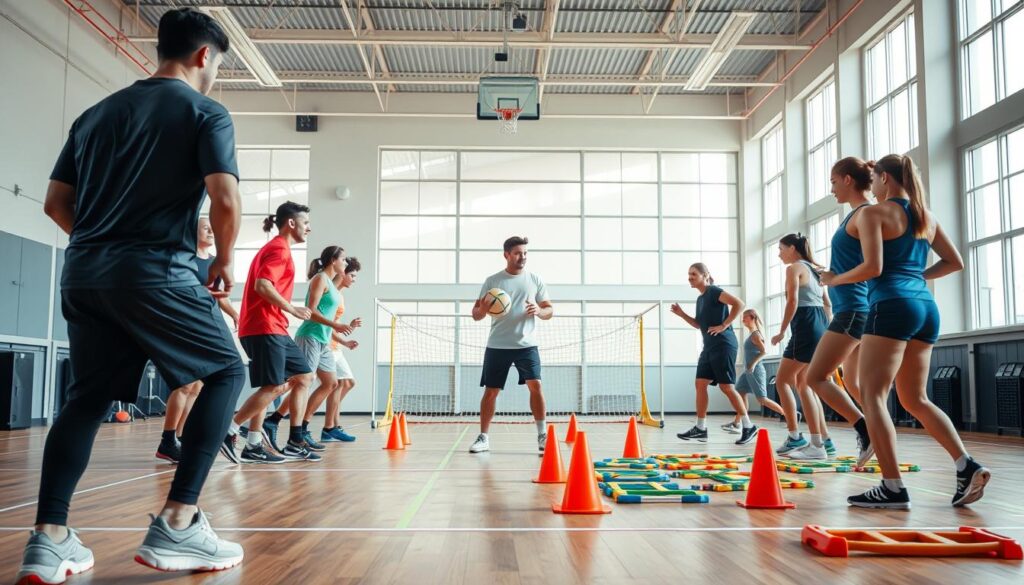
Looking into group versus individual training shows us how each has its own special benefits. They meet different needs and goals, just like layers in a lasagna. For those new to fitness, knowing these differences is key.
Group training is like a fitness party where everyone joins in. It brings a sense of belonging and accountability. Knowing others are counting on you makes workouts less scary.
On the other hand, individual training is like getting a custom-made suit. It’s all about you, focusing on your specific needs. Personalized coaching offers precise feedback and tailored plans.
Choosing between group and individual training depends on what you prefer. Some love the buzz of group sessions, while others enjoy the one-on-one focus. The fitness world is now mixing these styles, creating new, hybrid programs.
| Training Style | Benefits | Ideal For |
|---|---|---|
| Group Training | Collective energy, accountability, social interaction | Those who thrive on motivation from peers |
| Individual Training | Personalized attention, tailored programs, focused feedback | Individuals seeking specific goals or facing unique challenges |
| Hybrid Training | Combination of benefits, scalable, personalized | Those looking for a balance between group dynamics and individual focus |
In conclusion, whether you choose group or individual training, find what works for you. Both paths help you grow and improve, but in different ways. For those interested in level definitions in training, knowing these differences is essential.
Hybrid training approaches
Hybrid training mixes old-school methods with new tech for amazing results. It’s like a blockbuster sequel in fitness—more action, better effects, and a twist that keeps you hooked.
The Coursera model is a great example of this. It blends self-paced learning with hands-on projects and peer reviews. This way, it fits different learning speeds and keeps standards high. Hybrid fitness programs also help people of all levels, making them game-changers.
Here are some key benefits of hybrid training approaches:
- Flexibility: Fit your workouts to your schedule, with options for home and in-person training.
- Personalization: Meet individual skill levels, helping both newbies and pros.
- Continuous Feedback: Get feedback that online or in-person training alone can’t match, improving your learning.
- Community Engagement: Build a sense of belonging through both online and in-person interactions.
This model is perfect for anyone. Beginners can work on basics at home, while advanced athletes get in-person technical help. It’s like the ultimate fitness package—everything you need, when you need it.
Adding hybrid training to your routine can really boost your skill level progression. Whether you’re starting out or refining your skills, this approach has the tools you need to succeed.
Assessment and placement protocols
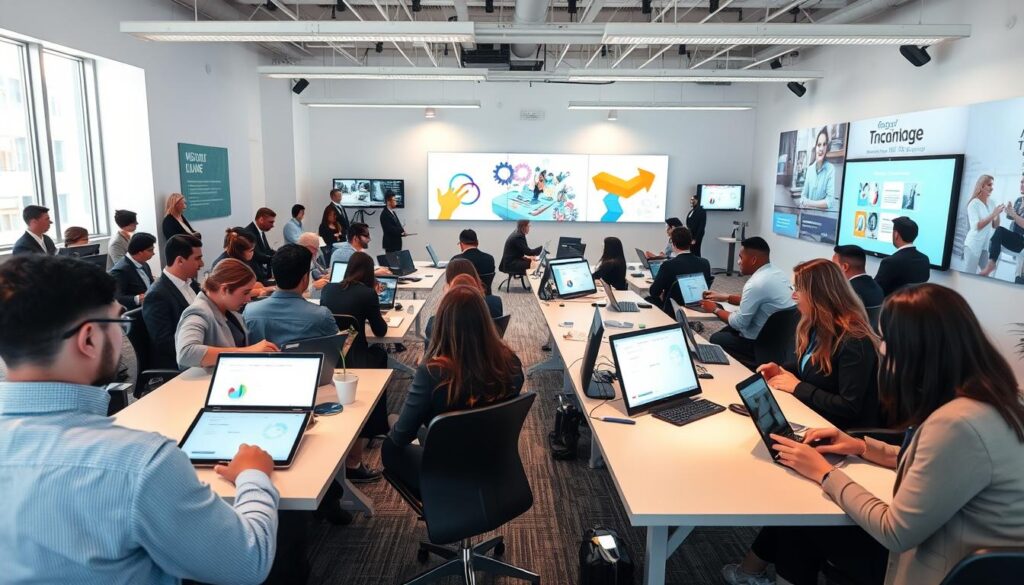
Think of assessment protocols as your personal GPS in the vast world of fitness. Just like the University of Maryland’s “Cybersecurity for Everyone” course, which welcomes all learners, effective fitness assessments ensure that everyone finds their ideal training path. No prerequisites needed here; just a solid understanding of where you stand and where you need to go.
In advanced athletic training, protocols like the Functional Movement Screen (FMS), VO2 max testing, and force plate analysis are not just barriers to entry. They are your starting coordinates, mapping out a tailored journey based on your unique needs. Imagine being sorted into your perfect training program without the moral judgment of a Hogwarts sorting hat—just a focused approach to your specific imbalances.
It’s astonishing how many training programs skip this critical step. They toss participants into predetermined levels, much like a chef serving a dish without tasting it first. You wouldn’t want to eat something that hasn’t been tested, right? So why would you dive into a training program that hasn’t considered your individual readiness and resilience?
Here’s a quick look at some of the most effective assessment methods:
| Assessment Method | Purpose | Key Benefits |
|---|---|---|
| Functional Movement Screen (FMS) | Identify movement dysfunctions | Prevents injuries, customizes training |
| VO2 Max Testing | Measure aerobic capacity | Informs endurance training levels |
| Force Plate Analysis | Assess balance and power | Enhances performance metrics |
In summary, the best assessment and placement protocols measure not just output but readiness and resilience. They can predict injuries before they announce themselves, ensuring you are not just fit but fit for purpose. To dive deeper into effective training evaluation methods, check out this resource.
Progression tracking methods
In today’s world, tracking fitness progress has become an art, not just science. What gets measured gets managed, as Peter Drucker said. This idea is key in fitness tracking.
The old days of just looking at the barbell or scale are fading. Now, Training Program Types use a variety of indicators. These include heart rate, sleep quality, and how well you move. They see you as a complex system, not just a simple machine.
Google’s Career Certificate shows the power of clear goals and progress. It shows how seeing your progress can motivate you. We all like to see where we’re headed. For skill level progression, the best tracking methods tell a story of your journey.
Let’s compare old and new tracking methods:
| Traditional Tracking | Modern Tracking |
|---|---|
| Weight on the barbell | Heart rate variability |
| Body weight | Movement efficiency ratings |
| Rep counts | Recovery scores |
| Workout duration | Sleep quality scores |
This new way of tracking is like a TV show’s recap. It quickly reminds you of your journey before the next step. By using these modern metrics, athletes can understand their progress better and make smart training choices.
Customization for different fitness levels
One-size-fits-all is a myth, like ill-fitting sweatpants and lazy workout plans. Today, customization is key. Platforms like obé Fitness show how smart training can change the game. They use a quiz and cycle-tracking to create personalized plans.
For those who use equipment, Pvolve shows that beginners can easily move to advanced training. The same tools can offer different levels of challenge. It’s all about adjusting intensity, complexity, and volume.
True customization meets individual needs. It’s like a chef making a special menu just for you. Fitness programs that do this make workouts better for everyone. They ensure everyone finds their perfect fit.