
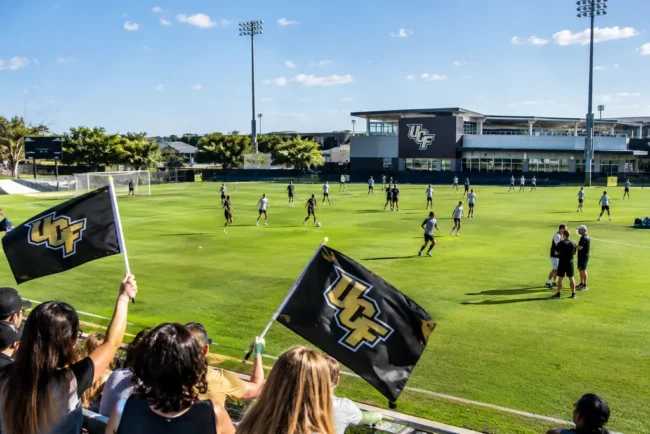
The UCF Soccer Facility proposal moved into sharper public view on October 8, 2026, when Orange County Mayor Jerry Demings backed $46 million in Tourist Development Tax funding for a new soccer stadium and a separate track and field facility at UCF. The proposal sits at the intersection of college athletics, youth tournament planning, and sports tourism. For coaches and club administrators, the key issue is not only the headline number. It is whether dedicated venues can improve event scheduling, reduce conflicts between sports, and bring more youth competitions back to Central Florida.
Why UCF Soccer Facility Funding Matters
Mayor Demings’ October 8, 2026 proposal placed UCF within a wider Orange County tourism funding package. The memo backed more than $800 million in tourism-tax projects, with $46 million allocated to UCF and funding set to begin in fiscal year 2029, according to WESH reporting. That timing matters because the project was not presented as an immediate build-out. It was part of a future-year funding sequence, which means facility users should treat the project as a proposal with a funding path rather than a completed venue plan.
UCF had previously sought $43.6 million in August 2026 for standalone soccer and track and field venues within a larger $119 million athletics infrastructure plan. The later $46 million proposal narrowed the public discussion toward facilities with clearer tourism claims. From a grassroots sports perspective, that shift is significant. Multi-day youth events are usually judged by field availability, warm-up space, hotel demand, officials’ capacity, and event operations. A college venue can help, but only if tournament access, pricing, and scheduling are workable for clubs beyond elite showcases.
UCF Soccer Facility Numbers To Track
The UCF Soccer Facility case is built around two connected ideas: a dedicated soccer stadium and a separate track and field complex. The current discussion is not simply about replacing a field. It is about separating two event types that often need different meet-day layouts, equipment staging, athlete flow, and spectator control. For soccer, match-day turnover and bracket scheduling drive the operation. For track and field, heats, field-event rotations, clerking, and warm-up areas decide whether a meet runs on time.
The financial framing also depends on visitor demand. Supporters have pointed to projections of roughly 76,000 new visitors per year, 32,000 room nights annually, and an estimated $15 million to $16 million in yearly economic impact. On3 reported those projections and noted Amateur Athletic Union support for the proposal, including the argument that Orlando had lost major youth track and field events to Jacksonville because of venue limitations On3 analysis.
How The Proposal Changed
The change from a broad $119 million athletics request to a focused $46 million soccer and track request is important for public review. Tourism-tax projects are usually tested against visitor generation, hotel-room demand, and countywide benefit. A narrowed proposal can be easier to assess because the claimed outcomes are tied to a smaller set of facilities. It also creates a clearer question for youth sports groups: would the venues serve only high-end events, or would they create usable dates for regional meets, school championships, adaptive-sport events, and club tournaments?
That distinction is central to community value. Facility investment often receives support because it is expected to host high-volume events. The day-to-day benefit is less automatic. Local clubs need affordable rental windows, reliable calendar access, and safe surfaces. Without those details, a facility can bring visitors while still doing little for nearby players and families.
Youth Event Capacity And Scheduling
Dedicated venues can change how events are built. A shared soccer and track complex can be functional for college competition, but youth events often require longer windows and more moving parts. Soccer tournaments need multiple match blocks, referee rooms, medical coverage, staging areas, and recovery time between fixtures. Track meets need field-event sectors, athlete check-in systems, timing operations, and crowd movement that does not interfere with competition.
Separate Venues And Event Flow
For the UCF Soccer Facility proposal, separation is the operational point. A standalone soccer stadium could host matches while a separate track and field venue handles meets or championships on the same campus. That does not guarantee simultaneous events every weekend, but it gives planners more options than a shared setup. From a club-management angle, the largest gain may be calendar flexibility. Fewer conflicts can mean cleaner event windows, less setup turnover, and more predictable staffing.
Youth sports events also depend on repeatability. Families, coaches, and event directors return to venues that run on time and communicate clearly. A purpose-built track facility can support meet operations if it has enough warm-up space, athlete flow, and seating. A soccer stadium can support tournaments if field quality, lighting, locker areas, and access points fit the event scale. The proposal points in that direction, but the public record in the research does not yet provide full design details, operating policies, or rental structures.
Grassroots Access Questions
The strongest youth-sports argument is not only tourism. It is pathway development. If Central Florida gains better meet and tournament inventory, more local athletes may get exposure to organized events without long travel. That said, facility quality alone does not solve cost pressure. Registration fees, parking charges, hotel requirements, and travel schedules can still limit participation for families.
For that reason, the best community test will be practical: how many dates are available to schools, clubs, adaptive programs, and regional governing bodies? Our prior coverage of community sports facilities made the same point: new construction matters most when access rules match local use. The proposed UCF venues should be evaluated through that lens once more details are released.
Tourism Metrics And County Funding
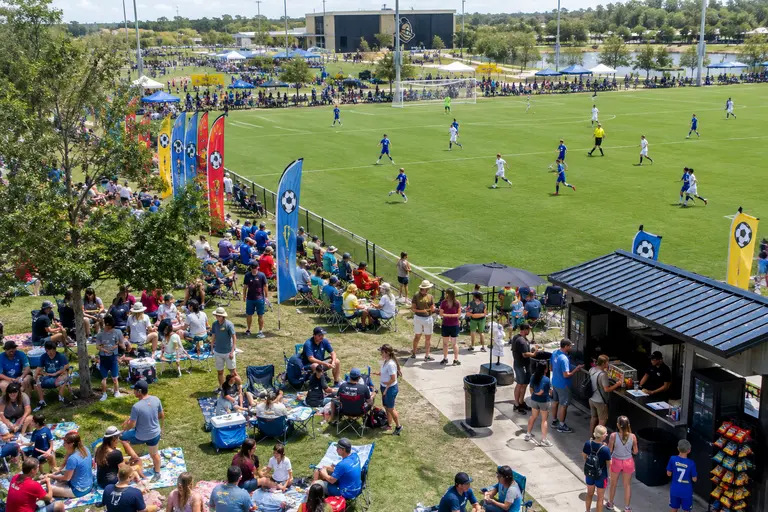
The $46 million figure comes from Tourist Development Tax funding, so the tourism case is central. Visitor projections can support public investment, but they should be treated as estimates rather than guaranteed outcomes. Tournament calendars shift. Competing cities improve venues. Youth sports bodies choose sites based on cost, availability, hotel inventory, transportation, and relationships with event operators.
Visitor Projections
The public estimates cited in the research suggest the project could attract about 76,000 new visitors per year and create about 32,000 room nights annually. A separate analysis cited in reporting projected 76,414 visitors from outside Orange County, roughly $70.8 million in direct visitor spending, and about $1.87 million in annual Tourist Development Tax revenue. Those numbers explain why the project was framed as a tourism asset rather than only a campus athletics upgrade.
| Measure | Reported Projection | Planning Meaning |
|---|---|---|
| County funding proposal | $46 million | Public funding request tied to future tourism-tax years |
| Estimated annual visitors | About 76,000 | Event volume would need consistent tournament and meet bookings |
| Estimated room nights | About 32,000 per year | Hotel impact depends on multi-day events and traveling teams |
| Estimated yearly economic impact | $15 million to $16 million | Projection should be reviewed against actual event calendars after opening |
These figures are useful, but they are not the same as a schedule. For youth sports leaders, the most important future documents would be event agreements, facility-use policies, and calendar commitments from governing bodies. Those materials would show whether the visitor estimates are backed by recurring events or by general market assumptions.
Fiscal Timing
Funding beginning in fiscal year 2029 creates a planning gap. Clubs, schools, and regional event organizers may support the concept, but they cannot plan around the venue until dates, construction timing, and operating rules are clearer. The UCF Soccer Facility funding path therefore carries both promise and delay. It gives stakeholders a defined public proposal, but it does not yet answer how soon youth soccer and track groups could use the venues.
There is also a broader facilities lesson across sports. Venues succeed when the event calendar, maintenance budget, and community-use plan are aligned. Readers interested in related topics across sports, including facility planning and management, are encouraged to visit Dashers Hockey. While the sport might differ, the underlying issues of access, funding, and community benefit remain strikingly similar.
UCF Soccer Facility Community Impact
The UCF Soccer Facility proposal has a credible sports-development argument because soccer and track are participation-heavy youth sports, and both need reliable venue access for events. The AAU support noted in the research adds weight to the track and field side, especially because the organization connected the proposal to events that had shifted away from Orlando. If Central Florida wants to regain those competitions, venue quality and event operations will both matter.
What Clubs Should Watch
Local clubs should watch four items as the proposal moves through future funding years: confirmed project scope, construction timing, event-use policy, and affordability. A dedicated soccer stadium and a separate track complex could help tournament operators create cleaner schedules. They could also support adaptive-sport events if accessibility, athlete services, and event staffing are built into planning. The research supports the possibility of that type of use, but it does not yet confirm specific future event contracts.
For UCF, the facilities would strengthen the athletic campus if delivered as proposed. For Orange County, the key measure will be whether the project produces the visitor and room-night totals used to justify tourism-tax funding. For youth sports, the measure should be wider: more quality competition dates, fair access for local programs, safe event conditions, and a realistic cost structure. If those pieces are present, the $46 million proposal could become more than a college facilities project. It could become a meaningful regional event platform for soccer, track and field, and community-based sports development.