
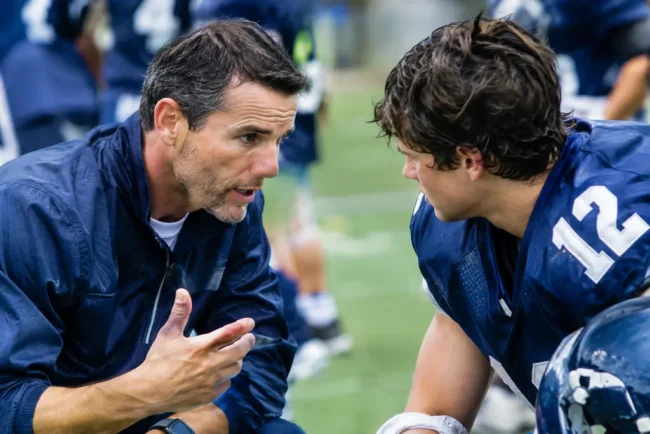
Hampden-Sydney coaching changed in a meaningful way on August 26, 2026, when the college announced five additions to its football staff: Owen Helton, Carlos Delgado, Jake Pugh, Joseph Gonzalez ’26, and Luke Candiano. The appointments, confirmed by Hampden-Sydney Athletics, were not just title changes. They created clearer position ownership, added recent playing experience, and separated some operational work from field instruction.
From a player development view, the most useful way to read the move is through daily contact points. Division III athletes often need coaching staffs to be efficient because practice time, academic demands, roster size, and travel logistics all press against the weekly plan. A staff with defined responsibilities can give players more direct feedback, cleaner teaching progressions, and more consistent review habits. That does not guarantee better results, but it improves the conditions in which skill growth can occur.
Hampden-Sydney Coaching Staff Changes And Role Clarity
Hampden-Sydney Coaching In The Position Rooms
The appointments created direct position responsibility across tight ends, quarterbacks, running backs, and cornerbacks. Owen Helton was named Tight Ends Coach and Video Coordinator. Carlos Delgado joined as Cornerbacks Coach. Jake Pugh became Quarterbacks Coach. Joseph “Jojo” Gonzalez ’26 moved into the Running Backs Coach role after playing for Hampden-Sydney through 2025. Luke Candiano became Chief of Staff, with duties tied to logistics, recruiting liaison work, and equipment management.
That structure matters because player development is rarely one broad process. Quarterbacks need decision-making, footwork, timing, and coverage recognition. Tight ends require blocking detail, route work, alignment discipline, and an understanding of protections. Cornerbacks work through stance, leverage, route anticipation, tackling angles, and ball skills. Running backs need vision, pass protection, ball security, and special-teams readiness. Clear ownership allows a coach to track errors by position rather than treating mistakes as general team issues.
Hampden-Sydney coaching also gained a useful internal balance between outside experience and program familiarity. Helton arrived after serving as assistant quarterbacks coach at Elon beginning in February 2025. Delgado came from Aurora University, where he had been a graduate defensive coach since August 2024. Pugh brought a record of high-level quarterback production from Washington & Jefferson. Gonzalez brought recent knowledge of Hampden-Sydney’s own practice standards, locker-room habits, and game-week rhythm.
Why Staff Support Can Affect Practice Quality
Candiano’s Chief of Staff role is easy to overlook because it is not a position-room job. Still, off-field organization can affect on-field teaching time. If logistics, equipment flow, and recruiting communication are handled more cleanly, position coaches can spend more hours on cut-ups, meeting preparation, individual correction, and player check-ins. For a college program, that can make the difference between a rushed teaching session and a targeted one.
In practical terms, staff support helps coaches protect the parts of the week that directly shape players. Film review needs to be clipped and organized. Scout looks need to be ready. Travel and equipment issues need fewer interruptions. Recruiting communication needs to move without pulling every coach away from player instruction. None of those tasks shows up in a box score, but each one can either protect or reduce development time.
Quarterbacks, Tight Ends, And Offensive Teaching
Jake Pugh And The Quarterback Room
Pugh’s background gives Hampden-Sydney a quarterbacks coach who recently produced at a high level as a player. At Washington & Jefferson, he finished with 7,668 career passing yards and 93 touchdown passes, ranking fourth and fifth in school history in those categories. He was also a two-time Presidents’ Athletic Conference Offensive Player of the Year for 2023-24. Those facts do not automatically translate into coaching impact, but they do show that he has lived the weekly demands of reading defenses, managing protection calls, and staying productive over multiple seasons.
The value for quarterbacks is likely to be strongest in the applied details: how to prepare for third down, how to respond after a bad series, how to connect meeting-room work with live routes, and how to manage a playbook without slowing down. Former college quarterbacks can sometimes communicate these points with credibility because they have worked through the same timing and decision problems. The key test is whether that experience becomes repeatable instruction for every quarterback, not only advice from personal history.
Helton’s Dual Role With Tight Ends And Video
Helton’s role links position coaching with video coordination, a combination that can be especially useful for tight ends. At Elon, he helped in offensive game-planning and had a role in developing Landen Clark, who was named Colonial Athletic Association Rookie of the Year. At Hampden-Sydney, his tight ends work can be connected to how the offense reviews formation, route spacing, blocking angles, and defensive responses.
For tight ends, video is not just a correction tool. It can be a teaching sequence. A player can see whether a release widened a defender, whether a block fit the correct shoulder, or whether a route stem created separation. When the same coach is involved in both the position group and the video process, feedback can become more direct. That is one reason Hampden-Sydney coaching may be better placed to connect weekly game-planning with individual skill work.
The research notes for the 2026 roster context also listed returning and incoming depth, which makes teaching clarity more important. A large roster creates competition, but it also creates a need for consistent grading. Young players need to know which corrections matter most, while returning players need standards that push refinement rather than repetition.
Defensive Backs And Running Back Development
Delgado’s Film And Defensive Practice Background
Delgado joined after working as a graduate defensive coach at Aurora University beginning in August 2024. During his time there, Aurora posted a 9-2 overall record in 2024 and went 8-0 in the Northern Athletics Collegiate Conference. The research notes also point to defensive practice and film breakdown routines as part of his background. For a cornerbacks coach, that experience is relevant because the position depends heavily on technique repetition and opponent study.
Cornerbacks are often judged by visible moments: a completion allowed, an interception, or a tackle in space. Development, however, sits in less visible habits. A corner’s alignment, eye discipline, hand usage, and recovery angle can determine whether the ball goes elsewhere. Film work can make those habits measurable. If Delgado brings a clear review process, Hampden-Sydney’s defensive backs can receive feedback that separates assignment errors from technique errors.
The roster context supplied in the research also noted increased defensive depth, including multiple freshmen safeties and cornerbacks, along with experienced players in the secondary. Depth is useful only if players are taught through a shared language. A young defensive back who understands leverage, down-and-distance, and route indicators can contribute faster on defense or special teams. That is where a position coach’s practice design has real value.
Gonzalez As A Recent Program Player
Gonzalez’s move from player to Running Backs Coach gives the staff a different type of development tool. He played for Hampden-Sydney through 2025 and, in that season, recorded 1,082 all-purpose yards, which ranked second in the ODAC, while averaging 108.2 all-purpose yards per game. Because his experience came inside the same program, he can help current players understand expectations in a direct and recent way.
Running back development includes more than rushing production. The position group must handle protections, route releases, ball security, tempo, and special-teams roles. A coach who recently moved through the same meetings and practice environment can translate staff language for younger players. That does not replace technical teaching, but it can reduce the adjustment period for freshmen and reserves trying to earn trust.
The 2025 production of senior running back Terry Hicks, listed in the research notes at 1,020 rushing yards, 14 rushing touchdowns, and 1,120 all-purpose yards, also set a clear performance reference point for the room. For Gonzalez, the task is not simply to preserve past output. It is to help the next group understand why productive backs are reliable away from the ball as well as with it.
Program Culture, Roster Depth, And Development Signals
Specialization Without Losing Team Teaching
Hampden-Sydney coaching has become more specialized, but specialization must still serve the team plan. A quarterbacks coach, tight ends coach, running backs coach, and cornerbacks coach each owns different details. The staff’s challenge is to keep those details connected. Offensive timing depends on quarterbacks, backs, receivers, tight ends, and protection rules working together. Defensive back development depends on pass rush, coverage calls, safety help, and tackling structure.
The best signal to track is not a single statistic. It is whether players show cleaner assignment execution as weeks pass, whether young players earn defined roles, and whether returning contributors reduce repeat mistakes. Those are coaching indicators that can be seen in film review, participation patterns, and situational performance. Public data may not show every correction, so outside analysis should remain cautious.
Community And Grassroots Value
For a college such as Hampden-Sydney, staff additions also carry community value. Players are not only developing for Saturday performance; they are part of campus life, alumni interest, local youth visibility, and regional recruiting relationships. A former player such as Gonzalez working with current athletes can strengthen continuity. Coaches with outside stops can bring new teaching habits into a smaller college setting.
There is also a broader sports-learning angle. Analysts often compare how football, baseball, tennis, and other sports define player growth through repetition, feedback, and role clarity. For readers interested in these development patterns, Booksonbaseball serves as an insightful baseball resource within the same network. The comparison is useful because the best development systems usually share common habits: clear instruction, measurable practice goals, and honest review.
Hampden-Sydney Coaching Development Readout
The August 26, 2026 staff additions gave Hampden-Sydney more defined teaching lanes. Helton connects tight end instruction with video work. Pugh brings recent high-level quarterback production into the quarterback room. Delgado adds defensive back instruction shaped by defensive practice and film study. Gonzalez provides recent program experience for running backs. Candiano’s operations role can protect coaching time by absorbing important off-field duties.
The implications are positive but should be stated carefully. New staff members do not guarantee immediate improvement, especially with a large roster and varied experience levels. What they can do is improve the teaching environment. More position-specific feedback, better organized film, clearer practice planning, and stronger staff support give players a better chance to develop. For Hampden-Sydney, that is the most grounded reading of the changes: the structure around player growth became more detailed, and the results should be judged by how consistently that detail appears in player execution.