
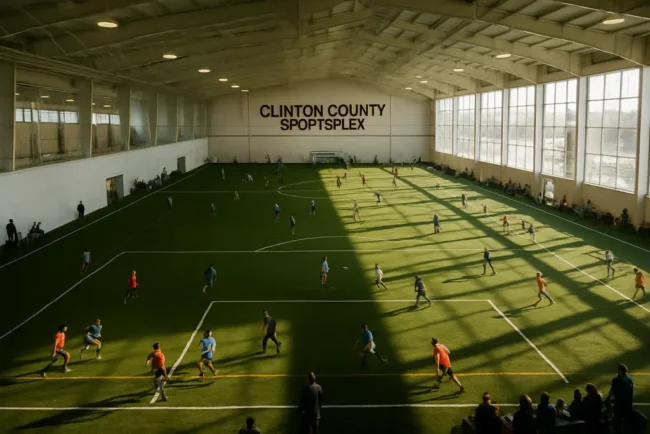
Clinton County Sportsplex is being developed in Aviston, Illinois, as a 15,000-square-foot indoor sports facility meant to give local athletes year-round training space. As of October 5, 2026, the facility had not yet opened, and the reported schedule still pointed to a fall 2026 opening after a July 14, 2026 groundbreaking and construction activity that began in early-to-mid August, according to The Breese Journal report.
For youth coaches, club organizers and families in Clinton County, the most relevant point is not simply that another building is being added. The practical question is whether the space, equipment and reservation model can reduce weather disruption, improve repetition quality and create a fairer path into local training. The available facts support cautious optimism, while leaving open major questions about pricing, peak-hour access and long-term programming.
Clinton County Sportsplex Facility Status
The project is best understood as a facility-in-progress rather than a finished operating venue. That distinction matters for any analysis of youth training impact. Construction details are available, but verified participation numbers, rental rates, tournament calendars and user policies have not yet been published in the research supplied. Until those figures are known, claims about participation growth or economic impact should be treated as possible outcomes, not confirmed results.
Clinton County Sportsplex Buildout Details
The planned indoor complex includes two full-size courts for basketball and volleyball, a 5,000-square-foot indoor turf field, four full-size batting cages and two HitTrax simulators for baseball and softball training. The project also includes a concession area, planned tournament use for basketball and volleyball, and a fully automated reservation system for bookings, payments and facility access through a mobile app, according to the SIUE-linked project announcement.
The building is reported to sit at 850 Steel Bridge Street in Aviston, directly behind Aviston Auto Body, which is owned by founders Melinda and Ryan Voss. The sports portion of the 15,000-square-foot building is about 13,200 square feet, with other space set aside for non-sports or multipurpose use. A gaming facility is also planned at the front of the building, separate from the main sports areas.
Why The Opening Timeline Matters
The fall 2026 target places the project close to the indoor training period for many school and club athletes. If the facility opens as planned, basketball and volleyball groups could gain court access during colder months, while baseball and softball athletes could move batting and swing-analysis work indoors. Still, the exact opening date has not been verified in the provided research, so clubs should avoid building firm practice schedules around the venue until operating dates and reservation rules are formally available.
Youth Training Uses And Scheduling
The Clinton County Sportsplex plan addresses several common limits in rural youth sport: weather exposure, limited indoor court supply and inconsistent access to sport-specific training surfaces. Two full-size courts can support basketball and volleyball practices, while the turf area can serve drills that need a different surface than hardwood. The batting cages and HitTrax simulators are especially relevant for baseball and softball players who need repetition when outdoor fields are unavailable.
Basketball And Volleyball Court Value
For coaches, full-size courts offer more than extra space. They allow teams to practice spacing, serve receive, transition defense, half-court actions and game-speed rotations without compressing drills into smaller areas. That can be valuable for player development because court geometry affects decision-making. A volleyball team practicing serve receive on a full court faces different visual cues than one working in a shortened gym. A basketball group can run five-on-five actions, baseline out-of-bounds sets and transition lanes with fewer compromises.
The tournament plan also matters. Hosting basketball and volleyball tournaments could bring more competitive minutes into the county, but it also raises a scheduling question. If tournaments claim many weekend blocks, local youth teams may need clear access windows during weeknights or off-peak hours. For grassroots development, a venue is strongest when it balances event income with recurring practice time for community athletes.
Batting Cages, Turf And Measurable Repetition
Four full-size batting cages should help baseball and softball coaches organize stations rather than forcing athletes into long waiting lines. That matters in youth settings, where practice quality often depends on how many meaningful repetitions each player receives. With two HitTrax simulators, the facility also introduces a training tool that can support swing feedback. The research states that this technology was not previously available in the surrounding area, which makes the planned installation notable for local player development.
The 5,000-square-foot turf field gives the building a broader training profile. It may support throwing progressions, agility work, goalkeeper drills, footwork sessions or small-area field-sport training, depending on the rules set by operators. The exact sport mix has not been fully detailed, so those uses should be read as conditional on facility policies and safety standards.
Community Access And Club Management
Facility access is where a project like this succeeds or falls short. The research states that there is no minimum age limit for use, which suggests a wide youth access intent. That does not answer every operational question. Families will still need to know rental prices, supervision rules, equipment policies, cancellation terms and whether teams, individuals and small groups have equal booking opportunities.
Reservation Technology And Equity
The planned mobile app-based reservation system could reduce friction if it clearly shows open times, prices and access instructions. For a club manager, automated payments and facility entry can simplify administration. For families, the same system could make individual cage or court rentals easier to compare. The risk is that digital-first booking can favor users who act fastest or have more flexible schedules. A fair access model would likely need transparent rules for recurring team rentals, individual sessions and high-demand evenings.
For a related analysis of how this specific Aviston project may affect training access and scheduling, see this local review of youth access at the facility. Across this site network, readers can also compare community sport coverage through AP Levante, a related site in the same network.
Community Gathering Beyond Practices
The concession area and planned tournament use point toward a facility that is not limited to team training. Tournament days can bring families, coaches and athletes into one location for longer blocks of time. That can strengthen community ties, particularly in a rural county where sports often serve as a shared gathering point. The planned gaming facility at the front of the building may also give visitors a separate entertainment area, though the research does not provide details on how it will be managed or connected to sports programming.
From a club-management view, the best use of the building would be a calendar that separates development blocks from event blocks. Young athletes need regular practice more than occasional showcase days. If operators protect time for foundational training while still hosting tournaments, the venue can serve both sport development and community activity.
Clinton County Sportsplex Community Test
The Clinton County Sportsplex project has clear physical assets: courts, turf, cages, training technology and planned automated booking. Those features match real needs in youth sport, especially during cold or wet weather. The key test after opening will be whether access is broad enough for beginners, school-age athletes, club teams and small training groups.
The evidence available on October 5, 2026 supports a cautious reading. The planned facility could expand indoor practice options in Aviston and surrounding communities, but verified impact will depend on operating policies that have not yet been released in the supplied research. For coaches and families, the most useful indicators to track after opening will be rental cost, weekly availability, age-group usage, tournament frequency and how often the batting technology is accessible to local softball and baseball players outside private lessons.
If those details align with the facility’s stated youth-sports purpose, the building can become more than a new indoor address. It can become a steady training base for Clinton County athletes who need repetition, reliable scheduling and a community setting that supports long-term participation.