
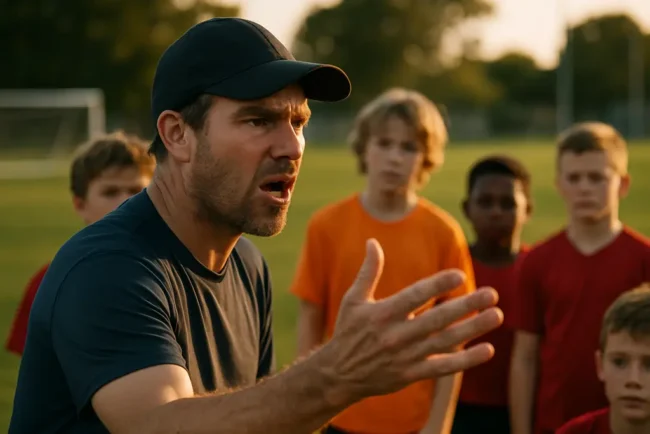
Youth Sports Coaches are being asked to absorb a participation rebound that many local systems were not built to handle. As of early 2026, U.S. youth sports participation among children ages six to 17 rose to 58%, moving closer to the Healthy People 2030 goal of 63%, according to the Project Play participation update. That is positive for player development, health and community connection, but it also exposes a staffing problem on the sideline.
The careful reading is not that every town has fewer adults willing to coach than before. The stronger evidence is that participation demand is rising while many agencies and clubs report difficulty filling volunteer and paid coaching roles. For grassroots sport, that distinction matters. A club can have more children registered and still offer a weaker experience if teams are too large, practices are rushed, or new coaches receive little support.
Why Youth Sports Coaches Are Under Strain
Youth Sports Coaches sit at the intersection of player growth, parent communication, safety expectations and club administration. At the recreational level, many are volunteers with limited time after work and family duties. At the competitive level, the role can include training design, travel planning, tournament preparation, roster decisions and conflict management. Those jobs require more than enthusiasm.
Participation Growth Without Matching Sideline Depth
Rising participation is a good sign only if the delivery system keeps pace. A larger player pool needs more trained adults, more practice slots, clearer safety rules and better communication. If the coach pool does not expand with registration numbers, clubs face three common responses: increasing roster size, reducing practice quality, or turning away players. None of those outcomes serves long-term participation well.
The pressure is sharper in team sports because coaching coverage is not easily replaced by equipment or facility time. A field, gym or court can host a session, but the learning environment depends on adult guidance. Young athletes need instruction, supervision and emotional control from the sideline. In lower-age groups, the coach often sets the first impression of sport itself.
What Youth Sports Coaches Need From Clubs
Youth Sports Coaches need a defined job, not an open-ended favor. A new volunteer should know the weekly time load, the practice plan format, the parent communication channel, the safety checklist and the escalation route for disputes. Clubs that fail to define those basics increase the risk that a willing adult leaves after one season.
Training also needs to match the level of play. A first-time under-8 soccer coach does not need the same course load as a travel-team coach, but both need usable guidance before the first practice. Short practice templates, assistant-coach pairing and a single point of contact can lower the barrier to entry without reducing standards.
Where The Coaching Gap Hits Grassroots Clubs
The clearest agency-level warning came from the 2025 NRPA youth sports administration report. It found that 82% of park and recreation agencies said finding enough volunteer coaches was a major challenge, while 37% reported not having enough staff or paid coaches, according to the NRPA youth sports report. Those figures point to a staffing bottleneck, not simply a marketing problem.
Volunteer Roles Are Not Cost-Free
Volunteer coaching is often described as free labor, but that misses the hidden cost. A parent coach may pay with time, stress and social exposure. The coach has to teach the players, communicate with other parents and represent the club during games. If a league gives that volunteer a roster and a ball bag but no structure, the adult carries the risk while the organization keeps the registration revenue.
This is where club management has to treat retention as seriously as recruitment. Recruiting more adults each season can mask a poor coaching experience, but churn weakens player development. Returning coaches understand the league format, know the age group and can mentor new assistants. Losing them forces clubs to restart from zero.
Access And Facility Scheduling
Coach supply also connects to facility access. A volunteer who can only coach after 6 p.m. cannot help if all available field time is at 4 p.m. A paid coach may cover more teams, but overlapping practice slots limit that option. Facility planning, registration caps and coaching assignments should be reviewed together, not in separate meetings.
That same access issue affects families. If a community adds players without solving transport, timing and supervision, participation gains may become fragile. Related analysis on community sports facilities and youth access shows why facility investment has to be linked with coaching, safety and scheduling decisions.
What Club Managers Can Change

Club managers cannot control every national participation trend, but they can improve the local coaching environment. The first shift is to view coaching as a managed pathway. A pathway does not have to be expensive. It needs stages: recruit, orient, support, review and retain.
Define The Job Before The First Practice
A clear role description reduces uncertainty. It should state the season length, expected practice frequency, match-day duties, training requirements and communication rules. That document protects both the club and the coach. It also helps parents understand that one volunteer cannot be the trainer, administrator, referee liaison and conflict mediator without support.
- Set a realistic time load: Give coaches a weekly estimate before they accept the role.
- Use assistant coaches: Build two-adult coverage where possible, especially for younger age groups.
- Provide practice plans: Offer age-level session plans that fit the available field or court time.
- Clarify parent conduct: State communication windows and sideline behavior standards before games begin.
- Review after the season: Ask coaches what made the role harder and what would keep them involved.
Retain Coaches Through Boundaries
Retention is partly about respect. Coaches are more likely to return when the club shields them from unreasonable demands and gives them a route to solve problems. Parent meetings before the first match can help, but only if the league enforces the standards later. A code of conduct without follow-through has little value.
Clubs should also separate technical feedback from personal criticism. A coach can be evaluated on practice organization, playing-time rules or safety compliance without being exposed to unmanaged parent pressure. This matters in recreational sport, where the adult leading a team may be a volunteer trying to keep 12 children active and safe after a full workday.
For those interested in a broader exploration of community-sport themes from within the same network, AP Levante provides additional insights into club culture and community engagement. The shared issue is practical: participation grows only when the adult system around players is stable enough to support it.
Coaching Dynamics For Youth Sports Coaches
Coaching dynamics in youth sport should be judged by whether players receive safe, consistent and age-appropriate instruction. More registrations are encouraging, but registration alone is not the outcome. The outcome is a child returning to sport with better skills, stronger confidence and a fair chance to keep playing.
Youth Sports Coaches will remain central to that outcome. The evidence available through participation and parks-agency data shows a clear tension: more children are entering sport while many local providers struggle to staff teams. A cautious club response is to avoid promising unlimited growth unless the coaching plan is credible. That means linking registration targets with coach recruitment, facility slots, training support and parent standards.
The practical path is not complicated, but it requires discipline from administrators. Treat the coach as part of the development structure, not as an afterthought once rosters are full. Give adults clear duties, protect their time, offer usable training and measure whether they return. If local clubs do that consistently, rising participation can become a stronger grassroots base rather than a seasonal staffing scramble.