

Field maintenance shortages are becoming a practical access issue for youth sports, not just an operations concern for parks departments. When grass fields are closed, turf fields fail safety checks, bathrooms stop working, or staff cannot prepare surfaces between bookings, the result is fewer usable hours for practices, league games, and entry-level programs. The access loss is often invisible until a team is moved, a season is shortened, or a recreation center turns children away.
The clearest reading of the available evidence is cautious: the problem is not caused by one factor alone. Demand for youth sports space, maintenance backlogs, staffing limits, and reservation policies interact. A facility can be listed as available in a public inventory yet be unusable because of field recovery time, locked gates, scheduled maintenance, or activity set-up. That gap between listed capacity and practical access is where many youth programs are now feeling pressure.
Why Access Loss Starts With Maintenance
Staffing Gaps Become Scheduling Gaps
On September 17, 2026, KTVZ reported two examples that show how staffing and maintenance can move directly into participation limits: a Florida recreation center had to turn away 700 children after limited field access and insufficient maintenance reduced usable space, and more than 58% of YMCA facilities in 2025 identified staffing issues as their top concern, limiting their ability to maintain fields and host youth sports programs KTVZ report.
Those figures matter because youth sports schedules are tightly packed. Soccer, baseball, softball, football, and lacrosse programs often depend on late-afternoon and early-evening windows after school. If a field is closed for recovery, if staff cannot line it, or if restrooms and lighting are not ready, a single lost site can affect multiple age groups in one week. The public usually sees field maintenance shortages as a turf or grass issue, but the operational effect is a calendar issue.
There is also a competitive development effect. Younger athletes need repeated, predictable practice time to build skills. Coaches can adjust a session plan when a roster is short, but they cannot replace a safe surface with good intentions. If a program loses field time repeatedly, technical sessions may give way to condensed scrimmages, travel to distant sites, or reduced team sizes. Each option can raise costs or narrow who can participate.
How Field Maintenance Shortages Reduce Access
Field Maintenance Shortages And Staffing Limits
Field maintenance shortages can affect access in at least three ways. First, fields may close for safety or recovery after heavy use. Second, sites may technically remain open but lose parts of the day to set-up, repairs, or maintenance windows. Third, the remaining playable inventory may become more expensive or harder to reserve because demand concentrates on fewer reliable surfaces.
That sequence is especially difficult for volunteer-led clubs and public recreation programs. Many do not control their own fields. They rely on municipal calendars, school district availability, or nonprofit facility operators. When a field is pulled from use, the organization may not have a comparable backup. A soccer team can sometimes train on a smaller field, but a baseball or softball team needs sport-specific dimensions, safe infield conditions, and enough lighting to complete a session after school.
Closures Create A Participation Filter
If field maintenance shortages force programs into fewer available slots, access can start to favor groups with more administrative capacity. Clubs with paid schedulers, travel budgets, or stronger relationships with facility operators may adapt faster than neighborhood teams. That does not mean every reservation decision is unfair. It does mean that maintenance capacity is part of equity, because surface quality, open hours, and reservation rules decide which children actually get on the field.
This is why facility planning cannot stop at construction counts. Adding a field helps only if the operating plan includes mowing, irrigation, drainage, bathroom upkeep, lining, lighting, and staff time. A field that is heavily booked without enough recovery time can become less playable, and a field that is over-protected through closures can fail to meet community demand. The practical target is not maximum use every day; it is reliable use across a full season.
What Scottsdale Shows About Blocked Hours
Blocked Hours Are Not Abstract
Scottsdale, Arizona, provides a useful example because its audit separated theoretical field inventory from hours blocked for maintenance. During fiscal year 2020-21, the Scottsdale Sports Complex had 31,668 field-hours available, but 6,535 field-hours, about 21%, were blocked for maintenance. At other reservable fields, about 9% of total available hours were blocked. The audit also found that apparent availability for external reservations and public drop-in use was limited by closures, locked fields, scheduled maintenance, and activity set-up hours Scottsdale audit.
The Scottsdale figures should not be read as proof that every city has the same maintenance share. They do show why a simple field count can mislead parents, coaches, and elected officials. A complex may look large on a map while a meaningful share of its hours is not available for outside booking. Some of that blocked time is necessary. Fields need rest and repair. The planning question is whether agencies explain those blocks clearly enough and whether the remaining hours match the youth sports demand placed on the system.
For families, blocked hours translate into later practices, longer drives, split squads, or shortened sessions. For coaches, they create fewer chances to teach in age-appropriate groups. For facility managers, they create a hard tradeoff: open fields too often and risk damage, or protect fields and reduce participation. Neither choice is easy, which is why staffing and maintenance budgets are central to youth sports access.
How Agencies Can Triage Field Time
Measure Usable Capacity, Not Just Inventory
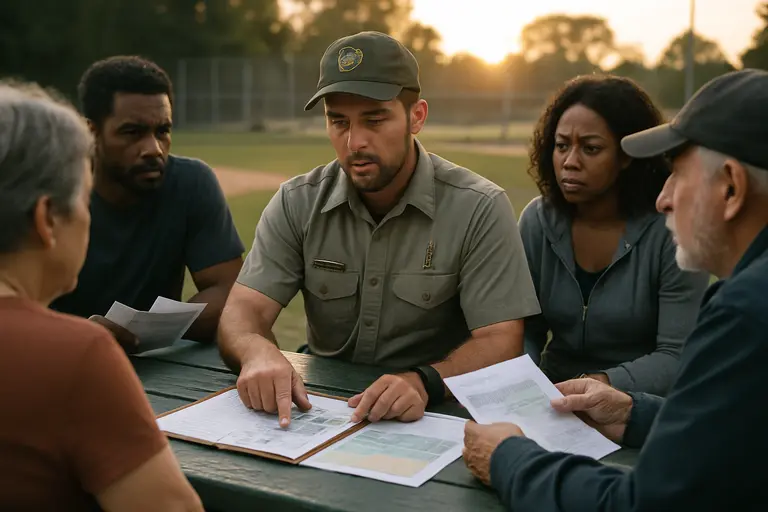
A stronger access review starts with usable capacity. Agencies can report total field-hours, maintenance blocks, weather closures, set-up time, and reservation hours in the same public schedule. That approach would help parents understand why an open-looking field is not always bookable. It would also help coaches compare sites and plan rosters before registration opens.
Program leaders should also distinguish between sport-specific needs and flexible space. Soccer and flag football can sometimes adjust to shared rectangular fields, while baseball and softball need more specialized surfaces. Youth sports facilities should be assessed by the sports they can safely host, not only by acreage. That is the same access issue raised in broader discussions of community sports facilities and youth access, where construction alone does not guarantee participation if pricing, scheduling, and location do not align with families.
Set Transparent Priority Rules
When playable hours are scarce, priority rules matter. Public agencies may need to balance school teams, recreation leagues, tournament rentals, informal drop-in play, and maintenance recovery. A clear policy can reduce conflict, especially if it explains how youth-serving programs, neighborhood access, and field protection are weighted. Comparable community-sport coverage across the network, including insights from AP Levante, often returns to the same operational point: access depends on the management model after a facility is built.
- Track closures by cause: Separate weather, staffing, repairs, surface recovery, and event set-up so decision-makers can identify the main constraint.
- Publish maintenance blocks: Families and clubs can plan better when unavailable hours are visible before registration.
- Protect entry-level programs: Recreation leagues with limited budgets are often least able to relocate when a field drops out.
- Review pricing and permits: A field that is nearby but too costly or hard to book is not meaningful access for many youth teams.
Field Maintenance Shortages And Youth Access Choices
The current evidence points to a clear operational lesson: field maintenance shortages reduce youth sports access through time, safety, and affordability. The Florida example reported in September 2026 shows the sharpest outcome, with hundreds of children turned away. The Scottsdale audit shows the less visible version, where thousands of field-hours existed on paper but a significant share was blocked for maintenance or constrained by gates, closures, and set-up demands.
Communities do not need to treat maintenance as a secondary line item after construction. For youth sports, maintenance is part of the facility itself. A playable surface, working restrooms, safe lighting, and staff coverage are what convert a field from public land into usable sports infrastructure. The most useful next step is evidence-based reporting at the local level: how many hours are playable, how many are blocked, why they are blocked, and which youth programs lose access when shortages appear.