
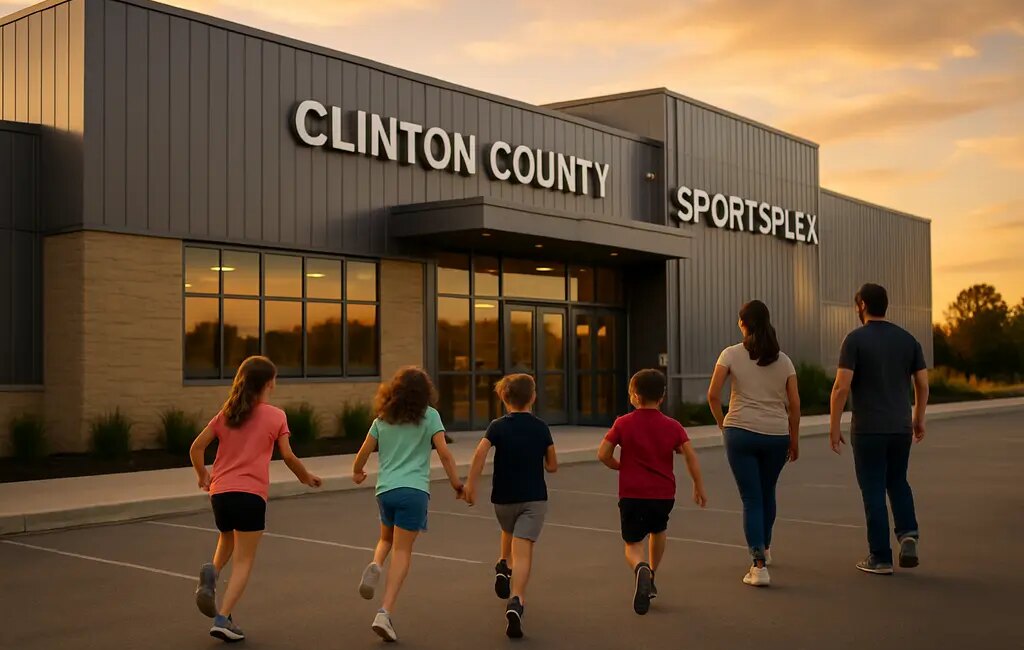
The Clinton County Sportsplex expansion in Aviston, Illinois, was announced on September 3, 2026, as a planned 15,000-square-foot indoor facility for year-round youth athletics. The clearest participation effect is not a guaranteed jump in sign-ups; it is a larger supply of practice space during winter and extreme summer weather, the two periods most likely to compress schedules for baseball, softball, volleyball, and basketball. Southern Illinois University Edwardsville reported the project details, including the indoor courts, turf space, batting cages, simulators, automated booking, and the intent to serve Clinton County and the Metro East region, in its September 2026 release.
Clinton County Sportsplex And Access Gaps
Clinton County Sportsplex For Winter Training
Indoor access is often the difference between a club that can run a stable training block and one that loses weeks to weather, gym conflicts, or limited evening slots. In Aviston, the planned facility is designed around that exact problem. The reported layout includes two full-size basketball and volleyball courts, a 5,000-square-foot indoor turf field, four batting cages, and two HitTrax baseball and softball simulators. Those assets do not automatically raise participation, but they can reduce one of the barriers that pushes families and coaches to travel farther or accept irregular practice times.
For grassroots development, continuity matters. Young athletes benefit when coaches can repeat skill work over several weeks, rather than restarting after cancellations. A volleyball team using consistent court time can work on serve receive, rotations, and controlled scrimmage periods. A select basketball group can use the same facility for shooting blocks and half-court teaching. A baseball or softball roster can shift some winter work indoors instead of waiting for outdoor diamonds to become playable.
Indoor Space As A Participation Input
The expansion should be viewed as a participation input, not a participation outcome. A new building creates capacity. Participation depends on pricing, scheduling, transportation, coaching supply, and whether local programs can secure fair access. If prime evening slots are concentrated among a small number of travel teams, the benefit may tilt toward families already active in organized sport. If open rental, clinics, and beginner-friendly blocks are part of the calendar, the facility can reach a wider group of children and teens.
This is why facility planning and youth development need to be judged together. A related analysis on community sports facilities and youth access makes the same point: construction helps most when access rules, coaching quality, safety, and cost match the needs of local families.
Facility Mix And Sport-Specific Effects
Baseball And Softball Development
For baseball and softball, the Clinton County Sportsplex gives coaches a way to separate repetition from weather. Batting cages allow high-volume swing work, while indoor turf can support throwing progressions, fielding drills, and controlled defensive sessions. HitTrax simulators add a data layer for batting practice, although the value depends on whether coaches use the information for development rather than novelty. In a community setting, the best use is practical: helping hitters understand contact quality, swing decisions, and repeatable practice routines.
Travel baseball and softball are specifically relevant because those teams often begin preparation before outdoor fields are reliable. A nearby indoor option can reduce long drives for cages or turf time. That matters for family schedules, especially during school weeks. It may also help local teams retain athletes who otherwise seek training environments outside the county.
Court Sports Scheduling
For volleyball and basketball, two full-size courts add important flexibility. Club volleyball needs enough court space for serve receive patterns, positional training, and game-like rotations. Select basketball needs space for shooting volume, ball-screen teaching, defensive shell work, and controlled scrimmage play. In both sports, the issue is not just the number of courts. It is whether the courts are available at usable times for different age groups.
A two-court facility can host simultaneous practices or small events, but it can also fill quickly if demand is high. The participation effect will depend on how operators balance club rentals, clinics, open gym periods, private training, and community events. A cautious reading of the project is that it adds needed capacity, while the distribution of that capacity will decide who benefits most.
Community Use, Booking, And Equity Questions

Mobile Reservations And Access
The Clinton County Sportsplex also introduces a mobile-app reservation model with automated payment and access, according to the announced plan. That can make bookings simpler for teams and families that are comfortable with app-based systems. It may also create friction for users who prefer direct staff support, cash payment, or informal scheduling. A facility that wants to support broad youth participation should track whether families are able to reserve space without confusion or delay.
The planned concession area and rental use suggest the building is intended to serve more than team practices. Practices, tournaments, clinics, and community rentals can create different entry points into sport. From a club-management perspective, that variety matters. A child who first visits for a birthday party or open session may later join a camp or beginner program. Still, that path only works if entry-level sessions are visible, affordable, and scheduled outside the most competitive team blocks.
School And Club Base
Available community data also points to a stable local base for youth activities. The Aviston Elementary PK-8 profile in the Clinton County executive summary lists relatively low low-income and mobility rates for the district, which can indicate a school community with continuity around extracurricular routines and parent volunteer networks, based on the Clinton County executive summary. That does not prove high sports demand, but it supports a reasonable reading that local programs may have the family stability needed to use scheduled training opportunities.
For a broader view of how such facilities impact local sports ecosystems, SportsWire News offers comprehensive coverage of related facility and participation stories across the wider sports network. The Aviston case fits a common pattern: smaller communities trying to keep more player development time close to home rather than sending families to larger regional hubs for indoor training.
- Access question: Will beginner sessions receive protected times, or will club rentals dominate the schedule?
- Coaching question: Will clinics support skill teaching across age levels, not only advanced travel players?
- Cost question: Will rental and camp prices allow regular use by families outside the core travel-sports market?
- Measurement question: Will operators track youth usage by sport, age group, and type of program after opening?
Aviston Youth Sports Participation Signals
What Can Be Measured After Opening
Because the facility had not yet completed its first operating cycle as of September 14, 2026, the participation impact should be measured after use begins rather than assumed. Useful indicators include the number of youth practice hours booked each month, the share of court and turf time used by local teams, the number of first-time clinic participants, and the balance between travel programs and entry-level offerings. Tournament traffic and regional rentals may help the business case, but youth development should be assessed through repeat access and coaching quality.
Construction milestones show the project moved from concept into active buildout in mid-2026. The groundbreaking occurred on July 14, 2026, and main construction was reported as beginning in early to mid-August 2026. The scheduled fall 2026 opening places the facility near the start of the indoor-heavy training period for court sports and the winter preparation window for baseball and softball. That timing could make the first winter a meaningful test of demand.
Why The Expansion Matters For Aviston
The Clinton County Sportsplex should be assessed as a local sports infrastructure project with regional reach. Its value for Aviston youth sports will come from repeatable training time, reduced travel pressure, and wider program options. The facility mix is well aligned with travel baseball, club volleyball, select basketball, and indoor turf needs. Yet participation growth will require more than square footage. It will require transparent scheduling, age-appropriate coaching, and access points for athletes who are not already inside competitive club systems.
For Aviston, the strongest case is practical. A 15,000-square-foot indoor facility cannot create interest in sport by itself, but it can give coaches, families, and young athletes a place to practice when outdoor fields and school gyms are not enough. If the operating model protects both competitive training and entry-level use, the project has a credible path to strengthening youth sports participation across Clinton County and the Metro East region.