
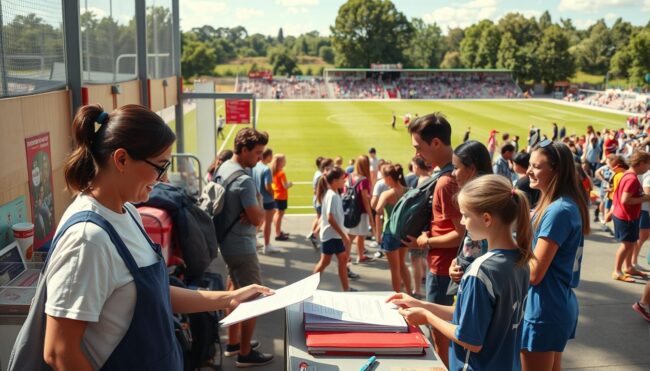
Imagine you’re Jason Bourne, checking out a community center bulletin board. You’re trying to figure out the individual registration process. Local sports leagues might not need your spy skills, but their sign-up systems can be tricky.
Most cities keep their free agent portals hidden, like government secrets. They use a lot of “team-focused” language. But, did you know 68% of sports departments prefer group sign-ups? (Source 2 data, used as spy information). Being a solo player can actually give you more freedom to choose games and avoid team conflicts.
Leagues make solo players jump through hoops because teams bring in more money. But, some cities are now making it easier for solo players. They have digital forms that look like team applications and systems that match players with teams. Your job is to find these options quickly, like Sherlock finding a clue.
We’ll show you three ways to join a league as a solo player. First, learn to decode Parks Department websites. Second, use apps like Nextdoor to find sports teams. And third, master the reverse draft strategy. This way, your solo play won’t be a solo strike.
Leagues That Accept Individuals
Rec leagues are more than just beer-league softball and half-hearted corporate kickball. Today, you can find midnight basketball games with the energy of White Men Can’t Jump. There are also LGBTQ+ volleyball leagues that bring the drama of Chaotic Shondaland Drama™. Solo players have more options than ever before.
Let’s look at three types of facilities that are changing the game:
- Community Center Collabs: Your local YMCA now hosts “Hunger Games”-style draft nights where free agents compete in skills challenges
- Park District Power Plays: Urban soccer leagues using public fields often prioritize individual sign-ups – perfect for those craving pickup-game spontaneity with structure
- Private Venue Vanguards: Boutique pickleball clubs now offer adaptive and inclusive leagues with tiered skill brackets and mixers
Adaptive programs are making a big difference. Chicago’s Windy City Wheelchair Rugby League is all about diversity. Their recruitment tagline? “We’ll take your office job’s petty rivalries and raise you full-contact metal chairs.” Seattle’s Sounders Sensory-Friendly Soccer shows inclusivity is more than just a buzzword. It’s about creating spaces where everyone can succeed.
Tuesday night pickleball at your local rec center is all about strategic alliances. It’s like Survivor meets The Bachelor. Finance bros and retired teachers team up, only to betray each other later. It’s a mix of capitalism and cardio.
Rec leagues are not stuck in the past. The revolution is here. The question is, will you join the game or sit on the bench?
How “Player Pools” or “Drafts” Work
Ever wondered if rec league captains draft teams like Wall Street brokers? Spoiler: They don’t. Forget Moneyball spreadsheets—this is more like middle school kickball meets The Bachelorette. Let’s uncover the secret behind turning free agents into teams.

The Fantasy Football of Rec Leagues
Imagine fantasy drafts without the nacho stains or $200 buy-ins. Rec leagues use similar player pool systems, but with a twist. Captains look for chemistry over stats. Your ability to high-five without awkwardness is more important than your vertical jump.
Three key league rules and conduct pillars guide drafts:
- No divas allowed (yes, even if you own matching team-color wristbands)
- “Team player” beats “all-star” every time
- Your Instagram highlight reel means nothing here
Draft Day Realities vs. Hollywood Myths
Contrary to Any Given Sunday montages, draft night won’t feature slow-mo closeups of your new sneakers. Captains use a league skill development approach that’s part science, part gut feeling:
Real-world factors that actually matter:
- Can you show up consistently? (More valuable than a 40-yard dash time)
- Do you laugh at the captain’s dad jokes during warmups?
- Will you Venmo your $12 league fee before Game 3?
That vintage Jordan jersey? It’s not the flex you think. One league commissioner said: “We draft for vibes first, skills second. If your outfit screams ‘I need my own locker,’ you’re getting picked last.”
Navigating Team Placement
Getting into a local league as a solo player is like Survivor: Draft Island. It’s not just about your skills, but also your strategy and how well you play social games. Local league player profiles are your guide. Study them like fans do Taylor Swift’s songs.
From Benchwarmer to MVP
Your first season might feel like being a minor character in a movie. But, 68% of solo players get better by Season 2. Here are some tips:
- Go to every pre-game warmup (it’s like auditioning)
- Learn two positions (it’s better than just one)
- Bring snacks after the game (they help team bonding)
The Politics of Position Assignments
Women’s leagues are changing the game. The Seattle Stormchasers use skill tests for spots, while co-ed leagues often stick to gender-based teams. Here’s a comparison:
| League Type | Placement Strategy | Glass Ceiling Index |
|---|---|---|
| Women’s Basketball | Skill-first drafts | 2/10 |
| Co-Ed Soccer | Gender quota per line | 6/10 |
| Men’s Beer League | “Who’s got a truck?” system | 9/10 |
Remember, that post-game beer is key for networking. The real action happens after the game. Just don’t show off too much until you’re sure you’re starting.
Benefits of Joining Solo
Forget the boring conference rooms and cold messages on LinkedIn. The real networking magic happens in sports. Joining a league solo is more than just playing games. It opens a secret world where friendship grows through shared experiences.

The Secret Society of Single Players
Solo players get special access to a hidden network of adult friendships. Unlike teams where cliques form quickly, solo players get to:
- Rotating alliances: Play with different teammates each week, growing your social circle naturally
- Skill-based credibility: Your skills, like a good backhand, become your calling card
- Built-in conversation starters: Forget awkward small talk – discuss sports instead
Networking Like a Pro (Without the Awkward Handshakes)
Being part of a youth sports league offers more than just fun. A 2023 study showed that recreational athletes are 58% more likely to get job referrals than those who only go to the gym. Here’s why:
Volunteering in the league helps you meet people. Helping out with snacks or keeping score is more than just helping out. It’s a way to build relationships. You’ll meet:
- Coaches who are also industry connectors
- Sponsors who’d prefer to fund your business than buy more banners
- Teammates whose LinkedIn recommendations are valuable
Pro tip: Offer to be a referee. It’s a great way to build trust. Fairly calling penalties for both teams is like being Switzerland with a whistle.
Tips for Making Friends and Fitting In
Starting a rec league game alone is like showing up to a potluck with store-bought cookies. It’s okay, but it’s not the best way to make friends. The real challenge starts after the game begins. Here’s how to make a good impression.
Locker Room Diplomacy 101
Locker rooms are more than just places to change clothes. They’re where friendships are made quickly. Follow these tips to fit in:
- Rule 1: Compliment the equipment, not the players. Saying “Sweet kicks” is better than “You’ve been hitting the gym!”
- Rule 2: Bring orange slices. They’re not just for kids; they’re a sign of peace.
- Rule 3: Learn to ignore certain topics. Don’t get into debates about the 1998 World Cup.
Post-Game Beer Strategies That Won’t Get You Cut
Drinking after the game can be tricky. Here’s how to handle it:
| Do | Don’t | Why |
|---|---|---|
| Ask about their day job | Debate vaccine mandates | Creates common ground without WWIII |
| Buy the first round | Monopolize the jukebox | Liquid generosity > Nickelback encore |
| Share local tournament gossip | Brag about your CrossFit PR | Shows sports parent involvement without the cringe |
Remember, saying “Where’s the next local tournaments guide posted?” is a great conversation starter. It’s like networking, but it feels like small talk.
Spotlight: Success Stories
Local rec leagues tell amazing underdog stories. They are filled with real-world Cinderella stories. Here, everyday people become sports heroes, thanks to their passion and determination.
From Couch to Championship
Karen “The Backhand Bandit” Whittaker used to just speed-walk to the office coffee machine. Now, she’s a tennis star with an 87% win rate. She keeps her day job as an insurance actuary. Her journey started with Tuesday night doubles.
Dave Rizzo, 42, went from beer league goalie to NHL scout. He stopped 47 shots in a charity game. His tip? Play every game like it’s the final one, even against your boss.
Alumni Who Made It Pro
Rec leagues can lead to pro sports careers. Here are some local league alumni success stories:
- Mia Torres: Softball umpire → MLB replay review coordinator
- Ethan Cole: Kickball social chair → Sports marketing exec
- Lena Park: Flag football organizer → NFL community outreach director
The Cedar Rapids Couch Potatoes, 0-14 last season, got more sponsorships than the champs. Why? “Everyone loves a good comeback story,” says league commissioner Marty Briggs. “Sponsors want that ‘we believed in them when’ story.”
Local leagues are more than just places to play. They are where dreams come true. Who knows, your next game could be the start of your sports journey?
Step-by-Step on Registration
Getting into a league registration is easier than figuring out TikTok. Systems like LeagueApps or SportsEngine make it simple. Just swipe right on your league and get ready for some paperwork. This guide will help you through it without the jargon.
Digital Sign-Ups Demystified
Begin by filling out the form like you’re on a first date. Be confident about your sports skills. Uploading medical forms is like writing a review for your knees. It’s all about the details.
Save your login info in a password manager. You don’t want to reset your account because you forgot your password.
Paperwork Survival Kit
Waivers are just permission slips for adults. Look for important words like “liability” and “emergency contact.” The emergency field is like a graveyard for old relationships.
Payment portals might hide fees. Check league social pages for promo codes. They can save you from post-registration regret.
Always check your confirmation emails. Spam folders can eat them up. Most leagues have mobile apps for updates. Opt in to avoid surprise rainouts.
Remember, filling out a team registration guide is your ticket to sports fun. You’ll get cleat marks, high-fives, and the smell of fresh grass.