
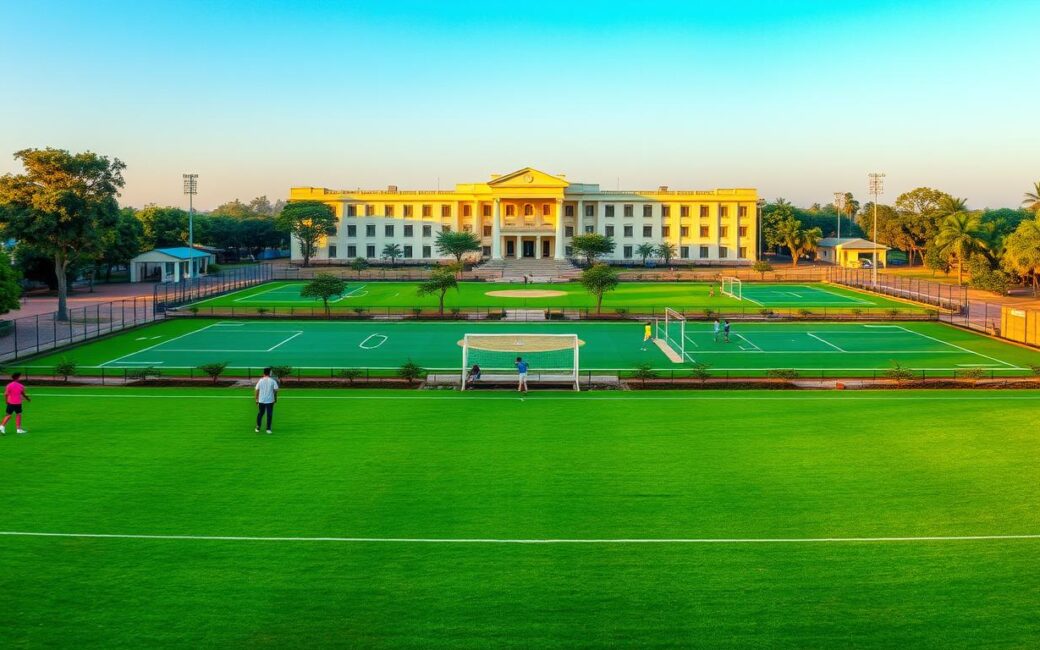
This choice is more than just about the field. It’s about access versus exclusivity. It’s about community spirit versus a curated experience.
I’ve seen both sides. The lively chaos of a municipal pitch at sunset. And the calm, scheduled world of a private club. Your decision is deeply philosophical.
First, let’s look at the players. “Public” means government grounds and community pitches. They’re funded by our taxes and open to everyone. You can see this at a local government institution, where access is a key part of their mission.
“Private” is different. It’s for-profit academies and clubs where you pay to play. The atmosphere changes from a public park to a private party.
Understanding this difference is your first step. It helps you make a choice that won’t leave you unhappy or broke. For more on the choice for athletes, the contrast in rules and reality is where the real game begins.
Cost Comparison (hourly, membership, deposits)
Let’s talk about what really matters: your wallet. In Ambikapur, public and private sports facilities have different pricing. It’s like they’re following different economic rules.
Public courts and fields charge by the hour. It’s like eating at a casual restaurant. You pay for your time and leave. The cost is low, and there’s no long-term commitment.
This model is fair. But, you might face long wait times. A low hourly rate can feel like a gamble if courts are always busy.
Private venues are like exclusive streaming services. They want you to join. The club membership fee gives you access to everything. It’s not just a fee; it’s a status symbol.
So, which one saves money? Let’s calculate. Imagine a private academy charges ₹300 per hour. Their annual club membership is ₹15,000. If you play once a week, that’s 52 sessions a year.
- Pay-per-use at the private rate: 52 sessions x ₹300 = ₹15,600.
- Annual Membership: ₹15,000.
In this scenario, the membership is almost a break-even. Play more, and you save money. Play less, and it’s a pricey loyalty card. Public pay-per-use might be cheaper, but can you get a slot when you want it?
Then, there’s the security deposit. It’s the facility’s insurance against damage or missed payments. Private clubs often ask for a big deposit. Public facilities might ask for a smaller deposit for equipment or court keys.
Is the predictability of a club membership worth the extra cost? For serious players, yes. The guaranteed slot is priceless. For casual players, pay-per-use might be better.
The real cost is more than just the price. It’s about the value of your time, the reliability of your workout, and the peace of mind. Choose the model that fits your life, not just your budget.
Availability & Peak‑Hour Access
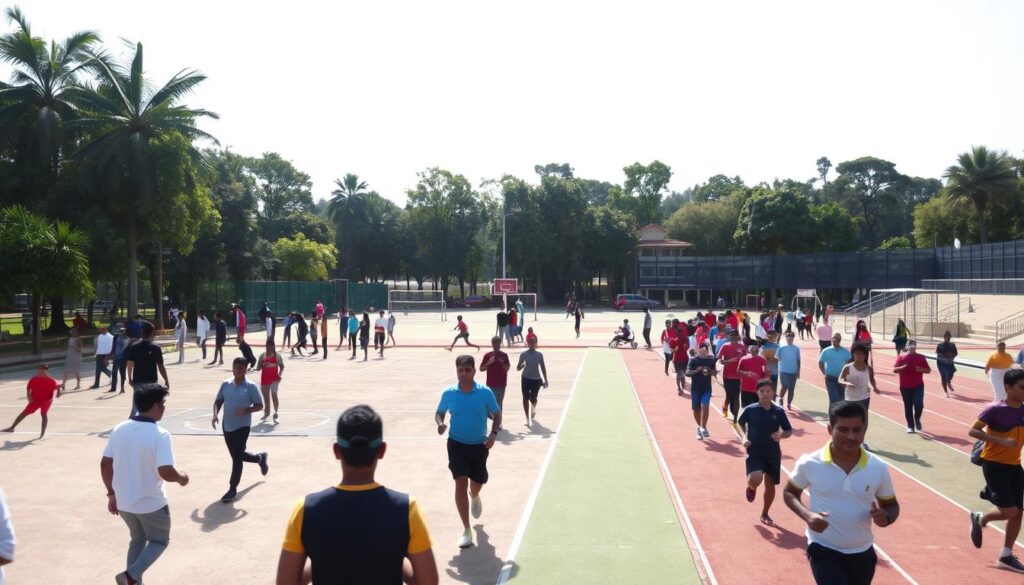
Imagine showing up at the public court ready to play, only to find it full of a local league. Your evening plans are ruined. This is what happens in Ambikapur’s public sports areas. They follow a simple rule: first come, first served.
Your dream game can be ruined by a school event you didn’t know about. The rush after work and weekends make these places very competitive. Everyone wants the same spot.
Private facilities offer a big advantage: you can book a time. It’s like getting a table at a popular restaurant without waiting. This is their main selling point.
But, this privilege comes with a cost. You might have to pay a membership fee or a high hourly rate. You also need to plan ahead, sometimes weeks, to get a good time slot.
The main issue is between wanting to play spontaneously and knowing you can play. Public courts offer spontaneity but you might have to wait. Private courts offer certainty but cost more and take away spontaneity.
| Aspect | Public Facilities | Private Facilities |
|---|---|---|
| Booking System | None. Pure first-come, first-served. | Online/phone reservation system is standard. |
| Peak Hour Reality | High congestion. Likely wait or full denial of access. | Guaranteed access if booked. No waiting. |
| Prime Time (Weekends/5-8 PM) | Extremely competitive. Arrive very early or forget it. | Slots are limited and book quickly. Premium pricing may apply. |
| Planning Horizon | Zero planning. Just show up and hope. | Requires advance planning, often 48+ hours for good slots. |
| Hidden Calendars | Check municipal websites for league schedules. | Booking portals show real-time availability. |
To deal with the availability issues, knowing the public courts is key. Look for the best times to go. Follow local community boards online. Learn when leagues leave.
For private courts, booking is like getting concert tickets. Set reminders for when slots open. Members often get booking advantages over non-members.
The choice is deep. Do you like the chaotic, democratic public courts? Or do you prefer the calm, scheduled private courts? In Ambikapur, your choice affects your sports life a lot.
Coaching & Equipment Rental Differences
Public courts are like jam sessions, while private academies are like masterclasses. Your choice is no longer about the location but about your goals. Do you want the raw joy of playing or a structured path to get better? The difference is huge, like the gap in a tennis court.
At public fields or courts, coaching is usually on your own. You might find a passionate coach renting a corner. The quality and style can vary like the weather. It’s like a pickup band, thrilling but unpredictable.
Equipment rental here has character. Think of communal basketballs and soccer cones that have seen a lot. Volleyballs bear the scars of a thousand games. It’s functional, affordable, and tells a story, often involving duct tape.
Enter the world of private academies, and everything changes. Coaching is a key part of the deal. It’s consistent and built on a plan. The equipment shows this too.
- The Public DIY Model: Coaching is ad-hoc or self-taught. Equipment is communal, well-loved, and budget-friendly. You’re paying for access, not guidance.
- The Private Academy Package: Coaching is professional, structured, and a core sales pitch. Equipment is newer, better-maintained, and often included in your fee. You’re investing in a system.
So, what are you really choosing between? Public courts offer freedom and low costs. You can play at your own pace and find great coaches. Private academies promise measurable progress. Your fees cover the space and the expertise to use it well.
It’s a classic trade-off. The self-directed journey is cheaper but you face challenges alone. The guided experience is pricier but comes with a map and a guide. It’s about whether you want the adventure or the blueprint.
Amenities & Upkeep: what typically varies
Amenities and upkeep are key in your sports facility contract. They show value without words. Public places set expectations low. Private ones promise a full experience. The difference is more than just clean floors.
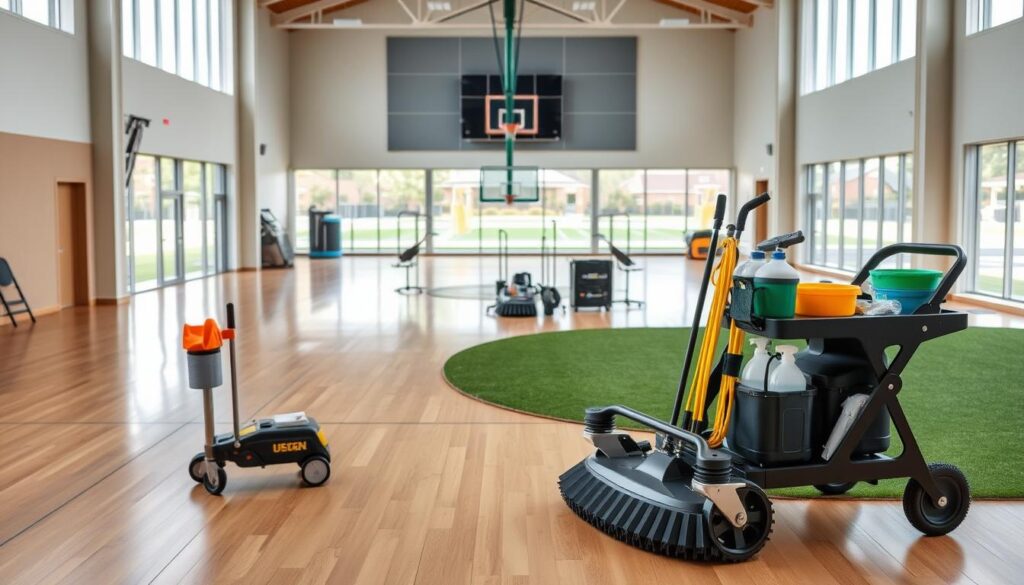
Public facilities have a clear maintenance schedule. It’s like fixing potholes. The grass gets cut, but lines might fade. Bathrooms work, but soap is often missing.
This isn’t neglect. It’s about budgeting. Money spreads thin across many projects. Your court is just one part of a big budget.
Private facilities focus on maintenance as a marketing tool. A broken bench is a failure. They offer clean locker rooms and air-conditioned lobbies. It’s all about image.
But is this image worth more money? We need to know what’s important and what’s just fancy.
| Amenity Feature | Public Facility Reality | Private Facility Standard | Game Impact Score (1-5) |
|---|---|---|---|
| Locker Rooms & Showers | Basic, functional. Often communal and dated. | Private stalls, consistent hot water, clean towels sometimes available. | 3 (Important for leagues/post-game) |
| Field/Court Maintenance | Reactive. Fixed when complaints pile up or budget allows. | Proactive schedule. Even surfaces, fresh nets, precise markings. | 5 (Critical for safety & performance) |
| Lighting Quality | Often uneven. Some dark spots, even in older buildings. | Professional-grade, uniform illumination for optimal visibility. | 4 (Affects play quality and eye strain) |
| Water & Snack Access | Maybe a water fountain. Vending machine is a 50/50 gamble. | On-site cafe, hydration stations, energy bars for sale. | 2 (Nice convenience, not essential) |
| Equipment Storage | Minimal. “Leave at your own risk” is the unspoken policy. | Secure, monitored lockers or cubbies for members. | 3 (Valuable for regular players) |
Is perfect grass worth a big price hike? For casual players, probably not. But for serious leagues, good maintenance is key. Private facilities offer top-notch maintenance. Know what you’re paying for.
It’s all about what you value. Do you want perfect playing conditions or just basic facilities? Your choice shows where you stand on the amenities divide.
Permit/Insurance Considerations for Events
Planning events in Ambikapur’s sports facilities means dealing with permits and insurance. Whether it’s a charity soccer match or a corporate cricket tournament, the rules off the field are different. Understanding permits and insurance is key. Get it wrong, and your event could face big challenges.
At public facilities, you need a permit to host an event. This is not a simple online form. It’s a journey through various departments. The process is slow, and the outcome is not always clear.
Insurance for events at public venues is your responsibility. The city’s insurance covers them, but you need your own for your event. You must get a general liability policy and name the city as an additional insured. Without this, your event could be canceled.
Private facilities offer a different deal. The permit process is faster and more straightforward. But, you have less control over the venue.
Private venues have strict insurance rules. You’ll sign a contract with many clauses and waivers. They might require specific coverage amounts and premiums. This is to protect their assets and reputation.
So, how do these paths compare? The table below breaks down the key bureaucratic battles you’ll face.
| Consideration | Public Facility | Private Facility |
|---|---|---|
| Permit Process | External; requires application to city/municipal offices. Prone to delays and opaque requirements. | Internal; handled directly with facility management. Typically streamlined and faster. |
| Insurance Requirement | You must provide your own liability policy, naming the city. Minimum coverage amounts apply. | Mandatory, often with higher minimum coverage. Facility will be named as an additional insured. |
| Typical Timeline | Weeks, sometimes months. Subject to government processing speeds. | Days to a week. Dependent on facility availability and contract review. |
| Cost Implications | Permit fees are usually lower. Insurance cost is your full responsibility. | Higher rental fee often includes permit admin. Insurance cost remains your separate expense. |
| Who Bears Ultimate Liability? | You and your insurance carrier. The city’s liability is limited. | You, via stringent contractual indemnification. The facility’s waiver shields them. |
The choice between public and private facilities depends on your preference. Public facilities are cheaper but slower. Private facilities are faster but more expensive. In both cases, insurance is your silent, expensive teammate. Make sure you understand your coverage well. Your event’s success depends on it.
Decision Matrix by Player Type (youth, casual, league)
Choosing a sports facility is like casting a movie. You wouldn’t put a method actor in a slapstick comedy. The venue must fit the role. Your player profile is the script. Let’s get analytical and match the archetype to the stage.
Not all athletes are created equal. A youth athlete on a development path has different needs than a casual player blowing off steam. The organized league player operates on another level entirely. Your frequency, skill goals, and budget are the three coordinates for this map.
Below is your tactical playbook. It’s a simple matrix to cut through the marketing noise and find your genuine fit.
| Player Profile | Key Needs | Ideal Facility Type | Why It Works |
|---|---|---|---|
| The Youth Athlete | Skill development, consistent coaching, safe & quality surfaces, structured progression. | Private Academy or Specialized Club | Treats training as an investment. Prioritizes instruction over open play. The higher cost buys access to better coaching and dedicated time, which is non-negotiable for development. |
| The Casual / Weekend Warrior | Flexibility, low commitment, social fun, value-for-money. | Well-Maintained Public Facility | The pay-per-play model is king. You avoid binding memberships and only pay for the hours you use. It’s about convenience and keeping the sport a hobby, not a second job. |
| The Organized League Player | Schedule reliability, block booking access, professional-grade equipment, league amenities. | Private Sports Complex | Needs the logistical power and guarantee that a public pitch can’t always offer. Private facilities cater to teams with block bookings, consistent slot times, and often include referee services. It’s a business transaction for guaranteed play. |
See the pattern? For the youth athlete, it’s a long-term investment in skill. The private route often makes sense, even if it pinches the wallet. You’re buying a curriculum, not just court time.
The casual player thrives on freedom. A high-end private club’s membership fee is like paying for a gym you’ll only visit twice a month—a fiscal tragedy. A clean, safe public field is your sweet spot. For more on evaluating clubs, our guide on how to choose the right sports dives deeper.
Lastly, the league player operates like a general. You need strategic control over the battlefield—reliable scheduling, proper lighting, and space for your team. A private complex becomes your home base.
This decision matrix isn’t about good versus bad. It’s about fit. A youth athlete at a busy public court might get inconsistent training. A casual player in a rigid academy will feel overcommitted. Map your profile against the core offerings. Your perfect sports facility is the one that aligns with your game, not just your Instagram feed.
Real‑World Scenarios & Sample Budgets
The debate between public courts and private clubs isn’t won with opinions, but with a calculator and a year’s worth of receipts. Let’s move from abstract pros and cons to concrete, Ambikapur-adjacent math. We’ll profile three local archetypes and pit their annual public facility costs against private club alternatives.
Meet our contenders: The Dedicated Dad coaching his kid’s team twice a week. The Casual Football Crew with their sacred Sunday morning ritual. The Aspiring Tennis Pro grinding toward a scholarship. Their goals differ, and so will their optimal facility choice.
Below is the financial face-off. All figures are annual estimates based on typical Ambikapur rates. We’ve factored in the obvious (hourly fees, memberships) and the often-overlooked (equipment wear, travel, incidental costs).
| Scenario & Annual Use | Public Facility Route (Estimated Annual Cost) | Private Club Route (Estimated Annual Cost) | The Verdict & Why |
|---|---|---|---|
| The Dedicated Dad Youth team coaching, 2x/week for 40 weeks. |
$1,200 (Court rental @ $15/hr, no equipment storage, separate insurance) |
$1,800 (Full family membership includes court booking, storage, liability coverage) |
Private wins for serious organizers. The $600 premium buys predictability, storage, and cuts administrative hassle. Value exceeds the gap. |
| The Casual Football Crew Sunday games, 48 weeks/year. |
$960 (Public field @ $20/hr, bring your own balls) |
$2,400 (Individual social membership @ $50/month) |
Public is the clear champion. The crew’s infrequent use can’t justify a monthly fee. Pay-as-you-play math is unbeatable here. |
| The Aspiring Tennis Pro 4x/week practice + 2x/week coaching for 50 weeks. |
$4,800+ (Court time @ $24/hr, plus $50/private lesson = ~$6,800 total) |
$3,600 (Premium membership with unlimited court time, group clinics included) |
Private club value explodes. High volume turns the “sticker shock” membership into a steep per-hour discount. Coaching packages add more savings. |
See the twist? The “cheap” public option isn’t so cheap if you’re a power user. For The Aspiring Tennis Pro, the private club saves over $3,000 annually. That’s a vacation, or a lot of new gear. The club’s unlimited court time model rewards frequency like a bulk discount.
Conversely, The Casual Football Crew would be flushing money down a drain with a membership. Their sporadic schedule is the perfect customer for the city’s pay-per-use system. This is where the private club’s value proposition collapses.
The Dedicated Dad sits in the nuanced middle. The public route seems cheaper on paper. But factor in the hours spent re-booking courts, hauling gear, and worrying about permits? The private club’s premium buys back your time and sanity. For a committed volunteer, that’s often worth every penny.
So, what’s the takeaway from our Ambikapur sample budgets? Your perfect facility isn’t about public or private. It’s about your personal algorithm of frequency, convenience needs, and yes, your tolerance for administrative friction. Run your own numbers. The answer might surprise you.
Checklist: What to Ask Before You Book
Think of this as your smart research checklist. Choosing a sports facility in Ambikapur should be a well-informed decision. Use this guide to see through the marketing and find the real deal.
First, ask the basic questions. What’s the availability like during busy times? What does the fee include—like lights, equipment, and water? Also, what happens if you need to cancel?
Then, dive deeper. For public places, find out about the permit process. Is it easy or complicated? How fast does the maintenance team respond to problems?
Private clubs require a detailed look. Ask for a clear breakdown of all fees. Are there any hidden costs for certain times? Are the coaches certified or just passionate?
This isn’t just a list. It’s your guide to making smart choices. The right questions save your time, money, and effort. Your next booking should be a confident choice, not a guess.