
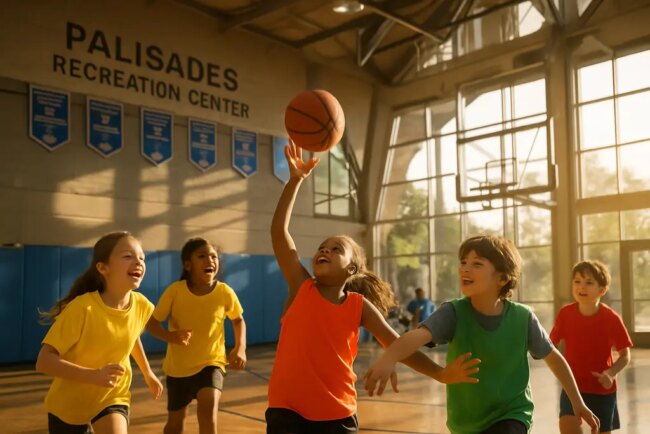
The reconstruction of Palisades Recreation Center has become a closely watched case in community sports recovery because it links disaster repair, youth access, donor funding, and public oversight in one local facility project. The center was partially destroyed and severely damaged during the January 2025 wildfires, and Los Angeles officials later moved the rebuild through a public-private structure rather than a standard city-only capital project.
For coaches, club managers, and recreation planners, the main question is practical: can a damaged neighborhood venue return with better sport function, broader community use, and clear accountability? The available record supports a cautious answer. The project has shown meaningful public engagement and a defined facility program, but its long-term value will depend on operations after construction, not only on design drawings or ceremonial milestones.
Why Palisades Recreation Center Matters
Palisades Recreation Center Damage And Access
Before the rebuild, the site served as a local sports and civic asset in Pacific Palisades. After the fire damage, the Los Angeles Department of Recreation and Parks listed all recreation programming at the facility as suspended until further notice, with programs relocated during the rebuild period, according to the department’s Palisades facility page. That suspension matters because recreation centers are not only buildings; they are scheduling hubs for youth leagues, informal play, coaching sessions, and community events.
The January 2025 damage also exposed a common issue in older municipal sports facilities: restoration is rarely just replacement. Research notes for the project reported that the former multipurpose center had an outdated kitchen, cramped administrative offices, a non-regulation basketball court, and severely aged infrastructure. In sport terms, those conditions can limit practice design, restrict safe circulation during peak league hours, and reduce the ability to host mixed-age programs on the same day.
What The Rebuild Changed In Planning Terms
On April 10, 2025, the City of Los Angeles, Steadfast LA, and LA Strong Sports announced a public-private partnership to fund, redesign, and rebuild the damaged site. LA Strong Sports was co-founded by Lakers coach JJ Redick, and the announcement placed private philanthropy alongside city ownership and public recreation goals, as described by the Mayor’s Office announcement.
The partnership model is notable because youth sport demand often rises faster than municipal capital budgets. A donor-funded project can move faster than a traditional public works path in some cases, but that advantage should be balanced with public access rules, transparent scheduling, and long-term maintenance planning. In this case, the research record states that no taxpayer funds were used and that funding came from philanthropic donors. Reported project cost figures varied, with some accounts citing more than $50 million and other articles citing $40 million, possibly reflecting funds raised to date rather than full budget exposure.
Design Choices And Youth Sports Use
Indoor Courts, Outdoor Fields, And Mixed Programming
The planned site covered about 17 acres and included both indoor and outdoor assets. The listed features included two indoor basketball courts, two indoor pickleball courts, two lighted outdoor basketball courts, a U10 soccer field, bocce courts, a two-level playground with embankment slides, an enlarged lobby, multiple community rooms, a Veterans Garden, and a central gathering space called the Pali Hub.
From a grassroots sport perspective, this mix matters. Two indoor basketball courts can support simultaneous team practices, age-group clinics, or half-court skill blocks. Indoor pickleball adds adult and senior participation without removing court-based activity from the project. A U10 soccer field is also significant because early-age football development depends less on large venues and more on reliable, appropriately sized spaces that allow touches, repetitions, and coach feedback.
One useful comparison is the wider question of how new venues serve young athletes after opening. Facility construction alone does not guarantee participation. Pricing, scheduling, safe access, coach availability, and equipment storage all shape use. That same access issue is addressed in our related analysis of community sports facilities and youth access, where operational choices are treated as important as the building itself.
Facility Design As A Coaching Tool
Good recreation design gives coaches more than playing surfaces. It creates predictable arrival points, spaces for parent communication, storage areas, meeting rooms, and recovery gaps between sessions. The planned enlarged lobby and community rooms could support coach education, league meetings, youth mentoring, and multi-generational activities if managed with those uses in mind.
The outdoor lighted basketball courts may also increase scheduling flexibility. Evening access can help families who cannot participate directly after school. Still, lighting, staffing, noise management, and neighborhood coordination will determine how much usable time the courts actually provide. For a public recreation site, hours on paper and hours used by teams are not always the same measure.
Community Engagement And Project Governance
Public Meetings And Local Stakeholders
The Palisades Recreation Center planning process included multiple community touchpoints. A virtual public meeting was held on June 3, 2026, from 6:00 to 7:00 PM to present updated facility designs. The gymnasium, part of the brick multipurpose center built in 1950, was demolished in early June 2026 as the rebuild process advanced.
Research notes also identified local groups and stakeholders involved in early design collaboration, including the Pali Community Center Committee, LA Parks Foundation, PaliStrong, Pali 4 Pali, Veterans Gardens’ Jimmy Dunne, and the Pacific Palisades Baseball Association. For a neighborhood sports project, that range is valuable because recreation centers serve users with different priorities: youth leagues need protected practice slots, older adults may need daytime court access, families need playground safety, and civic groups need meeting space.
On September 17, 2026, an official groundbreaking ceremony was held to begin construction on the recreation center and surrounding park. Participants included Mayor Karen Bass, Rick Caruso and Steadfast LA, LA Strong Sports, Councilwoman Traci Park, and others. The event marked a shift from planning to construction, but the key public test will come after opening: whether the promised mix of sport, civic, and open-space functions is managed fairly.
Why Engagement Must Continue After Construction
Community engagement is often strongest when a project is being designed, but recreation centers succeed over years, not at one meeting. After opening, useful measures would include participation by age group, court utilization, youth league waitlists, affordability of programs, coach training hours, and maintenance response times. The research record does not provide those figures, so any claim about future participation or social return would be premature.
There is also a governance lesson for other fire-affected or aging sports sites. Public-private delivery can bring funding and professional design capacity, but public recreation departments still need clear policies on access, insurance, programming, and maintenance. A new gym can reduce facility strain, but only if scheduling protects community users rather than favoring the loudest or best-connected groups.
For broader coverage of community projects in the same publishing network, the platform noticiasbo offers related public-interest reporting that can assist in comparing civic investments across varied local contexts.
Funding, Timeline, And Risk Points

Cost Clarity And Construction Schedule
The budget picture should be read with care. The research notes report more than $50 million as the budgeted cost in some sources, while other coverage cited $40 million. Without a single reconciled public budget line in the provided record, the safest interpretation is that the project was a major donor-funded rebuild with reported figures that differed by source and timing.
The expected construction duration was reported as 14 to 16 months once construction was under way. Since the groundbreaking occurred on September 17, 2026, that timeline points to a completion window after September 28, 2026, assuming no major delays. Weather, permitting, material supply, and field conditions can affect any construction project, so schedule discipline should be judged against dated public updates rather than early estimates alone.
Operational Risks For Sports Users
The risk most relevant to grassroots sport is not only whether the buildings are completed. It is whether families regain dependable programming. During the suspension period, activities were relocated, which can create travel burdens and reduce participation for families without flexible transport. When a local venue reopens, program design should account for those users who may have dropped out during displacement.
Another risk is imbalance between sport types. Basketball, pickleball, soccer, bocce, playground use, gardens, and community rooms all have legitimate users. The strongest facility model will publish clear schedules, protect youth development windows, and reserve time for casual community play. That approach reduces conflict and gives coaches a stable base for season planning.
Palisades Recreation Center Rebuild Model
The Palisades Recreation Center rebuild offers a useful model, but not a finished proof point. The evidence shows a donor-funded public-private project, defined sport and community spaces, public meetings, local stakeholder involvement, and a construction start on September 17, 2026. Those are meaningful steps for facility restoration after disaster damage.
The next measure is performance. If the rebuilt center delivers affordable youth access, safe courts and fields, transparent scheduling, and steady maintenance, it can become a strong reference case for community sports recovery. If those operations fall short, the project will still be a major reconstruction, but a weaker model for grassroots development. For now, its best lesson is clear: rebuilding a recreation center should restore the venue, improve the sport environment, and keep the community involved after the ribbon is cut.