
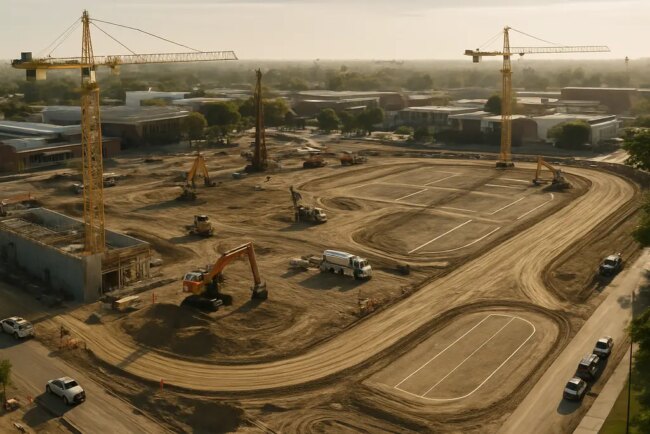
The LBCC Athletics Complex has moved from planning to construction after Long Beach City College held a groundbreaking ceremony on September 9, 2026. The $250 million Stadium and Athletic Sports Complex is expected to open by Summer 2029, and LBCC has described the project as approximately 285,453 square feet with a 10,000-seat outdoor stadium and a 2,500-seat indoor arena, according to the LBCC project release.
For sports infrastructure analysis, the headline cost is only part of the story. The more useful question is how the rebuild changes training space, event capacity, athlete services, and campus operations. The available records support a clear reading: this is not a single-venue upgrade. It is a campus-scale reorganization of athletic space at the Liberal Arts Campus.
LBCC Athletics Complex Site And Scale
Why The LBCC Athletics Complex Scale Matters
The LBCC Athletics Complex is planned on an approximately 18-acre site at the Liberal Arts Campus, replacing the aging Veterans Memorial Stadium. The state project filing also describes demolition of about 40,783 square feet of existing stadium structures as part of the replacement and reuse plan, according to the CEQA project filing.
That scale matters because college sports facilities often fail at the points where daily use is heaviest: practice blocks, sports medicine access, indoor overflow space, and shared locker or classroom demand. A 10,000-seat outdoor stadium and 2,500-seat indoor arena give the project two distinct event cores. The stadium can support larger outdoor contests, while the arena creates a controlled indoor setting for sports such as basketball and volleyball.
| Project Element | Reported Detail | Infrastructure Meaning |
|---|---|---|
| Outdoor Stadium | 10,000 seats | Higher event capacity for outdoor sports and campus events |
| Indoor Arena | 2,500 seats | Dedicated indoor competition space for court sports |
| Total New Facilities | About 285,453 square feet | Large multi-use athletic footprint, not a narrow stadium-only build |
| Project Site | About 18 acres | Campus-area consolidation of major athletic uses |
| Opening Target | Summer 2029 | Multi-year construction window with program scheduling implications |
What Replaces Veterans Memorial Stadium
The project replaces Veterans Memorial Stadium with a wider sports complex. Reported program elements include fields for football, soccer, and track and field; basketball and volleyball courts; training areas; sports medicine space; classroom areas; offices; concessions; and a Hall of Champions. This mix shows that LBCC is building for competition and athlete development rather than seating alone.
The practical effect is a shift from a traditional stadium asset to a multi-sport operations base. That distinction is significant for coaches and club managers because a stadium by itself mainly solves match-day needs. A broader complex can support daily development, recovery, teaching, and team administration if the finished facility is scheduled well.
Athlete Development And Campus Operations
Training, Medicine, And Classrooms In One Footprint
The planned consolidation of several decentralized athletic facilities into one campus area is one of the project’s most important operational features. LBCC has identified the Kinesiology Lab and Aquatic Center, baseball fields, and softball fields among the facilities tied to that consolidation plan. For student-athletes, coaches, and support staff, the main benefit is organizational: training, instruction, treatment, and competition spaces can be managed as part of one athletic district.
The LBCC Athletics Complex also includes classroom space, which is relevant for kinesiology and athlete education. In community college athletics, development is not limited to game-day performance. Strength work, injury-prevention education, tactical review, and academic scheduling all affect whether athletes can stay engaged through a long season. The evidence does not give exact practice schedules or staffing plans, so any estimate of daily time savings would be premature. Still, the infrastructure plan clearly moves LBCC toward a more integrated model.
Baseball Timing And Program Disruption
The baseball program is a useful reminder that major facility work can create short-term disruption before long-term benefits are realized. LBCC announced a strategic reinvestment plan that included temporarily suspending baseball competition during construction. That plan anticipated construction of a new baseball complex during the 2026-2027 academic year, with projected completion in fall 2028.
From a grassroots development view, that interruption carries real planning weight. Recruiting communication, athlete retention, community partnerships, and youth camp calendars all become harder when a program lacks normal competition rhythm. The project may improve baseball infrastructure once the new complex is completed, but the supported record only confirms the planned suspension and completion target. It does not yet show participation numbers, roster outcomes, or youth programming commitments during the construction window.
Sustainability And Construction Controls
LEED Gold As A Performance Target
LBCC has stated that the development is designed to achieve LEED Gold Certification. In facility planning, that target usually matters because sports venues have heavy lighting, conditioning, water, and event-day service needs. The supported fact here is the design goal: lower energy use, reduced environmental impact, and a healthier indoor environment have been identified as aims of the project.
For the LBCC Athletics Complex, the key test will be whether the built facility can balance intensive athletic use with sustainability targets. Indoor arenas, training rooms, and sports medicine spaces require reliable environmental control. Outdoor fields require durable surfaces and maintenance systems. The public record does not provide post-opening utility projections, so performance should be judged against verified operating data after the facility opens.
Demolition, Reuse, And Site Risk
The demolition of existing stadium structures is not just a removal task. It affects construction staging, material handling, campus circulation, and the ability to maintain safe boundaries between work zones and active college areas. The research record notes removal of about 40,783 square feet of existing Veterans Memorial Stadium structures and replacement or reuse of portions of material.
That reuse element is relevant, but it should not be overstated without more detail. The available information does not specify exact material quantities, disposal totals, or verified emissions savings. A cautious reading is that LBCC has included reuse within the project description, while the measurable environmental result will depend on construction reporting and final certification documentation.
Community Use And Event Capacity

What Larger Venues Can Change
The planned 10,000-seat outdoor stadium and 2,500-seat indoor arena expand the college’s ability to host larger events. LBCC has also stated that the complex will comply with NCAA competition guidelines and improve infrastructure for larger events and student-athlete competitiveness. The phrase larger events should be read carefully: the sources support added capacity and compliance aims, but they do not provide a confirmed event calendar after opening.
For local sports ecosystems, the value of bigger venues depends on access. A facility can help the broader community if youth tournaments, school partnerships, clinics, and affordable rental windows are built into operations. Those program details are not yet established in the supplied record. Readers comparing this project with other venue builds can review a related local analysis of the Veterans Memorial Stadium plan.
What The Evidence Does Not Yet Show
The available project information does not quantify local traffic effects, annual economic impact, parking changes, or long-term maintenance costs. Those are common questions around a $250 million campus facility, but they require official studies or post-opening data. Readers following community sports infrastructure across the same network can also find broader regional coverage at NoticiasBO, a related site providing additional insights.
This caution is especially important for community engagement. A major facility can create better settings for athletes and spectators, but equitable benefit depends on scheduling policy, pricing, transportation access, and whether local clubs can use the space. None of those details should be assumed from the construction budget alone.
LBCC Athletics Complex Infrastructure Impact
The clearest infrastructure impact of the LBCC Athletics Complex is consolidation. LBCC is replacing an aging stadium with a large multi-sport complex that combines competition venues, training space, sports medicine, classrooms, offices, concessions, and recognition areas. The project started construction after the September 9, 2026 groundbreaking and is expected to open by Summer 2029.
For athletes, the strongest supported benefit is access to purpose-built space across multiple sports. For coaches, the value is a more coherent operating base. For the college, the project creates a larger venue platform that may support expanded events once opening plans are confirmed. The evidence also shows temporary disruption, especially around baseball, which makes transparent communication with athletes and community partners essential through the construction period.
As of September 28, 2026, the project is best understood as a major infrastructure reset with clear capacity and facility gains, but with several public-use outcomes still unproven. The next meaningful measures will be construction progress, confirmed programming, access policies, and verified performance against the stated sustainability target.