
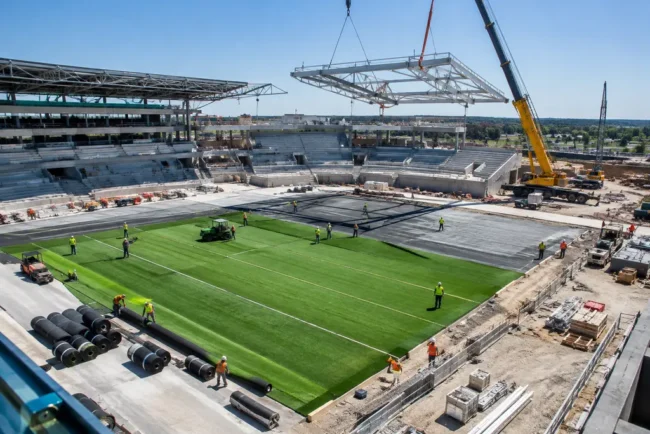
The USCA Soccer Stadium opened on September 26, 2026, giving the University of South Carolina Aiken a new $3.5 million soccer venue and giving Aiken a clearer case study in how mid-sized college facilities can affect campus athletics, visitor activity, and operating budgets. The project should not be treated as a stand-alone economic engine on the scale of a major professional stadium. Its value is more likely to come through daily usability, recruiting presentation, student-athlete experience, and a modest but repeated matchday connection with the local economy.
USCA Soccer Stadium Cost And Scope
USCA marked the opening with a ribbon-cutting ceremony on September 26, 2026, before the first home doubleheader of its 2026 home schedule, and the university described the venue as a $3.5 million project in its official announcement at USCA’s stadium notice. For a Division II athletics department, that figure is meaningful because it sits between routine field maintenance and the much larger capital programs seen at power-conference campuses.
The research record identifies several core upgrades: synthetic turf, improved lighting, new public restrooms, and field infrastructure. Those are not cosmetic details. In soccer operations, drainage, lighting, and surface reliability affect practice planning, match scheduling, and the ability to preserve a playable field after heavy rain. The replacement of the old Pacer Pit natural grass field, which had drainage problems, appears to be one of the most practical parts of the project.
USCA Soccer Stadium Capital Cost
The $3.5 million capital cost is the clearest number attached to the facility. It does not, by itself, prove a return on investment. A cautious facility analysis separates construction spending from recurring economic gains. Construction spending can support contractors, suppliers, and labor during the build period, but that effect is temporary unless the facility attracts more events, supports higher attendance, or strengthens enrollment and recruiting outcomes over several years.
For the USCA Soccer Stadium, the better early measure is utility. A synthetic surface can handle more use than many natural grass fields, especially where drainage has been a barrier. That matters for varsity teams first, but it may also affect camps, clinics, youth soccer partnerships, and community events if the university chooses to schedule them. No verified visitor-spending estimate was provided in the research, so any dollar figure tied to hotels, restaurants, or sales taxes would be unsupported at this stage.
What Changed From The Pacer Pit
The old field’s drainage issues are central to the economic discussion because poor field conditions create hidden costs. Cancellations, relocated practices, field repair, and limited community use all reduce the value of an athletics asset. A more reliable surface does not guarantee new revenue, but it can reduce scheduling friction and improve the student-athlete experience.
The new public restrooms and lighting also matter in basic venue economics. Restrooms affect spectator comfort and event readiness. Lighting expands usable hours and can make evening matches more practical. These are modest features compared with premium seating or large hospitality areas, but for a campus soccer facility they are often the difference between a field that serves only team practice and a venue that can support organized matchday operations.
Operating Costs And Budget Signals
Capital projects often draw attention on opening day, but the operating line is where long-term discipline shows up. The available state budget document lists annual maintenance, repairs, and utility costs tied to the new field at an estimated $30,000 once operational, according to the South Carolina CPIP report. That figure is small compared with the construction cost, but it still becomes a recurring obligation for the university.
From a sports facilities perspective, $30,000 a year should be read as a baseline estimate rather than a complete life-cycle model. Synthetic turf fields eventually require major replacement, and lighting, restrooms, fencing, drainage, and scorekeeping systems all age. The research does not provide a replacement reserve or a projected turf life, so the safest interpretation is that the stadium adds a manageable annual operating cost while creating future capital needs that will require planning.
Annual Maintenance Exposure
The annual cost estimate helps frame the trade-off. If the venue reduces weather-related disruption and supports more predictable scheduling, the university may gain value even without a large new revenue stream. Better facility reliability can reduce staff time spent on rescheduling and limit damage from repeated use on a wet natural surface.
Still, operating costs should be weighed against actual utilization. A field used mostly for varsity matches and practices has a different economic profile than a field that hosts camps, local club events, high school showcases, or campus recreation programming. The research supports the existence of the operating estimate, but it does not yet verify a full annual event calendar or attendance trend after opening.
Why Synthetic Turf Matters
Synthetic turf is often chosen because it can support heavier use and offers more predictable playability in wet conditions. That advantage is especially relevant where the previous grass field had drainage issues. The trade-off is that synthetic surfaces are not free of maintenance. They require grooming, cleaning, inspections, and eventual replacement.
In that sense, the USCA Soccer Stadium is a facility upgrade with both efficiency potential and asset-management responsibility. The strongest case for the field will come if it increases scheduled use without creating outsized replacement costs later. That kind of return is measured through usage logs, maintenance spending, team scheduling outcomes, and event revenue rather than opening-day ceremony language. For more details on venues like this one, similar in network context, you can find resources at efficientdirectory.com.
Economic Impact For Campus And Aiken

The stadium sits within a larger university growth story. Research notes indicate that USCA has reported more than $350 million in annual regional economic contribution and nearly 2,800 supported jobs in 2026. Those figures should not be attributed to the soccer venue alone. They describe the university’s broader role in the Central Savannah River Area, including employment, student spending, operations, and institutional activity.
That distinction matters. A $3.5 million soccer facility can strengthen the athletics department and may help campus recruitment, but it is only one part of a much larger institutional footprint. Its local effect is likely incremental: families visiting for matches, officials working events, possible youth programming, and spending tied to small tournaments or clinics if those uses are scheduled.
Direct Spending Versus Indirect Activity
Direct spending includes the construction budget, annual operations, and any matchday or event-related purchases tied to the facility. Indirect activity is harder to prove. It may include restaurant meals, hotel rooms, fuel purchases, or retail spending by visiting teams and families. The research did not provide verified visitor counts, hotel-night estimates, or tax projections, so those effects should be described as possible channels rather than confirmed returns.
For comparison, similar facility debates at other campuses often hinge on whether a project can move beyond varsity use and serve youth tournaments or regional events. A related analysis of UCF soccer facility funding shows why community access and event programming often determine whether soccer venues create broader public value. USCA’s project should be judged with the same caution: the building is complete, but the economic pattern will depend on how often it is used and by whom.
Recruiting And Matchday Use
Recruiting is one of the most credible non-ticket impacts for a college soccer venue. Coaches in the research described more positive reactions from prospective players seeing the new facility compared with the old field. That does not prove enrollment growth, roster improvement, or increased athletic revenue. It does show that facilities shape perception, and perception can matter in college recruiting where athletes compare campuses, training conditions, and match environments.
Matchday use also has a community dimension. Better lighting, restrooms, and field quality can make the venue more comfortable for families and local supporters. For civic partners and local businesses, the key question is whether USCA uses the stadium to deepen regular community contact rather than limiting it to a narrow varsity schedule. Readers comparing regional sports and business resources can also find network-adjacent local discovery tools at efficientdirectory.com.
What The USCA Soccer Stadium Means For Aiken
The strongest reading of the USCA Soccer Stadium is measured, not inflated. It is a $3.5 million athletics infrastructure project that replaced a problematic grass field with a more usable soccer venue. It carries a documented annual operating estimate of $30,000, and it may support recruiting, matchday comfort, and community programming. Those are real facility gains, even if they fall short of a large-scale economic development claim.
For Aiken, the stadium’s impact will depend on repeat use after November 3, 2026, not the ribbon-cutting alone. If the venue supports camps, clinics, youth soccer events, and fuller home schedules, it can add small but steady activity to the local sports economy. If use remains limited, the return will sit mainly in athlete development, campus pride, and reduced field-management problems. The evidence available now supports optimism about facility quality, while leaving the larger economic return open to future attendance, scheduling, and spending data.