
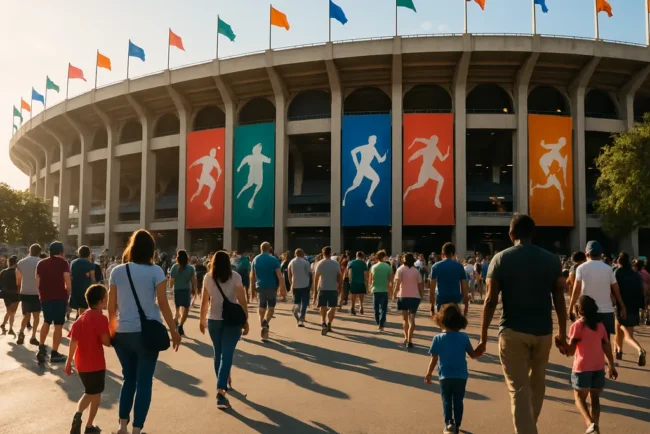
The 2027 MLS NEXT Cup gives Greater Cincinnati a defined place on the national youth soccer calendar: June 5–13, 2027, across Voice of America Park, Warren County Sports Park and TQL Stadium. For coaches, club directors and local sports planners, the value of the event is not limited to a championship week. It also tests field capacity, hotel coordination, player development pathways and the ability of a regional soccer community to support high-level youth competition without losing sight of access at the grassroots level.
2027 MLS NEXT Cup Venue Plan
MLS NEXT has announced Greater Cincinnati as host of the tournament, with competition set for six age groups: U13, U14, U15, U16, U17 and U19. The same league announcement also places the event within a larger 2026–27 calendar that includes MLS NEXT Fest in Mesa, Generation adidas Cup in Bradenton and MLS NEXT Flex in Atlanta before the championship event in Cincinnati. The 2026–27 MLS NEXT season has been described by the league as its largest, with more than 53,000 players, 2,743 teams and 310 clubs across the United States and Canada, including all 30 MLS academies, according to the MLS NEXT season announcement.
How Three Sites Share The Load
The three-site setup matters because a week-long youth championship needs more than match fields. Voice of America Park and Warren County Sports Park give the event large multi-field environments, while TQL Stadium adds a professional venue component. That mix can help separate age groups, reduce pressure on a single complex and create a more practical schedule for teams moving between matches, recovery periods and scouting opportunities.
The April 9–12, 2027 Ohio Regional MLS NEXT Cup Qualifier at Voice of America Athletic Complex will give Greater Cincinnati an earlier operating test. From a club-management view, that qualifier should help organizers evaluate match flow, staffing, parking patterns and communication systems before the larger June event. It is not the same scale as the championship week, but it is a useful rehearsal for field operations and volunteer coordination.
What 2027 MLS NEXT Cup Means For Age Groups
The 2027 MLS NEXT Cup will include both early teenage and older academy age groups. That is significant for development because U13 and U14 players are still forming core tactical habits, while U17 and U19 players are closer to college, professional academy and senior pathway decisions. MLS NEXT has said U13 and U14 qualification will rely heavily on Quality of Play rankings, which use analytical models through TAKA and evaluate more than win-loss records.
That approach is worth watching carefully. If applied well, it can reward teams that build repeatable attacking and defensive behaviors rather than chase short-term results. If clubs misunderstand the model, they may still focus too narrowly on tournament qualification. The better response for coaches is to treat the ranking process as feedback: how well a team progresses the ball, limits dangerous chances and develops decision-making under pressure.
Club Development And Coaching Stakes
For local and visiting clubs, the tournament is a calendar anchor. The Allstate Homegrown Division is set to expand in 2027 for U15 through U19 age groups, moving from 32 to 48 teams in each of those divisions. That expansion increases the competitive field for elite youth players and gives more clubs a reason to structure training blocks around late-spring performance.
Coaches should be cautious about treating the week only as a showcase. Youth tournaments can create selection pressure, especially when rosters tighten before major events. Strong club planning should keep development aims visible: position rotation where appropriate, balanced minutes across the season and clear communication with families about the difference between earning selection and measuring long-term growth.
There is also a local learning effect. Greater Cincinnati clubs that are not in the tournament can still observe training standards, match tempo and academy operations if access is made possible through clinics, coach education sessions or community programming. Local club administrators comparing rules, roster timing and seasonal planning may find related context in this analysis of US Youth Soccer regulations.
- Coaching focus: Use tournament preparation to refine team principles, not just set-piece routines.
- Player welfare: Build rest periods into match-week plans, especially for multi-game age groups.
- Club communication: Explain selection criteria early to reduce confusion for families.
- Community benefit: Connect visiting competition with local coach education and youth outreach where feasible.
Economic And Community Impact
FC Cincinnati’s announcement said the event is expected to bring about 350 teams, with an estimated economic impact of roughly $30 million and about 50,000 hotel room nights in Greater Cincinnati during the tournament window, according to FC Cincinnati’s event release. Those are planning figures, not completed outcomes, so they should be read as projections rather than results.
There has also been some variation in public reporting around the team count, with current official announcements using 350 teams and earlier reports citing a higher figure. For facility managers, hotel partners and transportation planners, the prudent approach is to base staffing and inventory on the current official number while keeping contingency plans ready. Youth soccer events can place uneven pressure on breakfast hours, laundry capacity, traffic corridors and medical support near field complexes.
The sports-tourism question is not only hotel volume. A tournament of this size can introduce families to parks, restaurants and training facilities across Butler and Warren counties and Cincinnati. Still, community leaders should judge success by more than visitor spending. Useful measures include whether local clubs gain new volunteers, whether younger players get more access to quality coaching and whether public facilities remain available for community use around event operations. For those interested in broader regional sports activities, check out Triple T Power Sports, which reflects the interest in participation and equipment in the area.
Scheduling Pressure And Player Welfare

The 2027 MLS NEXT Cup sits near the end of a demanding national schedule. MLS NEXT Fest is scheduled for December 2–13, 2026 in Mesa, Arizona. Generation adidas Cup is set for March 25–April 2, 2027 in Bradenton, Florida. MLS NEXT Flex is set for April 29–May 4, 2027 in Atlanta. By the time teams reach June 5–13, 2027 in Greater Cincinnati, many players will have worked through league matches, travel events and school-year demands.
That load makes coaching judgment central. The evidence available from the official calendar does not allow conclusions about injury rates or fatigue outcomes, and none should be inferred. What can be said is simpler: long youth seasons require planning. Clubs should monitor minutes, recovery windows and travel days, especially for players who participate in multiple team environments.
The age range also raises different welfare issues. U13 and U14 players may be encountering a national event of this size for the first time, while U19 players may be managing recruitment, graduation and future pathway decisions. Staff members should keep match preparation clear and age-appropriate. The championship setting can sharpen development, but only if adults avoid turning every touch into a scouting judgment.
Greater Cincinnati’s 2027 MLS NEXT Cup Test
The strongest case for Greater Cincinnati is that it has a clear event structure: defined dates, named venues, an early qualifier and a professional club presence through FC Cincinnati and TQL Stadium. The main test is execution. Field quality, referee support, weather planning, family movement between sites and communication with clubs will shape how the event is remembered.
For grassroots soccer, the opportunity is practical. If the 2027 MLS NEXT Cup leads to better coach education, more collaboration between clubs and greater interest from young players who see a national event close to home, the impact can last beyond the final whistle on June 13, 2027. If it becomes only a one-week visitor surge, the community benefit will be narrower. The best outcome sits between elite competition and local access: a major youth championship that raises standards while leaving room for more children to enter and stay in the game.