
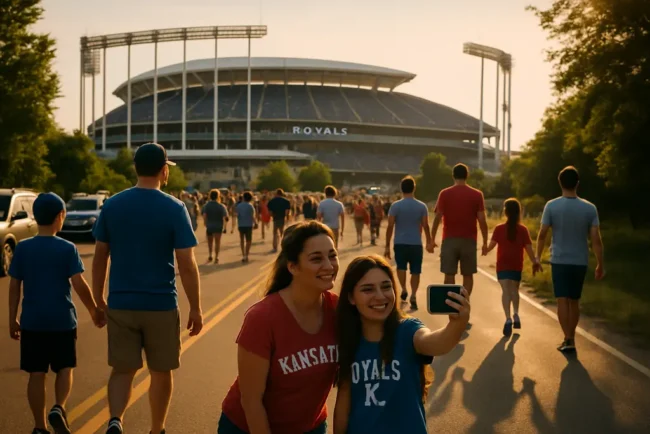
The Kansas City stadium debate has moved from broad concept to a sharper public-finance question after city action on August 20, 2026 and public reporting on September 15, 2026. The current Royals project is framed as a $2.05 billion plan covering the ballpark, infrastructure, offices, and related development, with opening targeted for 2030 if the 2027 construction start holds. For community sports observers, the issue is not only where Major League Baseball will be played. It is whether the funding model, traffic plan, neighborhood protections, and long repayment period can produce civic value beyond game days.
Kansas City Stadium Funding Structure
The reported cost structure places the project among the larger modern stadium-development packages in baseball. According to Axios, the total project cost is $2.05 billion, with public sources contributing about $1.14 billion and the Royals with private investors covering about $911 million Axios reported. That means the public share is roughly 60 percent, while the private share is roughly 40 percent.
That split matters because stadium projects can generate visible activity while leaving long-term repayment details less visible to residents. A downtown ballpark can create more foot traffic, more restaurant demand, and a stronger event calendar. Yet those outcomes do not automatically equal enough new public revenue to cover debt over three decades. The funding plan must be judged against measurable returns, not only against the appeal of a new venue.
Kansas City Stadium Cost Split
The city commitment identified in the research is $600 million, passed through two ordinances by the Kansas City Council on August 20, 2026. The state of Missouri is also part of the structure, including support through the Show-Me Sports Investment Act, which is expected to help repay some debt service over 30 years. The public share, therefore, is not one simple cash payment. It is a layered financing package involving city commitments, state-backed support, and expected future revenues linked to the district.
| Funding Element | Reported Amount Or Share | Community Issue |
|---|---|---|
| Total project cost | $2.05 billion | Scale requires long-term public tracking |
| Public sources | About $1.14 billion, roughly 60% | Taxpayer exposure depends on revenue performance |
| Royals and private investors | About $911 million, roughly 40% | Private stake is significant but not the majority |
| Kansas City commitment | $600 million | City repayment risk needs clear reporting |
| Anticipated city debt instruments | Not to exceed $560 million | Debt service may run for decades |
Debt Instruments And Repayment Risk
The official Kansas City legislative file says the city may issue revenue bonds or use other debt instruments, anticipated not to exceed $560 million, for design, construction, furnishings, and operational infrastructure city legislation states. The key community question is how protected the general public is if district revenues fall short of projections.
The research notes that the Royals are not obligated to repay or support payment of the city bonds. That does not mean a shortfall will occur. It does mean residents and council members need clear annual reporting once debt service begins. A cautious evaluation should ask whether new taxes, incremental economic activity, and development-related revenue can be separated from activity that would have happened elsewhere in Kansas City without the ballpark.
Neighborhood Effects Around Crown Center
The proposed site is the Crown Center and Washington Square Park area, described in the research as 85 acres of mixed-use land near Union Hill, Longfellow, and Beacon Hill. This location gives the Royals a more central urban setting than the Truman Sports Complex. It also places game-day movement closer to residential streets, small businesses, and daily commuter routes.
For coaches, club administrators, and local sports organizers, this is where stadium analysis crosses into community planning. A major venue can attract families, sponsors, and youth-baseball attention. It can also create access issues if parking, pricing, and traffic design favor premium visitors while nearby residents absorb congestion. The lesson from other sports-facility debates is simple: the community benefit is strongest when public access is designed before opening day, not corrected afterward.
Traffic, Parking, And Daily Use
Residents have raised concerns about traffic congestion, parking overload, and changes to neighborhood character. Those concerns are consistent with the site profile. Baseball has 81 regular-season home dates before any postseason games, and a downtown district also has concerts, office use, retail, and non-baseball events. Even without inventing attendance projections, the risk pattern is clear: repeated event traffic can affect streets differently than occasional major events.
Small-business parking deserves separate attention. If nearby firms lose convenient access on game days, the stadium district may shift spending toward new entertainment properties rather than supporting existing operators. Community benefits agreements, dedicated parking plans, and traffic-calming measures would be practical safeguards if they are specific, enforceable, and publicly reviewed.
Transit And Walking Connections
The research identifies possible infrastructure improvements such as expanded transit, parking solutions, neighborhood connectivity, streetcar connections, traffic calming, and pedestrian access, particularly for Union Hill and Longfellow. These elements should be treated as core stadium infrastructure, not optional extras. A ballpark that depends too heavily on car trips may intensify the parking issue it is supposed to manage.
From a grassroots sports perspective, walkability and transit have another purpose. They influence whether families, school groups, youth teams, and lower-cost visitors can use the district. A stadium district that works only for high-spend visitors has weaker community value than one that gives residents safe, predictable, and affordable ways to attend games, clinics, watch parties, or public events.
Sports Development And Public Value
The Kansas City stadium project is often discussed as a professional sports facility, but the public contribution makes the community return a central performance measure. For local baseball, the most defensible benefit would be structured programming: youth clinics, school partnerships, coach education, accessible public spaces, and field-use commitments that do not depend on one-off charity events.
Publicly funded venues can support a local sports ecosystem when they connect elite teams with community participation. The value is stronger when youth programs have dates, budgets, staffing, and transport support. Without those details, community language can remain broad while the hard benefits flow mainly to team operations, real estate interests, and event-driven retail.
A related review of community sports facilities found that access, coaching, pricing, safety, and scheduling are the practical tests that determine whether new construction helps young athletes. The same framework fits this project. A new ballpark alone does not improve youth participation. A connected plan can.
What Community Benefits Should Track
Because the repayment term is expected to stretch across decades, public benefit tracking should be equally long-term. Useful measures would include youth-program participation, no-cost or low-cost community events, small-business retention near the district, transit usage on game days, pedestrian safety incidents, and parking effects on adjacent blocks. These are not abstract civic goals. They are indicators that residents can understand and officials can publish.
- Access: Are youth teams, schools, and community groups receiving scheduled use or programming?
- Mobility: Are transit, walking routes, and parking plans reducing pressure on residential streets?
- Small business: Are existing operators protected from event-day displacement?
- Fiscal reporting: Are bond payments, revenues, and shortfalls published in clear annual updates?
Regional readers following civic funding debates across the same network can also find broader public-affairs coverage at Noticias Bo.
Future Prospects For The Royals Project
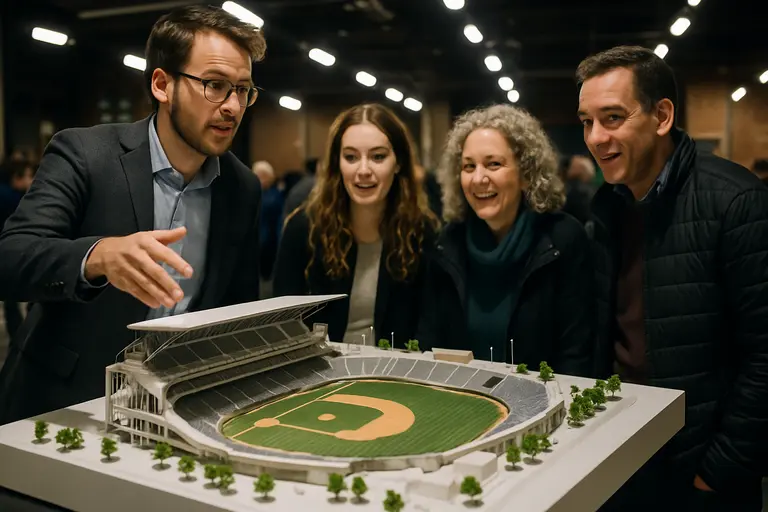
As of October 9, 2026, the next major phase is the expected construction start in 2027. The targeted opening is 2030. Those dates leave time for design refinement, infrastructure coordination, neighborhood agreements, and repayment transparency before the first pitch in the new venue. They also leave room for cost pressure, scheduling changes, and public scrutiny, so the timeline should be monitored against official updates rather than treated as fixed.
The wider facility picture includes the Truman Sports Complex. The research notes that after the Royals and Chiefs current stadium leases expire in 2031, Jackson County is considering redevelopment options for that site, including adaptive reuse, renovation, or demolition. That means Kansas City and Jackson County may be managing two major sports-infrastructure questions at once: building a downtown Royals district and deciding what comes next for the existing complex.
For club managers and community coaches, the concern is whether public money devoted to elite venues crowds out investment in fields, gyms, coaching pipelines, and affordable participation. That does not make the ballpark project a poor investment by definition. It means its public value should be tested against opportunity cost. If the project produces new tax revenue, better transit, wider youth engagement, and a stronger event district, the case improves. If it mainly shifts spending within the city while residents carry repayment risk, the public return becomes harder to defend.
Kansas City Stadium Community Test
The fair test for the Kansas City stadium plan is not whether a new ballpark would look better than the current arrangement. Most new venues can improve fan amenities. The sharper test is whether the financing structure and district plan protect residents over 30 years while expanding the city’s sports culture beyond professional game nights.
That test requires three things before 2030: clear bond reporting, enforceable neighborhood protections, and specific community-sports commitments. The public share is large enough that general promises should not be the standard. Kansas City has a chance to tie a major league facility to youth development, small-business stability, safer mobility, and civic accountability. Whether the project reaches that mark will depend on the details adopted before construction begins in 2027 and the reporting discipline that follows after opening.