
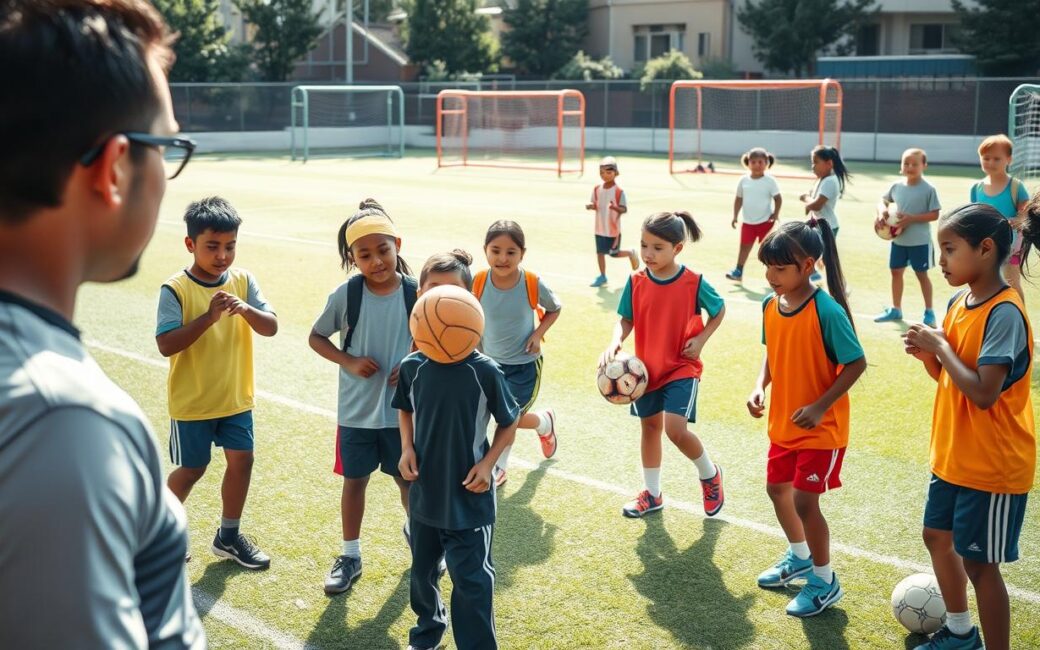
Children are not small adults. I’ve seen coaches treat 7-year-olds like they’re ready for the NFL. This makes kids hate sports instead of loving them.
Science shows that before age 6, team sports are mostly about managing chaos. Kids’ bones are growing, and they’re learning to coordinate. The USOPC says great coaching is about building trust, not just winning. But, sadly, only about 20% of little league coaches are trained.
So, what works? It’s about matching what kids can do with what we expect. A 5-year-old can learn to dribble a soccer ball because it’s natural. But asking them to serve a volleyball is too hard for them yet.
There’s a big gap between what adults think kids want and what kids really want. Kids want fun, fairness, and to get better. But parents often think they want to win. This mistake is why 70-80% of kids stop playing sports by age 15. For more on starting young, read this article.
Long-term athlete development models
In youth sports, the long-term athlete development model is key. It helps keep kids engaged and thriving. Sadly, 70-80% of kids stop playing sports by age 15. We must change how we approach sports to keep kids involved.
This model is like a three-act play for young athletes. Each act is a critical stage in their journey. Let’s explore each part.
The foundational years: ages 3-8
In the foundational years, kids learn through play. They develop basic movement skills in a fun way. The goal is to help them move well, not to make them sports stars.
Play-based learning and fundamental movement skills
Children learn coordination, balance, and agility through play. Programs like i9 Sports offer Pee Wee levels for kids to grow at their own pace. It’s all about fun and discovery, building a love for sports.
The building years: ages 9-12
As kids get older, they start playing in structured competitions. But, it’s important to keep the fun alive. This stage focuses on skill building and teamwork.
Introducing structured competition without crushing souls
Competitions should be friendly, not intense. Coaches need to keep the joy of play in mind. The goal is to build resilience and teamwork without too much pressure.
The competitive years: ages 13+
By age 13, kids can start specializing in sports. But, it’s important to do it carefully. We don’t want kids to play one sport too much, risking injuries.
Specialization with guardrails
Now, kids focus on refining their skills. Coaches and parents should encourage passion while considering other sports. This balanced approach helps keep kids engaged and healthy.
In conclusion, the long-term athlete development model is essential for young athletes. It focuses on age-appropriate skills and a love for sports. This approach can help keep more kids involved in sports.
| Age Group | Focus Area | Key Objectives |
|---|---|---|
| 3-8 | Play-based Learning | Fundamental Movement Skills |
| 9-12 | Structured Competition | Skill Development, Teamwork |
| 13+ | Specialization | Refining Skills, Cross-training |
Multi-sport vs. specialization debate
Choosing between multi-sport and early specialization in youth athletics is tricky. Parents and coaches face cultural pressures and the promise of early success. But, research warns of injuries and burnout from rushing to specialize.
The case for sampling: why cross-training creates better athletes
Sampling is more than a trend; it’s a proven way to make athletes well-rounded. Playing multiple sports helps young athletes gain transferable skills that boost their performance. Here are some benefits:
- Footwork from soccer is great for basketball.
- Hand-eye coordination from baseball helps in tennis.
- Spatial awareness from lacrosse improves football strategies.
By playing multiple sports, athletes develop a wide range of skills. This makes them more adaptable and resilient in their main sport.
Transferable skills across different sports
These skills make sports more enjoyable and build a strong foundation for growth. The versatility from playing various sports can turn a short-lived star into a lasting athlete.
The specialization trap: early excellence, early exit
The specialization trap is tempting, but it often leads to early sports exits. Studies show that over half of youth sports injuries come from overuse, caused by focusing too much on one sport.
Overuse injuries and the orthopedic surgeon’s waiting room
Imagine a 16-year-old with a 45-year-old pitcher’s shoulder. This is not healthy for young athletes. Early specialization raises injury risks and can take away the joy of sports. Who wants to be sidelined before reaching their prime?
What the research actually says about elite performance
Research on elite performance reveals some surprises. The 10,000-hour rule is not as true as thought. Elite athletes often find their success later, after trying many sports and gaining a deep understanding of athletics.
The myth of the 10,000-hour rule in youth sports
Many believe specialization is the only way to succeed. But, many top athletes excelled after trying different sports. The key is to enjoy the journey of exploration, not just the pressure for immediate success.
For more insights, read this research article on the risks of early specialization.

Parental support and involvement
In youth sports, parents often struggle to know when to encourage and when to back off. A child runs onto the field, full of excitement, while a parent watches with a mix of pride and worry. They want to support, but sometimes their words can feel like pressure.
The sideline paradox: support versus pressure
Many parents think they’re being helpful when they shout advice from the stands. But kids might see it as criticism. Research shows kids play sports to have fun, but parents often think it’s about winning. This misunderstanding can make the experience less enjoyable for everyone.
When cheering becomes coaching from the bleachers
Every shout of encouragement can turn into a critique. A child might hear, “Why didn’t you pass?” instead of “Great job!” This can make them feel anxious and doubt themselves. Parents should focus on uplifting, not judging. The U.S. Olympic and Paralympic Committee says it’s important to focus on the athlete’s development first, not just winning.
Understanding what your child actually wants from sports
So, what do kids really want? They want to have fun. But parents often put their own dreams on their kids, leading to different expectations. This can cause frustration for both sides.
The fun-versus-winning perception gap
Parents might see sports as a way to succeed, while kids just want to enjoy themselves. To close this gap, parents should talk openly with their kids. Asking, “What was the most fun part of the game?” can start a positive conversation.
Creating a positive sports environment at home
It’s key to create a supportive home environment for young athletes. This means focusing on fun, not just performance. Encouragement should come from understanding, not expectation.
Conversation starters that don’t begin with “Why didn’t you…”
Instead of criticizing after a game, try different questions. Ask about what they learned or who they had fun with. This can lead to a supportive conversation that encourages, not pressures.
| Parental Attitude | Child’s Perception | Impact on Experience |
|---|---|---|
| Supportive | Enjoyment | Positive experience, motivation to continue |
| Pressuring | Stress | Negative experience, possible dropout |
| Understanding | Confidence | Improved performance, love for the game |
Talent identification programs
Finding talent in youth sports is tricky. It shows biases and barriers. Junior sports programs often use old methods that confuse physical size with athletic skill. It’s like judging a book by its cover, or a player by their height at ten.
The truth is, the kid who does well early might just have grown faster than others. This can affect their chances in sports.
The promise and peril of early talent spotting
Spotting young talent can be both good and bad. Early recognition can open doors, but it can also categorize kids too soon. We might miss those who will grow later.
This approach can also leave out talented kids from lower-income families. They often don’t have the chance to play sports.
Why physical maturity gets confused with athletic ability
Many programs think physical size means a kid has talent. But this is wrong. It can leave out kids who grow later.
Girls in cities and rural areas play sports less than those in suburbs. It’s not because they lack talent, but because they don’t have the chance.
Bias in traditional identification methods
Old ways of finding talent often miss important points. Bias can sneak in, favoring those with more money. Kids from rich areas get better coaching and places to play, making it unfair.
This is like picking winners based on who has the most resources, not talent.
Socioeconomic barriers and the access problem
Socioeconomic barriers affect who is seen as talented. Kids from poor areas often miss out because they can’t get into sports programs. It’s unfair, as talent isn’t based on where you live.
Alternative approaches to finding talent
There are new ways to find talent that look at more than just how well someone does. The USOPC says a good coach can see qualities like resilience and curiosity. These are better signs of success than winning.
Looking beyond the scoreboard
Real talent is about growing and changing. New methods look at more than just winning. They focus on how well a young athlete can work with a coach and be part of a team.
These skills are important for success, even if they don’t show up right away.
| Method | Focus | Advantages |
|---|---|---|
| Traditional Methods | Performance Metrics | Quick Identification |
| USOPC Approach | Coach-Athlete Relationships | Long-term Development |
| Alternative Methods | Potential & Growth | Inclusive & Holistic |
College recruitment preparation
Let’s talk about college recruitment in a way the youth sports world doesn’t want you to hear. The chance your kid will play Division I sports is like winning the lottery while being hit by lightning. It’s not likely. The NCAA says only 2% of high school athletes get athletic scholarships. Yet, parents often plan their kids’ whole lives around this slim chance.
The reality check: odds of playing beyond high school
The truth behind athletic scholarships can be a shock. It’s important to remember that sports are just one part of a young athlete’s life. We should focus on what college coaches really look for.
NCAA statistics that should humble every sports parent
Coaches aren’t just looking for stars. They want players with character and coachability. Who do you think stands out more? The athlete with amazing plays or the one who listens, takes feedback well, and supports teammates?
What college coaches actually look for
Many top athletes say building good relationships with coaches is key. This is what the USOPC points out. Winning trophies at 12 doesn’t mean you’ll succeed later. Focus on growing the whole person, not just the athlete.
Character, coachability, and the things stats don’t capture
When planning for college recruitment, keep things in perspective. View sports as one part of a full life, not the only thing. Remember, the real scholarship is often academic. Studies show sports can help with school, not hurt it.
Building a recruitment strategy without losing perspective
The best student-athletes have parents who value grades over sports. They ask about teachers and remember that “student” comes first. This balanced approach to student-athlete preparation is key in college recruitment.
Academics first: the scholarship that actually exists
As you guide your athlete through recruitment, remember it’s not all about sports. It’s about building a strong future. For more advice, check out this resource.
Mental development through sports
Playing sports gives youth many psychological benefits that last a lifetime. It’s not just about winning trophies. It’s about the mental skills they learn that shape their future.
The psychological benefits that outlast the playing days
Athletic skills may fade, but the psychological benefits of sports stay. Teenagers in team sports feel happier and more confident. They also feel less anxious and are less likely to think about suicide.
The CDC says suicide is the third leading cause of death in teens. So, these benefits are incredibly important.
Resilience, emotional regulation, and the failure curriculum
Sports teach kids about failure in a safe way. They learn to handle disappointment, like missing a shot or losing a game. This teaches them to be resilient, a rare skill in today’s world.
Social intelligence and team dynamics
Sports are where social skills really shine. Kids learn to read people, work in teams, and lead. These skills are hard to find in school.
Learning to read a room at age 10
Imagine a 10-year-old understanding their teammates’ feelings during a game. This skill is key for adulthood. It helps them know when to lead and when to follow, making their lives richer.
Identity formation beyond the athlete label
Who are you when you’re not wearing a uniform? This is a big question for young athletes. Programs should help them grow into well-rounded people, not just athletes.
Who are you when the uniform comes off?
As kids leave sports, they must figure out who they are. This is key for their growth. A strong identity helps them face life’s challenges.
Preventing burnout in young athletes
If youth sports feel like a chore, burnout might be near. Every year, 35% of young athletes quit. By age 15, 70-80% have left, showing a big problem.
The biggest drop-off is in adolescence. This is when sports offer the most benefits. We’re losing kids to burnout, not other activities.
Spotting the signs is key. If a child says, “I don’t want to go to practice,” it’s serious. Other signs include stomachaches before games or forgetting gear.
Recognizing the warning signs before it’s too late
When “I don’t want to go to practice” means something more
It’s important to listen to these signs. When kids hesitate, we need to understand why. Is it too much pressure? The mental load can be as heavy as physical.
The role of rest and recovery in youth sports
Why year-round single-sport schedules are a recipe for disaster
Year-round single-sport schedules lead to burnout. The body and mind need breaks. When every weekend is sports, it feels like a job.
Groups like i9 Sports focus on fun, not pressure. Kids who enjoy sports at 10 are more likely to play at 16. But kids pushed too hard might quit by high school.
Rekindling the joy when the flame has flickered
Permission to take a break without guilt
Rekindling joy means letting kids take breaks. It’s about exploring other interests and being well-rounded. Saying, “You don’t have to do this” can be radical.
Preventing burnout is about more than keeping kids in sports. It’s about their well-being. By recognizing signs, valuing rest, and promoting love for the game, we can help them thrive.
Local pathway programs overview
Finding the right local youth sports programs can be tough. Parents face many choices, from casual play to competitive leagues. It’s key to understand these options to guide your child’s growth.
Finding quality programs in your community
Start by asking important questions. What training do coaches have? With only 20% of little league and 8% of high school coaches formally trained, this is vital. Look for programs that invest in coach training, like the USOPC’s free Connection Based Coaching.
Questions to ask before signing up
Ask about the program’s philosophy. Does it focus on fun and skill, or winning? The best programs support your child’s interests and avoid early competition.
The difference between recreational and competitive tracks
Choose based on your child’s preferences. Recreational leagues are more relaxed, helping kids love the game. Competitive programs can be tempting but might lead to burnout if not right for your child.
Choosing the right level without ego interference
Don’t let your own dreams decide your child’s sports path. Programs like i9 Sports offer age-appropriate lessons and stress sportsmanship. They balance practice and games, recognizing family life is important.
Community-based models that work
Good community sports focus on multi-sport exposure and fun. Look for programs that offer a balanced approach. The right environment makes kids happy to return, fostering a lifelong love for sports.
What i9 Sports and similar programs get right
Programs like i9 Sports make sports fun and age-appropriate. They ensure kids are tired but excited for more. This approach supports long-term athlete development.