
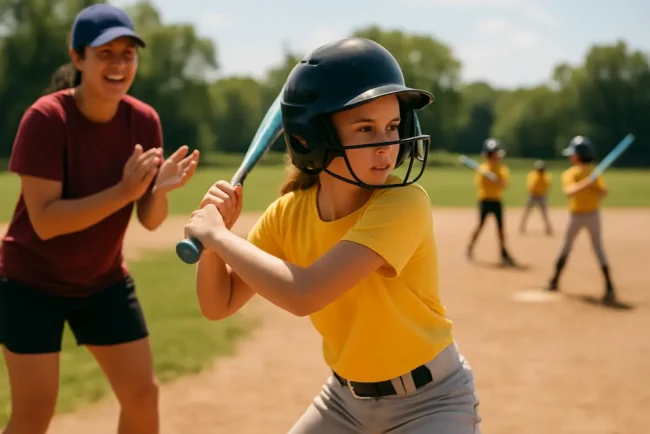
Rochester Youth Softball is gaining clearer training pathways through verified winter hitting dates, free community clinic windows, and planned field capacity in Rochester, New York, and Rochester, Minnesota. As of October 18, 2026, the strongest confirmed developments are not broad participation totals, but specific program dates, facility timelines, and access points that clubs and families can plan around.
Rochester Youth Softball Training Access
The most direct youth softball expansion in the verified material comes from the Wegmans Red Wings Performance Center in Rochester, New York. On August 1, 2026, the center announced expanded 2026-27 offseason programming, including a Winter Youth Softball Hitting League scheduled for January 9, 16, 23, 30, and February 6, 2027. The same announcement listed two free Community Hitting Days for all ages on October 4, 2026, and February 13, 2027, with complimentary 40-minute training sessions using HitTrax and advanced analytics, according to the Red Wings Performance Center announcement.
Rochester Youth Softball Clinic Signals
The October 4, 2026 Community Hitting Day had already taken place by October 18, 2026, so it should be assessed as an early access point rather than promoted as an upcoming event. The February 13, 2027 clinic remained a future date on the published schedule. The all-ages structure matters because it creates a lower entry point for players who may not yet be attached to a league, travel team, or private lesson schedule.
For Rochester Youth Softball, the winter hitting league format may support repetition at a time when outdoor field access is limited in western New York. Hitting programs do not replace full team practices, defensive work, base running, or game management. Still, they can give coaches a focused setting for swing decisions, contact quality, and confidence building before spring registration and roster activity intensify.
What Repeated Indoor Dates Can Solve
A five-date winter series offers a more useful training rhythm than a single showcase session. Coaches can observe whether a player is adjusting between sessions, not just how she performs in one isolated cage appearance. For club managers, repeated dates also help sort athletes into appropriate developmental groups without relying only on tryout impressions.
The free clinic model is also relevant to community engagement. Cost remains one of the main barriers that local sports programs must manage, even when no verified fee table is available in the current sources. A free 40-minute session cannot carry an entire development plan, but it can introduce families to instruction, basic feedback, and facility expectations before they commit to longer programming.
Facility Capacity In Two Rochester Markets
Rochester-based softball development is not limited to one state in the verified records. Rochester, Minnesota, has a major facility project in progress that could affect youth baseball and softball access once fields open. The Rochester Sportsplex in southeastern Rochester was reported as under construction as of Spring 2026. Its first amenities, including four ballfields, two rectangular fields, and an accessible playground, are expected to open in June 2027. A later phase planned for Spring 2028 includes four more ballfields, pickleball courts, and an outdoor basketball court. The plan calls for eight diamond artificial turf fields for softball and baseball, with the fields designed for local youth play and regional tournaments, according to the Rochester Sportsplex project page.
Minnesota Sportsplex Timeline
The timeline is central to any fair analysis. The initial ballfields were not open as of October 18, 2026, based on the stated June 2027 target. That means any claims about participation gains, tournament revenue, or competitive outcomes would be premature. The supported reading is narrower: if delivered on the published schedule, the project would add diamond capacity in stages, starting with four ballfields and expanding to eight.
Artificial turf diamonds can be attractive to tournament organizers and local leagues because they create a defined playing surface for multi-game scheduling. The verified source states the fields are planned for both local youth play and regional tournaments. The balance between those two uses will be a key management issue. A facility can serve elite weekend events and still support neighborhood teams, but only if booking rules, practice windows, and pricing protect regular local use.
Scheduling, Access, And Tournament Pressure
Facility expansion often creates a second challenge after construction: allocation. Four new diamonds can fill quickly if baseball, softball, clinics, weekend tournaments, and rental groups compete for the same hours. For community clubs, the most valuable time blocks are usually weekday evenings and consistent weekend slots. For facility operators, tournaments may bring concentrated use and regional traffic.
The coaching question is practical. More fields help only if teams have trained adults to run safe, age-appropriate sessions. A new complex can shorten waiting lists, but it does not automatically create coaches, umpires, equipment managers, or volunteer coordinators. For a related discussion of how access depends on more than construction, see this analysis of community sports facilities and youth access.
| Verified Development | Location | Date Or Target | Access Meaning |
|---|---|---|---|
| Winter Youth Softball Hitting League | Rochester, New York | January 9 to February 6, 2027 | Structured indoor hitting repetition |
| Free Community Hitting Days | Rochester, New York | October 4, 2026 and February 13, 2027 | Low-barrier training exposure for all ages |
| Initial Sportsplex Ballfields | Rochester, Minnesota | Expected June 2027 | First phase of added diamond capacity |
| Full Eight-Diamond Plan | Rochester, Minnesota | Second phase planned for Spring 2028 | Local youth play and regional tournament use |
Community Clinics And Club Management
Rochester Youth Softball development should be judged by access quality, not only by the number of offerings on a calendar. A winter hitting league is useful if athletes receive clear feedback and a sensible progression. A free clinic is useful if it reaches families outside existing private training circles. A new field complex is useful if local leagues can secure predictable time and if maintenance standards remain consistent after opening.
How Clubs Can Use Clinic Entry Points
Community clinics can function as early evaluation windows without becoming formal tryouts. Coaches can observe basic movement patterns, comfort in a batting environment, and athlete readiness for group instruction. That information can help place players in beginner, intermediate, or advanced groups, reducing the risk of mismatched sessions that frustrate both athletes and instructors. For families, the clinic format offers a less demanding first step than a full league commitment. This matters at the grassroots level, where many players sample multiple sports before narrowing their focus. Similar scheduling questions appear across community sport settings, including golf, where facilities such as those found at Copeland Hills Golf must balance organized use with broader participation access.
Data Gaps That Still Limit The Read
The available verified sources do not provide youth softball enrollment totals, demographic breakdowns, coach-to-player ratios, or retention rates for the listed programs. They also do not confirm how many players the winter hitting league can accept. Without those figures, any statement that the programs will raise participation by a specific amount would be unsupported.
That limitation does not make the developments insignificant. It simply narrows the evidence-based claim. The confirmed picture is that Rochester-area softball families have new or scheduled training touchpoints, and one Rochester market has a major diamond facility project with future opening targets. The next evaluation should depend on registration access, actual usage, affordability, and whether beginners receive as much attention as advanced players.
Rochester Youth Softball Access Measures
The strongest reading for Rochester Youth Softball is cautiously positive. In Rochester, New York, the published winter league and free hitting dates give players defined offseason development opportunities. In Rochester, Minnesota, the Sportsplex plan points toward a major increase in diamond capacity, though the first fields were still in the future as of October 18, 2026.
What Should Be Tracked After The Openings
League administrators, parents, and facility managers should track practical measures after these programs and facilities take shape: how many first-time players register, how many return for another session, how field time is divided between local teams and tournaments, and whether free clinics lead to continued participation. Those are stronger indicators than announcement volume alone.
A community softball system works best when clinics, leagues, fields, and coaching education connect. The verified developments show movement in that direction, but the final measure will be whether access reaches players across skill levels, neighborhoods, and family budgets.