
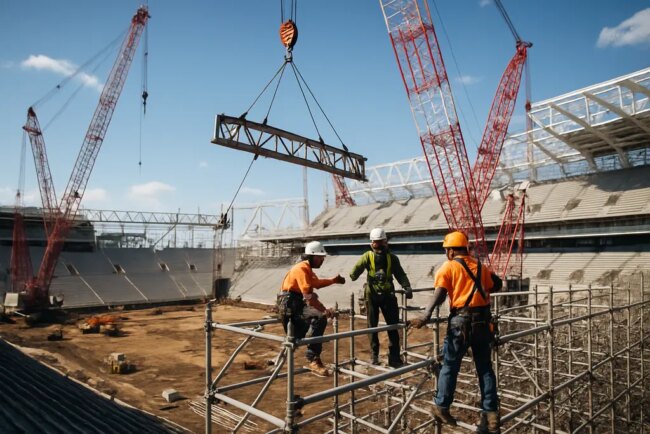
The Rays Stadium Deal has moved Tampa Bay baseball into a new phase of sports-business analysis: not just where the team will play, but how a ballpark-linked district could affect local tourism, public finance, grassroots access, and club operations across Hillsborough County. The available research supports a cautious reading. The project is large, the public contribution is material, and many of the forecast benefits depend on mixed-use development around the ballpark rather than baseball games alone.
Rays Stadium Deal Funding Structure
On August 21, 2026, a final agreement was reached for a $2.361 billion ballpark and mixed-use development on the Hillsborough College Dale Mabry campus in Tampa, with the agreement still tied to city and county action reported at that point by WUSF. The scale matters because stadium debates can be distorted when the venue is discussed apart from the surrounding development. In this case, the financing design links the ballpark to a larger district, and that changes how the impact should be judged.
Rays Stadium Deal Cost Split
The reported cost split places $1.37 billion, about 58% of the total, on the Rays. Public sources account for $876 million, about 37%, according to the finance breakdown from the Baratelli Institute. Hillsborough County’s share is listed at $796 million, using existing sales tax through the Community Investment Tax, tourist development taxes, other county funds, and a $30 million federal disaster recovery grant. Tampa’s $80 million contribution is structured as an advance designed to be recouped from future property-tax growth inside a new Community Development District.
From a club-management perspective, the most relevant protection is the reported assignment of cost overruns and design fees to the Rays. That does not remove public exposure already committed through the agreement, but it does define a cap on the public side. For community sports organizations, that distinction is significant. Local clubs often depend on predictable public budgets for parks, field maintenance, transport links, and youth programming. A stadium agreement that expands unexpectedly can create pressure elsewhere; a capped public share reduces that specific risk, even if it does not settle the broader policy debate.
Why The Mixed-Use Element Carries The Case
The economic case rests less on the 81-game home schedule and more on whether adjacent development produces sustained property-tax growth, visitor spending, and activity outside game windows. Supporters have pointed to long-term economic impact and job creation projections, but the research notes also make clear that many fiscal benefits are expected to come from the mixed-use district. That is the key analytical point: the stadium is an anchor, not the entire economic engine.
For local sports, this creates a practical test. If the district becomes active on non-game days, it could improve transit use, hotel demand, food-and-beverage spending, and event scheduling around the campus area. If it is too dependent on baseball dates, the return profile becomes narrower. Baseball facilities can generate repeat attendance, but a district has to serve residents, students, amateur tournaments, concerts, and community events to become a wider sports asset.
Tourism Logic And Event Demand
Tampa’s tourism base gives the proposal a stronger platform than a stadium project in a lower-traffic market, but that does not guarantee results. A ballpark can attract visiting supporters, corporate groups, and neutral sports travelers, especially when paired with hotels, restaurants, and mixed-use activity. Still, the tourism case should be measured through occupancy, taxable spending, length of stay, and repeat event bookings after the venue opens, not only through pre-opening projections.
What Baseball Adds To The Calendar
Major League Baseball provides a high-volume event calendar. That matters for tourism because regular-season dates are spread across weekdays and weekends, creating many smaller demand pulses rather than a few isolated spikes. For hotels and restaurants, that pattern can be useful if the venue draws out-of-market visitors and if the surrounding district gives them reasons to stay longer.
The caution is that not every baseball attendee is a tourist. Many fans are local or regional, and spending can shift from one part of the county to another rather than create new net activity. A stronger tourism outcome would come from visitors who book rooms, attend multiple games, combine baseball with other events, or travel for tournaments connected to the broader district. That is why post-opening measurement will matter more than headline impact estimates.
Sports Tourism Beyond MLB Games
The Rays Stadium Deal should also be assessed through its possible use as a hub for non-MLB sports activity. Modern ballpark districts can support college events, amateur showcases, coaching clinics, and youth baseball experiences, depending on access terms, field availability, and nearby practice infrastructure. Those details are not fully established in the research, so any claim about direct youth sports benefits should remain cautious.
For grassroots development, the opportunity is not just ticket access. The stronger community model would connect local clubs, schools, coaches, and county recreation programs to the venue district through scheduled clinics, volunteer pathways, officiating education, and facility-sharing arrangements where feasible. Without those mechanisms, the benefits may remain concentrated in professional baseball and commercial development.
Public Safeguards And Community Tests

The agreement includes a 35-year non-relocation commitment and public-side protections tied to cost overruns. Those provisions matter because franchise stability is a central part of any public stadium justification. If a market helps fund a facility, a long-term team commitment gives residents and businesses a clearer time horizon for planning around the asset.
Still, safeguards are not the same as outcomes. The public value test should include several measurable markers after construction and opening. Local officials, club operators, and community advocates should track whether the project expands access to sports programming, whether event-day transport works for families and workers, and whether tax receipts develop as projected.
- Fiscal performance: property-tax growth, tourist-tax collections, and public repayment timing should be compared with published assumptions.
- Sports participation: youth clinics, school partnerships, and amateur tournament use should be counted, not described only in promotional terms.
- Local business impact: spending should be reviewed by geography to see whether gains are new or shifted from nearby districts.
- Venue access: community groups need clear information on rental costs, available dates, and eligibility for subsidized use.
Readers comparing facility investment models across sports can also use coverage from a related site in the same network for broader context, while a related local review of the Rays new ballpark economic impact examines the same funding debate through projected returns and community effects.
Economic Impact For Local Sports
For coaches and club managers, the Rays Stadium Deal is relevant because major facilities shape the local sports system around them. They influence transport habits, sponsorship attention, media coverage, volunteer interest, and the availability of event infrastructure. A successful district could raise the profile of baseball and create more chances for young athletes to see professional standards up close. That exposure has value, especially when paired with structured coaching programs.
The risk is that professional infrastructure absorbs civic attention while neighborhood fields, school diamonds, and recreation programs still face routine maintenance needs. Grassroots baseball development depends on playable surfaces, trained coaches, safe lighting, affordable fees, and reliable scheduling. A new MLB venue cannot replace those basics. It can support them only if public agencies and the club build direct pathways from the stadium district into community sport.
The agreement’s projected April 2029 opening date gives Tampa and Hillsborough County time to define those pathways before the first full operating cycle. The research also lists September 2026 as the target month for groundbreaking; because no specific completed groundbreaking date is supplied in the research notes, that point should be treated as a scheduled target rather than a verified milestone. That distinction matters for temporal accuracy and for accountability.
The strongest reading of the project is cautious but not dismissive. The financing structure places a majority share on the team, public funding is capped as reported, and the non-relocation commitment gives the region a long planning window. The unanswered question is whether the district will convert a professional baseball facility into measurable public value for tourism, tax receipts, amateur sport, and daily community use. The Rays Stadium Deal will be judged less by the announcement and more by the data that follows after construction, opening, and several years of operation.