
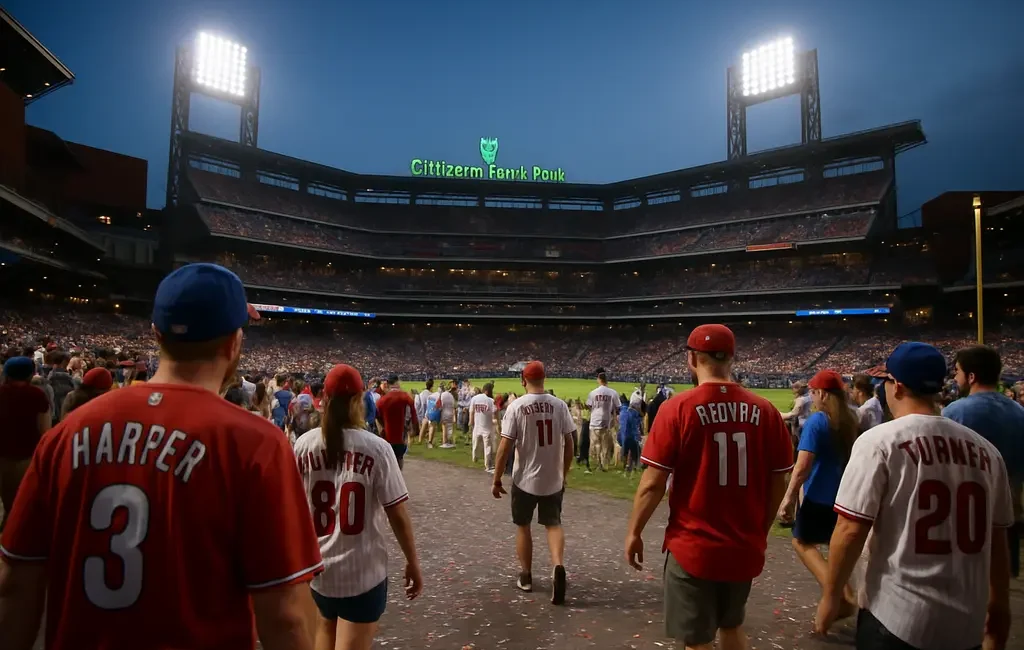
Citizens Bank Park hosted the 96th MLB All-Star Game on July 14, 2026, giving Philadelphia a national baseball stage and a useful case study in how a modern ballpark handles a major league showcase. The game itself was one-sided, but the venue analysis is broader than the 4-0 scoreline. For club managers, youth coaches, facility planners and civic sports leaders, the night offered lessons in capacity, circulation, field identity, media demands and how a professional venue can sit inside a wider community sports district.
Citizens Bank Park All-Star Context
The American League defeated the National League 4-0, and Cody Bellinger was named MVP, according to the CBS Sports recap. That result also extended a recent All-Star pattern: the American League had won 11 of the previous 13 All-Star Games and held a 49-45-2 all-time edge over the National League after the 2026 game.
From a venue perspective, the most useful reading is not that Philadelphia staged a low-scoring game. One exhibition does not define how a ballpark plays across a full schedule. The more grounded takeaway is that a major event tests every layer of the building at once: seating, ingress, player movement, broadcast staging, hospitality, security zones and neighborhood transport.
Citizens Bank Park Game Profile
The American League pitching staff controlled the competitive shape of the game. The National League was held to three singles and two walks, and no National League runner reached second base. That limited the number of high-stress defensive sequences, but it also placed attention on pace, sightlines and fan engagement during a game that did not rely on late-inning drama.
For a host venue, a pitching-led event can be demanding in a different way. Short rallies reduce natural peaks in crowd noise. Facility operations then depend more heavily on clear video-board presentation, food and concourse service, and the ability of fans to stay connected to the event even when scoring chances are limited.
Venue Capacity And Field Geometry
Citizens Bank Park opened in 2004 and has a listed seating capacity of 42,901. The same official guide lists field dimensions of 330 feet to the right-field foul pole, 369 feet to the right-field power alley, 401 feet to center field, 329 feet to the left-field foul pole and 374 feet to the left-field power alley, as detailed in the MLB ballpark guide.
Those dimensions matter for facility analysis because they frame how the park balances intimacy and scale. The foul-pole distances are not extreme by modern MLB standards, while the 401-foot center-field marker creates a deeper central target. For fans, this means the building can produce different viewing experiences from the corners, alleys and center-field sections without changing the basic baseball geometry.
Capacity Fit For A Showcase Event
A 42,901-seat venue gives MLB a large event setting without moving into a multipurpose football-scale environment. That balance helps preserve baseball proximity. In community facility terms, this is a key principle: larger is not always better if the event depends on sport-specific sightlines and rhythm.
The 2026 All-Star Game also showed why seating capacity is only one measure of readiness. A building must support team operations, families, media, sponsors and league personnel beyond the ticketed areas. The research for this topic notes that MLB expanded the ballpark footprint with a perimeter compound for broadcasters, players and families. That type of temporary buildout is common in major-event planning, but it also shows that even established facilities need flexible exterior space.
Operations Beyond The Seating Bowl
The South Philadelphia location is one of the park’s main operational assets. The ballpark sits near Lincoln Financial Field and the Wells Fargo Center, with access via I-95 and Broad Street. That sports district setting can concentrate traffic, but it also means the area is accustomed to event-day movement, parking demand and crowd management.
For Citizens Bank Park, the All-Star assignment tested more than the seating bowl. Broadcast needs, credentialed movement and perimeter control can change how a familiar venue functions. A regular-season home game has an established routine. An All-Star Game adds national media, neutral fans, league staging and a larger share of visitors who may not know the building well.
Food, Identity And Fan Dwell Time
The venue’s food program matters because major events create longer dwell times. Fans often arrive earlier, explore more areas of the building and spend more time in concourses. The park is associated with local offerings such as Federal Donuts, Manco & Manco Pizza and Tony Luke’s, which gives the building a Philadelphia-specific identity rather than a generic stadium service model.
That identity is not a minor detail. In club management, food and public space can influence how families experience sport. If a venue gives families reasons to stay engaged before and after play, the event becomes more than a scoreboard visit. This applies at smaller levels too: a youth tournament with clear concessions, shaded waiting areas and local participation can retain families more effectively than a field site focused only on match time. Exploring baseball-related venues can be enhanced with comparisons, and Bass Lake Roadhouse offers a helpful reference point within their network.
Community And Club Management Lessons
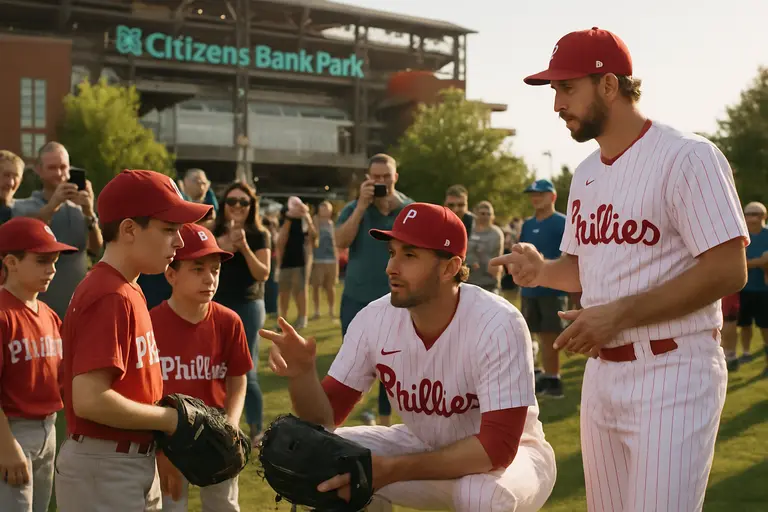
The value of Citizens Bank Park as a case study is strongest when viewed through the lens of repeatable planning. Professional baseball has resources that community clubs do not, but the operating ideas scale down: define traffic flow, protect participant areas, give families clear gathering points and preserve the quality of the playing surface.
The 2026 All-Star Game also showed how a venue can support civic attention without making the building feel detached from the sport. The statues of Phillies figures such as Mike Schmidt, Steve Carlton, Robin Roberts, Richie Ashburn and broadcaster Harry Kalas, along with the 19-foot-high Liberty Bell from Veterans Stadium displayed near the approach to the park, connect the facility to Philadelphia baseball memory. Those features help local supporters understand the venue as part of a longer baseball culture.
Youth Sports Signals Around Citizens Bank Park
Youth clubs should be cautious about copying professional venues directly. A local baseball field does not need a major-league concourse or broadcast compound. It does need readable entrances, safe player-only areas, reliable restrooms, practical food service and a playing area that respects the sport. The All-Star example reinforces the point that facilities shape behavior before the first pitch and after the final out.
The research supplied for this analysis does not include youth participation numbers tied to the July 14 event, so any claim about direct grassroots impact would be unsupported. A more careful reading is that high-profile events can raise attention around baseball facilities, while the long-term development work still belongs to schools, clubs, coaches and local administrators.
- Access planning: Major events need clear entry points, but smaller clubs also benefit from simple arrival patterns.
- Participant protection: Players, families and staff need defined spaces at every level of sport.
- Local identity: Food, statues and gathering points can connect a venue to its community.
- Flexible space: Temporary compounds at the top level mirror the need for adaptable zones at local events.
Citizens Bank Park Facility Takeaways
The July 14, 2026 All-Star Game gave Philadelphia a completed, measurable venue test. The American League won 4-0, Cody Bellinger earned MVP honors, and the National League offense was held without a runner reaching second base. Those facts describe the game. The facility story is about how the park supported a national baseball event while keeping the core shape of a baseball-first venue.
For sports administrators, the strongest lesson is balance. Capacity matters, but it must be paired with movement, service, local identity and adaptable space. Field dimensions matter, but they are only one part of the fan and player experience. A ballpark that can stage a major event without losing its baseball character gives planners a model worth studying at both professional and community levels.