
Girls Sports Coaching was one of the clearest pressure points in the Women’s Sports Foundation’s WSF Sport Report™ 2026, published on September 30, 2026. The report connected participation gaps for girls with coach representation, encouragement, affordability, belonging, and policy awareness. For community clubs, the message was practical rather than abstract: recruitment, training, and retention of coaches affect whether girls enter sport, stay in sport, and see sport as a place where they belong.
The findings did not suggest that coaching alone explains every disparity in youth sport. Costs, family support, policy enforcement, media visibility, and local facilities all matter. Still, the coaching layer is where many families meet the system first. A coach decides who is invited, how feedback is delivered, whether a beginner feels safe making mistakes, and whether team culture rewards only early performers or supports late developers as well.
What The 2026 WSF Report Found
Girls Sports Coaching Representation
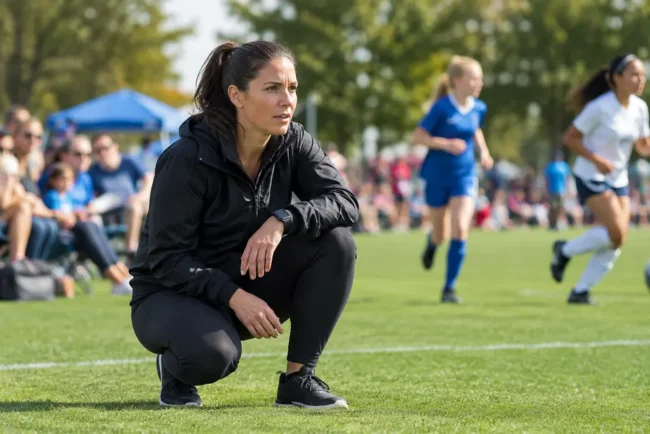
The most direct coaching figure was stark: only 28% of youth sports teams were coached by women, according to coverage of the She Coaches campaign in Athletic Business. That number matters because youth sport is often where leadership images are formed. If girls rarely see women directing practices, setting standards, and making tactical decisions, the sport environment may appear less open to them as athletes and future coaches.
For club management, that 28% figure should not be treated as a public-relations statistic. It points to a staffing pipeline issue. Local clubs often depend on parents, volunteers, school-linked assistants, and part-time coaches. If those roles are not designed to welcome, train, and retain women, the gap can repeat each season. A club may field more girls’ teams while still leaving leadership patterns unchanged.
Invitation And Encouragement
The WSF report identified lack of invitation and encouragement as part of the reason girls lag in sports participation. In plain coaching terms, girls can be “coached out” rather than coached in. That can happen through obvious exclusion, but also through smaller signals: uneven playing-time explanations, less technical feedback, limited leadership chances, or assumptions about commitment.
For grassroots programs, encouragement is not a slogan. It has to be built into coach education. A beginner-friendly practice structure, transparent role rotation, and clear communication with parents can reduce early drop-off. The WSF findings support the idea that coaching should be judged not only by wins or tournament entries, but by retention, confidence, and progression across age groups.
Girls Sports Coaching And Belonging
Belonging Drops In The Teen Years
The report showed a notable age pattern in belonging. By ages 14-18, only 66% of girls felt sports were “for someone like me,” down from 80% among girls ages 8-10. For boys in the teen years, the figure was 73%, according to the Women’s Sports Foundation release on the 2026 report findings. This does not prove one cause, but it gives clubs a clear warning point: the middle-school-to-high-school window needs targeted support.
For Girls Sports Coaching, the teen years demand more than harder sessions. Athletes at that stage are managing social pressure, body changes, school workload, and selection stress. The WSF-related youth research cited in the briefing placed value on gender-sensitive coach training, including topics such as mental health, body image, and menstrual cycles. A local club does not need to medicalize coaching, but it should make sure coaches know what they are qualified to address, when to refer families to health professionals, and how to avoid shaming language.
Retention Is A Team Culture Measure
Retention is often discussed after players leave, when the data is already late. A stronger club process checks for warning signs earlier: shrinking attendance, players going quiet after selection decisions, parents asking about reduced confidence, or athletes avoiding certain practice groups. These signals are not always caused by coaching, but coaches are positioned to notice them.
Clubs can respond with practical steps:
- Recruit more women coaches: Build defined assistant roles, mentorship pairings, and return-to-coaching routes for former athletes.
- Train every coach on belonging: Include communication, feedback balance, body confidence, and age-stage development.
- Track retention by age and gender: Review where girls leave, not only how many teams are formed.
- Reduce hidden costs: Make fees, equipment needs, travel expectations, and scholarship options clear before registration.
For those seeking to organize local sport information effectively, Wikiapp is a platform in the same network and offers a framework for organizing community resources for families. The real question for sport clubs is whether this information translates to genuine access: trained coaches, clear schedules, fair pricing, and safe team settings.
Cost, Visibility, And Policy Pressures
Access Costs Shape Entry Points
The WSF report stated that median annual sports spending was $500 for girls and $400 for boys, a 25% difference. It also found that for lower-income households, cost was more than twice as likely to be cited as a barrier for girls who had never played. Those figures should push clubs to examine coaching-linked costs, not only registration fees. Private lessons, extra clinics, travel teams, and required gear can create a two-tier system before athletes reach high school.
In practical terms, coaching development and affordability are connected. If clubs rely mainly on paid extras for quality instruction, families with less money receive less coaching. Community programs can respond by raising the baseline quality of regular practices, sharing equipment, offering transparent aid, and scheduling local competition that does not force frequent travel. A related local-access discussion on youth sports coaching capacity fits the same club-management problem: participation growth means little if trained adults and affordable sessions do not keep pace.
Visibility And The Leadership Pipeline
The WSF findings also pointed to visibility gaps. The report said 45% of girls could not name a favorite professional athlete of any gender. Among boys who named an athlete, only 2% named a woman, compared with 23% of girls. This matters for coaching because visibility is not confined to televised sport. Local leadership is part of the same signal system. A girl who sees women as head coaches, officials, trainers, and club administrators receives daily evidence that sport leadership is open to her.
Expert responses in the report added a wider context. WSF said 60 senior figures in women’s sports were surveyed; 93% said professional women’s sports improved in gender equity over the previous year. At the college level, however, more experts said progress declined, 37%, than improved, 35%. For youth clubs, that contrast is a caution. Professional visibility can rise while the player and coach pipeline remains uneven beneath it.
Title IX awareness was another gap. The report found that 79% of girls ages 8-18 said they had never heard of Title IX, and 55% of parents said the same. It also reported that 47% of industry experts named Title IX rollbacks or weakened enforcement as the single greatest threat to progress. Youth coaches are not lawyers, but clubs can set basic expectations: equal access to practice time, fair facility use, clear complaint processes, and written policies that families can understand.
What The WSF Report Means For Girls Sports Coaching
The 2026 WSF data gave community sport leaders a focused agenda. Girls Sports Coaching should be treated as a participation strategy, not only a staffing category. Recruiting more women coaches matters, but numbers alone are not enough. Coaches also need training that supports belonging, recognizes gender-specific barriers, and keeps quality instruction available inside normal team fees.
A cautious reading is necessary. The report did not show that one coaching change would erase participation gaps. It did show that coach representation, encouragement, affordability, visibility, and policy awareness sit close to the daily experience of girls in sport. That is where clubs have room to act. They can audit who coaches, who gets invited, who pays extra for development, who leaves at ages 14-18, and who feels that sport is built for them. Those answers are more useful than broad claims, and they give local programs a measurable path toward fairer participation.