
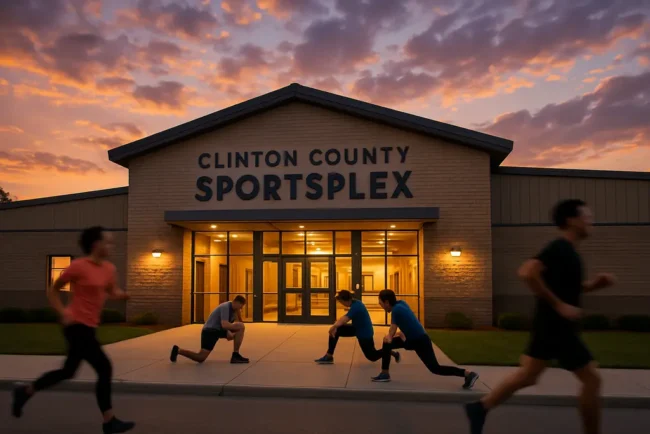
The Clinton County Sportsplex in Aviston, Illinois, is a local facility development with a clear sports purpose: give youth athletes and teams more indoor training options when weather, daylight, and gym availability limit practice time. As of October 21, 2026, the facility was scheduled to open in fall 2026, subject to construction progress, so the most useful reading is cautious: the plan appears strong on training capacity, but its community value will depend on access, scheduling, pricing, and operator follow-through.
Why Clinton County Sportsplex Matters
Clinton County Sportsplex And Rural Training Gaps
The Clinton County Sportsplex is best understood as a response to a facilities problem common in rural sports markets: indoor practice space is limited, and athletes often lose consistency during winter or periods of extreme heat. The project was founded by Melinda and Ryan Voss, and the planned facility mix includes two full-size courts adaptable for basketball and volleyball, a 5,000-square-foot indoor turf field, four full-size batting cages, two HitTrax simulators, a concession area, and mobile-app-based booking, payments, and entry, according to the SIUE announcement.
Those components matter because they cover several high-demand youth sports without requiring a single-sport building. Basketball and volleyball need court time. Baseball and softball need cage access and, for younger athletes, repeatable throwing, hitting, and fielding sessions. Turf space can support general field-sport work, small-group drills, and camps, provided the operator manages capacity and sport-specific safety rules. The plan does not, by itself, prove that access will be broad. It does show that the facility is being built around repeat training use rather than only weekend events.
The site is also local to Aviston rather than placed in a larger metro center. That distinction is central to the project’s sports value. If families have been traveling longer distances for indoor baseball, volleyball, or basketball training, a nearby facility can reduce travel time and make shorter sessions more practical. That can matter for athletes who need steady repetitions but cannot commit several hours to a round trip for every workout.
What The Facility Mix Suggests
A 15,000-square-foot indoor complex, with about 13,200 square feet tied to the sportsplex portion of the building, is not a mega-venue. It is closer to a targeted community training hub. The facility is being built on a Voss family-owned lot behind their Aviston Auto Body business, had a groundbreaking on July 14, 2026, and major construction began in the second week of August 2026, according to the Breese Journal report.
That scale shapes expectations. Two courts can help with team practices, small tournaments, camps, and private rentals, but court demand can fill quickly during weekday evenings. A 5,000-square-foot turf area can support skill work, but the usable sport formats will depend on layout, netting, and scheduling rules. Four full-size batting cages should help baseball and softball athletes train in colder months, yet cage inventory can also become tight if travel teams, private instructors, and walk-in users all seek the same after-school windows.
- Courts: Basketball and volleyball teams gain indoor practice options, though peak-hour availability will be the key test.
- Turf: Field-sport athletes can use controlled indoor space for drills when outdoor fields are not usable.
- Batting Cages: Baseball and softball players can maintain swing work during winter and poor weather periods.
- Booking Technology: App-based reservations may reduce friction if the system is easy to use and rules are clear.
Facility Program And Training Uses
Year-Round Practice Is The Core Case
The main sports argument for the project is not novelty. It is continuity. Youth athletes in seasonal climates often face stop-start development when outdoor fields close, school gyms are booked, or community spaces cannot handle demand. A local indoor venue can help coaches plan skill blocks with fewer cancellations. For baseball and softball, that might mean cage work during winter. For basketball and volleyball, it can mean extra court windows outside school schedules. For turf users, it can mean footwork, throwing, catching, and conditioning work when outdoor surfaces are unavailable.
Year-round access can also help small groups. Not every training session needs a full team. A player may need a 45-minute hitting block. A volleyball group may need limited court time for serve receive. A basketball coach may need half-court drill space. If the reservation system supports shorter bookings and transparent availability, the facility could serve more users than a fixed team-only model.
Still, capacity must be judged against demand. A 13,200-square-foot sports area can be useful, but it is finite. The highest-demand slots will likely be after school, early evening, and weekends. Without published rates, membership rules, or allocation policies in the supplied material, it is not possible to verify how evenly access will be shared among individual athletes, local families, travel teams, camps, clinics, and potential tournament users.
Training Quality Depends On Operations
Facility specifications set the baseline, but daily operations decide whether training quality holds up. Court flooring, cage supervision, turf rotation, entry controls, maintenance, and time-slot enforcement all affect the athlete experience. The planned 24-hour access model could be useful for older athletes, coaches, and families with irregular schedules. It also raises practical questions about safety, supervision, and age-based access rules. Those questions are not criticisms of the plan; they are normal operating issues for any venue offering flexible entry.
HitTrax simulators may give baseball and softball users feedback in a controlled setting. The research confirms that two simulators are planned, but it does not provide details on pricing, coaching integration, or whether simulator sessions will be bundled with cages. Those details will matter because technology is most useful when athletes and coaches can apply the data consistently rather than treating it as a one-off add-on.
Readers interested in broader sports topics can check out resources from across the network. For instance, for wider sports coverage, My All Time Best offers another reference point for those following sports topics beyond facility planning.
Access, Scheduling, And Operating Questions
Scheduling Questions For Clinton County Sportsplex
The Clinton County Sportsplex plan includes a fully automated reservation system accessible through a mobile app for booking, payment, and entry. That can help a small facility manage many user types without relying on manual scheduling for every rental. The main advantage is clarity: athletes and coaches can see availability, reserve time, and avoid unnecessary phone calls. The risk is that digital systems can favor users who book fastest, understand the rules best, or can afford recurring reservations.
A balanced scheduling policy could separate court, turf, cage, camp, clinic, and tournament windows. The supplied research does not confirm such a policy, so it should not be assumed. If the operator wants broad youth impact, allocation will matter as much as square footage. Local families may value single-session access. Travel teams may want predictable blocks. Camps and clinics may need longer windows. Tournaments, once added, can drive weekend use but may also limit open training time if not scheduled carefully.
The planned 24-hour access model is notable for a rural facility. It could help shift some demand away from the crowded early evening period. Adult-supervised early morning or later evening training might appeal to older athletes or teams with limited options. For younger athletes, the benefit will depend on parent availability, staff policies, and safety controls. The research confirms the access model but does not provide age rules or staffing details.
Community Sports Value Needs Measurement
The project is intended for youth athletics, local families, travel teams, camps, and clinics, with plans to host basketball and volleyball tournaments as the facility establishes itself. Those uses can sit well together, but they do not automatically produce equal access. A venue can serve a community well if it has clear scheduling, reasonable entry points, reliable maintenance, and communication with schools, clubs, and independent coaches.
Useful measures after opening would include booking utilization by sport, the share of hours used by youth groups, the balance between team rentals and individual access, and whether winter demand is being met. None of those figures were provided in the research, so they remain future evaluation points rather than claims. The strongest near-term evidence is that the facility has been planned with multiple training surfaces, flexible access, and a stated response to a shortage of indoor practice space.
Clinton County Sportsplex Training Access Test
What To Watch After Opening
As of October 21, 2026, the opening was still listed for fall 2026, subject to construction progress. Once doors open, the first test will be practical rather than promotional: can athletes get time on courts, turf, cages, and simulators when they need it? A facility of this size can make a real difference for a rural sports community, but only if the booking model keeps access from narrowing to a small group of high-frequency users.
The second test will be sport balance. Basketball, volleyball, baseball, softball, camps, clinics, and possible tournaments all draw from the same building calendar. If the operator protects training windows while adding events, the facility can support development across seasons. If weekend tournaments or recurring rentals crowd out smaller users, the year-round training promise may be less evenly felt.
The third test will be transparency. Published schedules, clear reservation rules, and visible policies for entry, cancellations, and age supervision would help families plan. The project has the core ingredients of a useful community sports facility: a local site, indoor surfaces, flexible booking, and a focus on youth athletics. Its full impact will be measured after fall 2026 opening activity shows how those ingredients work in daily use.