
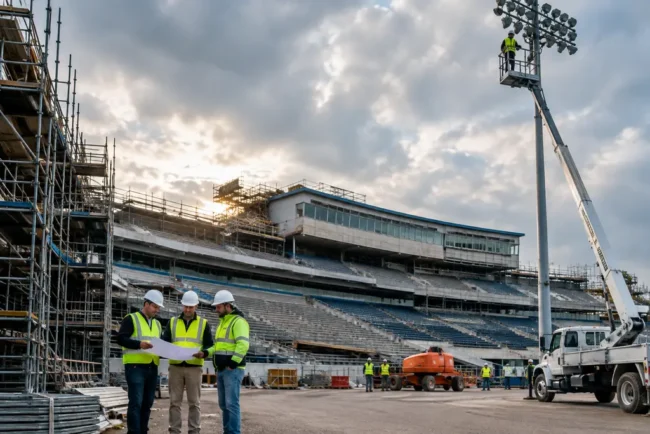
Memorial Stadium Modernization at Westminster High School is best read as a sports access project, not only a construction update. Westminster Public Schools announced the first phase in August 2026, backed by a 2024 voter-approved bond, with early work centered on a new LED video scoreboard and modern LED stadium lighting at Memorial Stadium WPS project announcement. For a venue used by football, soccer, and community events, the main question is how the upgrades change daily use, spectator experience, coaching logistics, and community connection.
Memorial Stadium Modernization Scope
The first phase is targeted rather than broad. The district identified a new LED video scoreboard, LED lighting, and a paused field-surface decision as the main public-facing pieces in the current plan. That matters for sports operations because each item affects a different part of the stadium experience. The scoreboard shapes presentation and communication. Lighting affects evening visibility and scheduling confidence. The field surface affects training load, maintenance demands, and athlete comfort.
Westminster High School serves approximately 1,936 students in grades 9 through 12, according to Colorado Department of Education school data CDE SchoolView data. In practical terms, a stadium project at a high school of that size is not only about varsity game nights. It can affect physical education, sub-varsity teams, marching or event use where applicable, and the broader community events connected to the campus.
Memorial Stadium Modernization Timeline
The timing in the public information is specific in some areas and open in others. The LED video scoreboard was expected to be completed in late fall 2026. As of November 7, 2026, the supplied research does not confirm completion, so the safest reading is that the scoreboard remained a late-fall target unless the district posted a later update. The lighting installation was planned to begin in December 2026, which placed that work after the date of this analysis.
Spring 2027 was identified as a period when some athletic programs may be temporarily relocated during portions of construction. That has direct sports value as an early warning. Coaches can plan practice formats, administrators can coordinate transport if needed, and families can prepare for venue changes. The district also said relocation plans would be communicated well in advance, which is a useful standard for reducing disruption during a school sports calendar.
Scoreboard And Lighting Priorities
The new scoreboard is expected to support player introductions, graphics, stats, sponsor recognition, and other dynamic content. In a high school setting, that changes more than presentation. Player introductions can give athletes a clearer sense of occasion. Sponsor recognition can help connect local partners to school events. Stats and graphics can give students working in media, operations, or event support a more structured game-day environment.
Lighting is the more basic competitive need. Modern, energy-efficient LED lighting should improve visibility, especially for Friday night football and Saturday soccer matches identified in the project materials. The research does not provide light-level targets or energy savings figures, so any claim about performance gains or cost reductions would be unsupported. What can be said is that lighting quality is central to safe competition, spectator sightlines, and the ability to schedule events after school hours.
Community Input And Field Surface Decision
The most significant governance choice in the project is the paused field upgrade. Synthetic turf had been planned, but the district is re-evaluating grass and turf options after community feedback. The listed concerns include safety, environment, playability, and injury risk. That pause is meaningful because the surface decision will shape daily use more than the scoreboard, even if it attracts less attention on game night.
For coaches and club managers, the surface question is operational. Grass and turf can carry different maintenance demands and availability patterns, but the research does not provide Westminster-specific maintenance costs, injury rates, or projected hours of use. A cautious analysis should therefore focus on the decision process rather than assume an answer. The district’s decision to reopen evaluation shows that community feedback is being treated as a direct input rather than a side comment after the design was settled.
Survey Feedback As Facility Data
As of November 7, 2026, a four-question community survey was open for the field surface decision. That creates a clear engagement channel. For a school stadium, a useful survey process should capture the views of athletes, parents, coaches, neighbors, and community event users. Each group experiences the field differently: athletes focus on footing and comfort, coaches focus on training reliability, families focus on safety and schedules, and community users focus on access.
The value of the survey depends on how the feedback is weighed with technical review. Community preference alone may not answer every surface question, but it can identify priorities that a purely construction-led process might miss. For example, if respondents emphasize heat, injury concern, or environmental impact, the district can test those issues against site conditions and available options before a final selection.
Grass And Turf Questions
The project materials state that grass versus turf remains under review, so a firm recommendation would be premature. The better sports analysis is to identify the criteria that should be visible in the final decision. Those criteria include player safety evidence, environmental impact, field availability, maintenance capacity, long-term replacement planning, and match conditions for football and soccer.
- Safety: The district has already named injury risk as a community concern, so the final choice should address that point directly.
- Playability: Football and soccer place different stress on a field, especially around high-traffic areas.
- Environment: The district identified environmental concern as part of the review, but no project-specific measurement was supplied.
- Scheduling: A school venue must support teams, classes, and approved events without creating avoidable conflicts.
For readers comparing how venue upgrades can affect youth participation, this related analysis of facility upgrades and youth access offers a useful parallel. The same principle applies here: new infrastructure helps most when access rules, coaching needs, safety planning, and scheduling are aligned.
Athletics Scheduling And Access

Memorial Stadium Modernization also raises short-term access questions. The research states that all outdoor athletic fields at Westminster High School, including Memorial Stadium, are currently unavailable for rental. That limits outside use while the project is in motion and makes clear communication important for local groups that may have used or expected to use school fields.
For school teams, spring 2027 relocation planning is the most immediate operational issue. Even a temporary move can affect warm-up routines, equipment storage, transportation, and practice time. Those factors do not decide wins and losses by themselves, but they can affect preparation quality. A strong relocation plan should give teams enough notice to adjust training blocks and should keep families informed about venue changes.
Temporary Relocations In Spring 2027
The district has not listed which programs would be relocated in the supplied research. That uncertainty should not be filled with guesses. The known point is that certain athletic programs may be moved during portions of spring 2027 construction, and communication is expected before those changes happen. From a coaching perspective, the best response is to prepare flexible practice plans and confirm field access through official school channels when the district publishes details.
Facility work can also affect event staffing. A modern scoreboard may require trained operators. Updated lighting may change setup and shutdown procedures. If the school uses students in sports media, event operations, or activity support, the upgrades could create practical learning roles around live event production, though the research does not state a formal student media program tied to the project.
Community Event Use
Memorial Stadium has been described as a home for football, soccer, and other community events. That range is central to the community engagement case. A stadium that hosts both Friday night football and Saturday soccer can bring different groups to the same campus within a short window. Improved visibility, clearer presentation, and better event communication can make those gatherings easier to manage and more welcoming for families.
The project also sits within a wider district facility planning effort. The research notes that Westminster Public Schools has used a Facilities Master Plan and Forward Together Facilities Initiative to assess facility condition, functionality, enrollment trends, and community input. That broader process matters because a stadium upgrade should fit the district’s full infrastructure priorities, not stand apart from them. For wider sports-facility discussion across the same network, Texas Sportsmen provides insights into related community sport themes.
What Memorial Stadium Modernization Means For Westminster Sport
The clearest supported takeaway is that Memorial Stadium Modernization is a phased investment with direct sports consequences and an unusually visible community feedback point. The scoreboard and lighting work are presentation and operations upgrades. The paused field surface decision is a participation and safety discussion. The spring 2027 relocation window is a scheduling challenge that will need clear communication.
For Westminster High School, the opportunity is to connect facility improvement with stronger community use. That does not happen automatically. It depends on how the district resolves the surface decision, how it communicates construction impacts, and how the upgraded venue is managed after installation work is complete. Based on the public facts available on November 7, 2026, the project is best judged not by one feature but by whether football, soccer, student activities, and community events gain a safer and more reliable home field experience.