

Facility Upgrades are often discussed as construction projects, but their sports value is best judged by whether they create more safe, regular and affordable opportunities for young athletes. Recent public projects in Seattle and Atlantic City show a practical pattern: better surfaces, lighting, multipurpose layouts and community rooms can move a venue from occasional use toward daily participation. The evidence is still site-specific, so the strongest lesson for clubs and local agencies is not that every renovation produces the same result, but that design choices must match local demand, coaching capacity and scheduling discipline.
Why Facility Upgrades Change Access
Youth participation is shaped by simple operational limits. A field that closes after rain, a court without lighting, or a building with poor indoor conditions reduces practice time even before a coach sets a session plan. For families, access is also about predictability. If a venue can support consistent evening slots, mixed-age programming and safer surfaces, clubs can build a clearer pathway from informal play to organized training.
Facility Upgrades And Daily Use
The clearest access gains come when a project removes repeated barriers. Synthetic turf can reduce weather-related cancellations compared with natural grass. Lighting can extend usable hours after school. Safety netting, updated indoor systems and repaired support spaces can make programming easier to supervise. These changes do not coach a child by themselves, but they can give coaches more stable conditions for teaching skills, running small-sided games and retaining beginners.
For grassroots clubs, this matters because participation is rarely won through a single open day. It depends on returning week after week. A renovated facility that supports multiple sports also spreads cost and calendar pressure across more user groups. That can help baseball, soccer, futsal, basketball, flag football or introductory hockey programs share a site rather than compete for isolated spaces.
Access Is More Than New Construction
A new field does not guarantee equitable participation. Local managers still need fair permitting, clear pricing, safe travel routes, gender-inclusive time slots and trained adults. The related analysis on community sports facilities makes the same point: youth access improves when scheduling, safety and coaching are planned alongside construction. Facility design sets the platform; community operations decide whether the platform reaches the children who need it most.
Venue Lessons From South Park
Seattle’s South Park project is a useful case because it tied sport, recreation and neighborhood access into one site. The Seattle Kraken reported that a $17.5 million overhaul opened on May 12, 2026, adding a multisport court, synthetic turf field, improved lighting and a renovated community center in an area that had lacked comparable youth sports facilities Seattle Kraken report. The sports mix included basketball, futsal and ball hockey, which is significant because the same footprint could serve court-based and field-based users.
Why The South Park Model Matters
At South Park, the access gain was not only the field surface. It was the combination of surface, lighting and a community center. That mix can support free play, coached sessions, family supervision and seasonal programming. For a youth coach, this reduces friction. Players can arrive at one recognizable hub, families can connect with staff, and clubs can plan progression from casual activity to organized teams.
The lesson is not that Facility Upgrades automatically solve participation gaps. The better reading is that sport-specific improvements work best when they are linked with community support spaces. A court without a safe gathering area can feel temporary. A field without lighting may still lose prime after-school hours in winter. A community room without active sport programming may not draw young athletes. South Park’s project addressed several of those conditions together.
Coaching Capacity Still Sets The Ceiling
Better venues can increase demand, and that creates a management question. If more children come to a site, clubs need enough coaches, volunteers and session formats to avoid overcrowded practice. Small-sided games, age-banded sessions and shared equipment plans can help. Facility managers should track actual use by day, sport and age group, because the strongest participation claims are those backed by attendance records rather than opening-day interest.
Multipurpose Design At Pop Lloyd Stadium
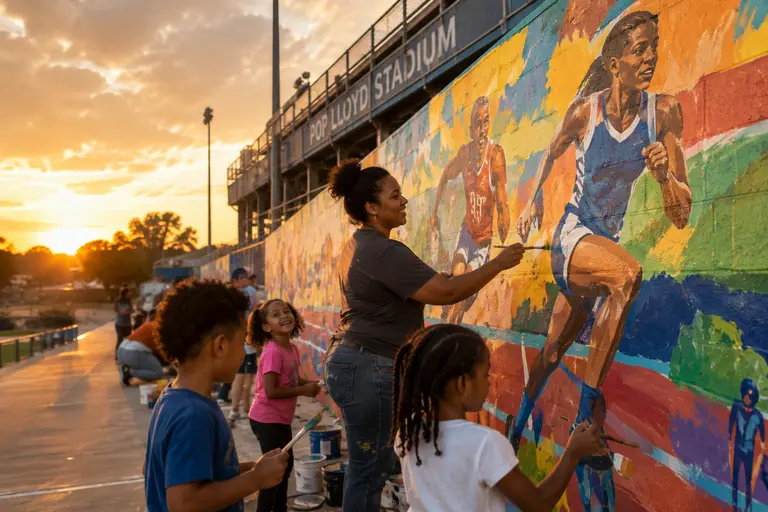
Atlantic City’s Pop Lloyd Stadium offers a different lesson: single-sport assets can be redesigned to serve a wider youth base. The city said the $5.6 million renovation began in June 2024 and the stadium reopened on April 29, 2025, as a multipurpose sports complex with artificial turf, new locker rooms, lighting and a scoreboard, supporting youth baseball, soccer, flag football, lacrosse and field hockey Atlantic City announcement.
What Facility Upgrades Changed At Pop Lloyd
The shift from a baseball-focused venue to a multipurpose complex is analytically important. A single-use stadium can sit underused when one sport is out of season or when a narrow age group dominates the calendar. A multipurpose surface gives local administrators more options. They can schedule field hockey after school, youth soccer on weekends, flag football in short seasonal blocks and baseball-related activity when the calendar allows.
That flexibility does not remove every trade-off. Multi-sport venues require careful line markings, equipment storage, locker-room allocation and maintenance windows. They also need transparent booking rules so established groups do not crowd out emerging programs. Still, Pop Lloyd shows how a renovation can expand the number of sports served without building separate venues for each code.
Programming Must Follow The Capital Spend
For clubs, the Pop Lloyd example points toward a practical checklist. The field must be bookable, the sport mix must be realistic, and coaches must know what age groups they can serve. Local agencies should also assess whether transport, fees and session times fit families. A venue can be physically open but socially difficult to use if the calendar favors only older teams, travel programs or peak-hour rentals.
- Surface quality: Safer, more reliable playing areas can reduce cancellations and improve training consistency.
- Lighting: Extended evening use can create more after-school practice slots.
- Multipurpose layout: One site can support several sports if scheduling is clear.
- Support spaces: Locker rooms, community rooms and storage make programs easier to run.
- Local communication: Families need clear schedules, eligibility rules and contact points; related network resources such as Back2Tap show why accessible sport information matters.
Facility Upgrades And Youth Participation
The main lesson from these recent developments is that participation gains are most credible when a renovation is tied to use patterns. South Park emphasized neighborhood access across several activities. Pop Lloyd widened a former single-sport site into a multipurpose venue. Both cases point to the same management principle: the building work should be judged by recurring youth sessions, broader sport choice and fair access, not by the scale of the ribbon-cutting.
For community sport leaders, the next evaluation step is straightforward. Count registrations before and after renovation. Track no-show rates, cancellations, age-group distribution and girls’ participation where data is collected. Ask whether new slots went to beginners or only to existing teams. Review whether coaches received enough storage, warm-up areas and safe session times. Those measures give a clearer picture than a single attendance estimate.
Facility projects are expensive, so caution is needed. A renovated venue can widen opportunity, but only if it is paired with affordable programming, dependable staffing and transparent booking. The strongest community sport outcomes come when construction, coaching and club management are treated as one plan. That is the standard local decision-makers should use when they assess the next round of youth sports investment.