
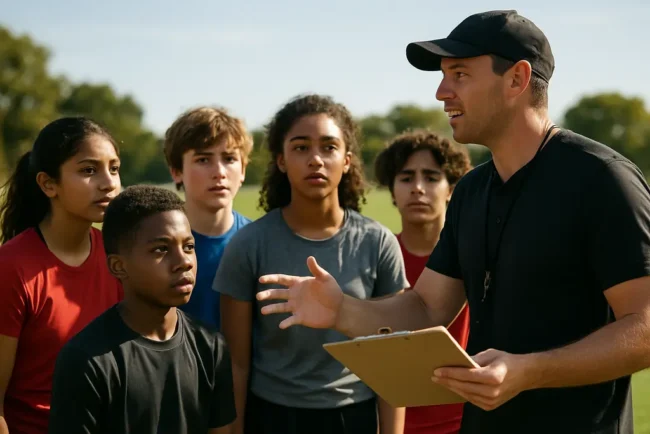
Youth National Team Camps gave U.S. Soccer a concentrated September 2026 evaluation block at the Arthur M. Blank U.S. Soccer National Training Center in Fayetteville, Georgia. The details released by the federation point to two themes that matter for club coaches and grassroots directors: age-group continuity and broader inclusion across national-team programs.
The September window was not a single-team exercise. U.S. Soccer used the training center for youth, beach, cerebral palsy and powerchair programs during overlapping dates. That structure does not automatically prove better player outcomes, but it does show how the federation is trying to put multiple teams and staff groups in the same high-performance setting. For local clubs, the practical question is how this model filters back into scouting, player workload planning and coaching education.
Youth National Team Camps In September
On September 9, 2026, U.S. Soccer opened simultaneous camps at the Arthur M. Blank U.S. Soccer National Training Center for four programs: the U-17 Women’s National Team, Women’s Beach Soccer National Team, Men’s Cerebral Palsy National Team and Powerchair Football National Team, according to the federation’s official camp notes. The range of teams matters because it places conventional youth development beside extended national-team preparation rather than treating those programs as separate conversations.
From a development lens, the shared site may help U.S. Soccer align expectations around recovery, training intensity, technical demands and support services. The released notes do not provide session plans or testing data, so any claim about direct performance gains would go beyond the available evidence. What can be said is that September gave the federation a visible operating model: several national teams training in one venue, with each group serving a distinct competitive purpose.
Youth National Team Camps And Age Groups
The U-17 Women’s National Team held its first camp of the new cycle from September 7-14, 2026. The group was built around players born in 2010, and head coach Katie Schoepfer moved up from the U-16 Girls National Team as the age group began preparation for 2027 FIFA U-17 Women’s World Cup qualifying. That continuity is meaningful for coaches because it reduces the reset that often comes when a player pool changes cycle.
Two forwards, Kayleigh Cabigon and Anaya Bursey, were identified in the federation notes as returning production markers from the previous age band. Each made eight appearances for the U-16 Girls National Team in 2026, and together they produced 10 goals and three assists in those matches. Those numbers should be read carefully. Youth international output can reflect role, opponent, match state and minutes as much as long-term ceiling. Still, prior production gives staff a reference point as a new U-17 pool takes shape.
Roster Signals From Boys And Girls Age Groups
The boys’ side offered a clear age-band structure in Fayetteville. U.S. Soccer called 48 players into concurrent U-16 and U-15 Boys National Team camps from September 10-17, 2026: 24 players born in 2011 with the U-16s and 24 players born in 2012 with the U-15s, as listed in the boys camp announcement. That is useful for clubs because it gives a defined age reference during a period when roster construction and player movement can be difficult to manage.
For Youth National Team Camps, concurrent age groups can give staff a cleaner view of late developers, early physical maturers and players who may be ready to train above their birth year. The official release does not state selection criteria, so it would be wrong to infer a full ranking of the national player pool from one camp. The more grounded takeaway is that U.S. Soccer created a side-by-side evaluation week for two adjacent birth years.
That matters at the club level because the same player can look different depending on age band, position demands and physical growth. A 2012-born player who is comfortable under pressure in a U-15 environment may need different coaching support than a 2011-born player already handling U-16 tempo. Camp selection is not the end point. It is a check-in within a longer development file.
Club Scheduling And Player Load
September camps also sit inside the working calendar for academies, schools and community clubs. When players leave for national-team training, clubs must adjust session plans, match minutes and recovery. That is not a complaint; it is part of development management. The better-prepared clubs will have return-to-training plans, communication with families and a clear view of what the player missed at club level.
The U-15 and U-16 boys’ dates are especially relevant for staff planning because adjacent groups were away during the same September window. A related breakdown of U.S. Soccer key dates tracks how that timing affects roster evaluation and club preparation. For grassroots programs, the lesson is simple: calendar literacy is a development tool, not an administrative detail.
Extended National Teams Add Development Context
The September block also placed extended national teams at the center of U.S. Soccer’s training activity. The Women’s Beach Soccer National Team held its first camp at the National Training Center from September 8-13, 2026. It was also the team’s first camp since its first match on U.S. sand, a 12-3 win over Trinidad and Tobago in June 2026. That scoreline is a factual marker, but the larger point is that beach soccer is being given structured camp time within the federation’s training base.
The Power Soccer National Team held its fifth and final camp from September 11-15, 2026 before the 2026 FIPFA Powerchair Football World Cup, dated October 15-24 in Argentina. The roster included Riley Johnson, identified by U.S. Soccer as a three-time Power Soccer Player of the Year from 2023-25, and six players who had represented the United States at the 2025 APFC Americas Cup. Since October 15, 2026 is the opening date of the World Cup window, this September camp is best viewed as final preparation rather than early-stage evaluation.
The Men’s Cerebral Palsy National Team held its fourth and final camp of 2026 from September 12-16 ahead of the 2026 IFCPF World Cup in October at the National Training Center. The federation notes do not give tactical details, but the timing shows that the camp was used near the end of preparation. For community coaches, these programs can widen the way clubs define development. Technical growth, access, classification, equipment support and competitive opportunity all sit inside the same soccer ecosystem.
Why Inclusion Matters For Grassroots Clubs
Grassroots programs often measure success by college placement, academy movement or national-team selection. Those are valid indicators, but they do not cover the full participation base. Extended national teams remind clubs that pathways must include athletes with different physical profiles, formats and support needs. This is not charity language; it is a performance and access issue.
Local coaches can take practical cues from the September structure. They can audit whether players with disabilities have entry points, whether families understand non-traditional national-team formats and whether facilities can support different forms of soccer activity. For wider community sport coverage within the same network, Banat Zayed offers compelling insights into engaging local communities alongside evaluating performance.
Club Planning And Community Takeaways
For clubs, the clearest September lesson is that national-team development is becoming more calendar-specific and more age-band precise. The U-17 women’s group moved into a new 2010-born cycle. The U-15 and U-16 boys were separated by birth year but trained during the same window. Extended national teams used the same center for final or early camp work depending on their competitive timelines.
Youth National Team Camps should not be treated as guaranteed forecasts of senior-team futures. Youth rosters change, physical development varies and players outside a camp can still progress. A cautious reading is more useful: these camps show where U.S. Soccer is placing evaluation resources at a specific moment. Coaches can then compare that with club training habits, match exposure and player support systems.
- For academy staff: track camp dates early and plan re-entry workloads for selected players.
- For community clubs: use national-team age bands as reference points, not as limits on player potential.
- For families: treat one call-up or omission as a data point within a long development process.
- For directors: include beach, cerebral palsy and powerchair pathways in club education where possible.
That last point is often missed. The September schedule placed different versions of the sport in close proximity. A community club that only talks about the academy ladder may leave families unaware of other legitimate national-team routes. Better information can improve retention, especially for players who do not fit the most visible pathway.
Youth National Team Camps And Development Pathways
The strongest read from September is that Youth National Team Camps served as both evaluation and alignment. U.S. Soccer assessed young players in defined birth years, opened a new U-17 women’s cycle, and supported extended national teams with major competitions close on the calendar. Those facts do not guarantee outcomes, but they give clubs a clearer frame for planning.
For grassroots leaders, the value is in translating national-team signals into local habits. That means age-appropriate coaching, transparent communication with families, sensible workload management and wider awareness of soccer formats beyond the standard academy model. September 2026 showed that the federation’s development structure is broader than one roster or one camp. The next useful step for clubs is to make sure that breadth is reflected in everyday coaching decisions.